18th Dynasty statue
- Gallery: Room 4
- Culture: 18th Dynasty
- Date: 1370BC (c.)
- Object type: statue
- Materials: red granite
- Museum number: EA15
- Museum: The British Museum
- Collection record: British Museum website
- Image © The Trustees of the British Museum, shared under a CC BY-NC-SA 4.0 licence.
Listen to the free audio guide
About this object
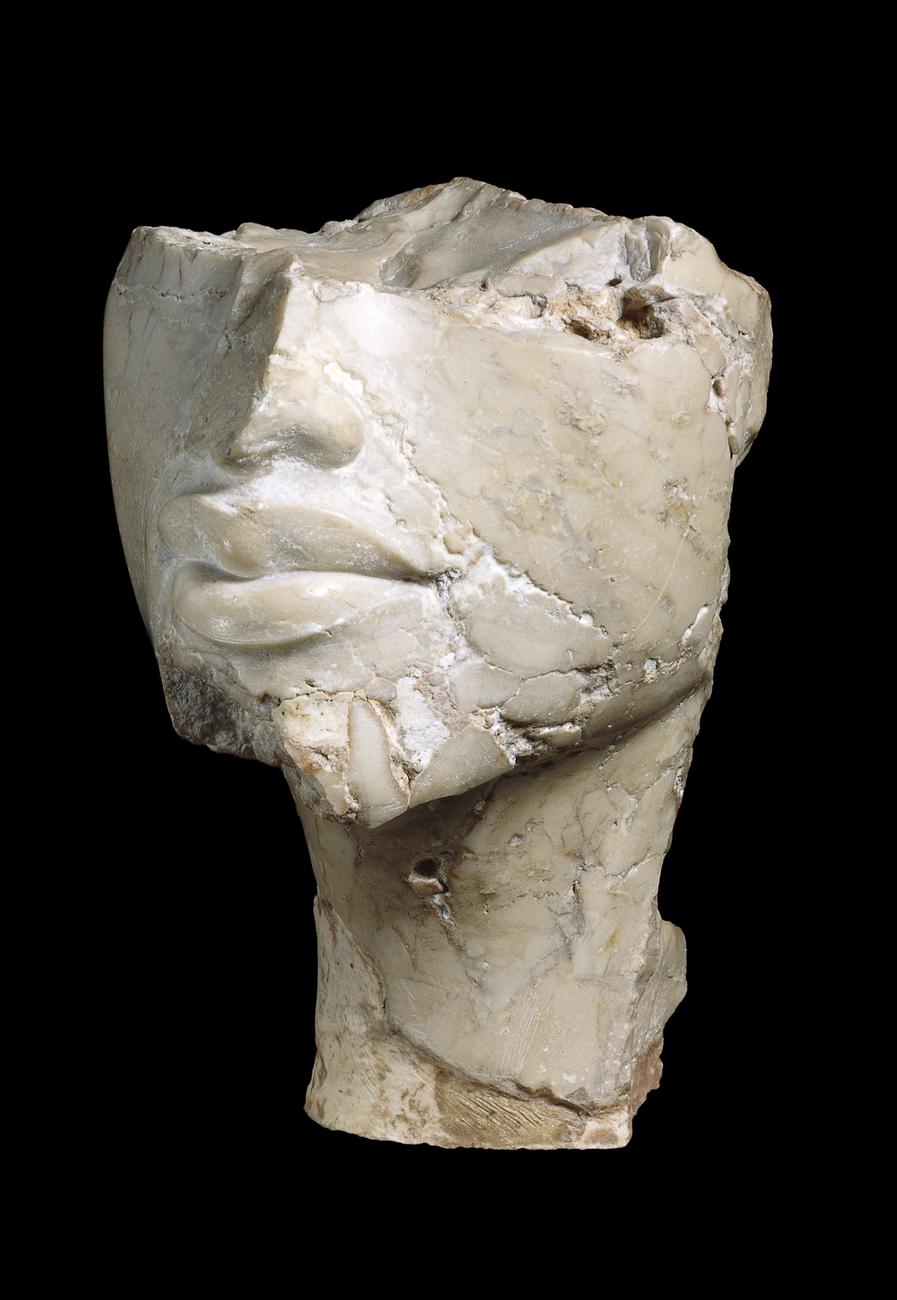
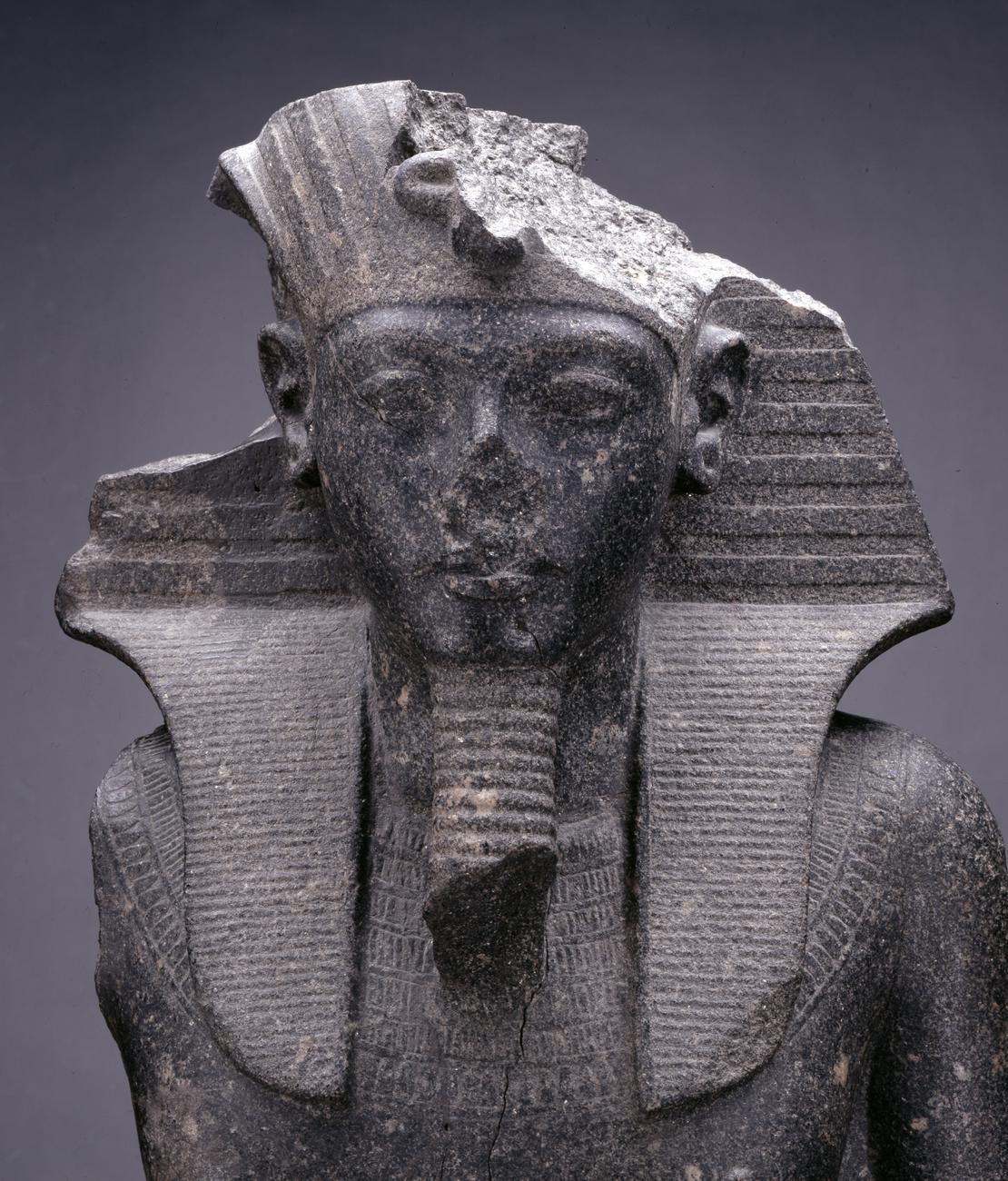
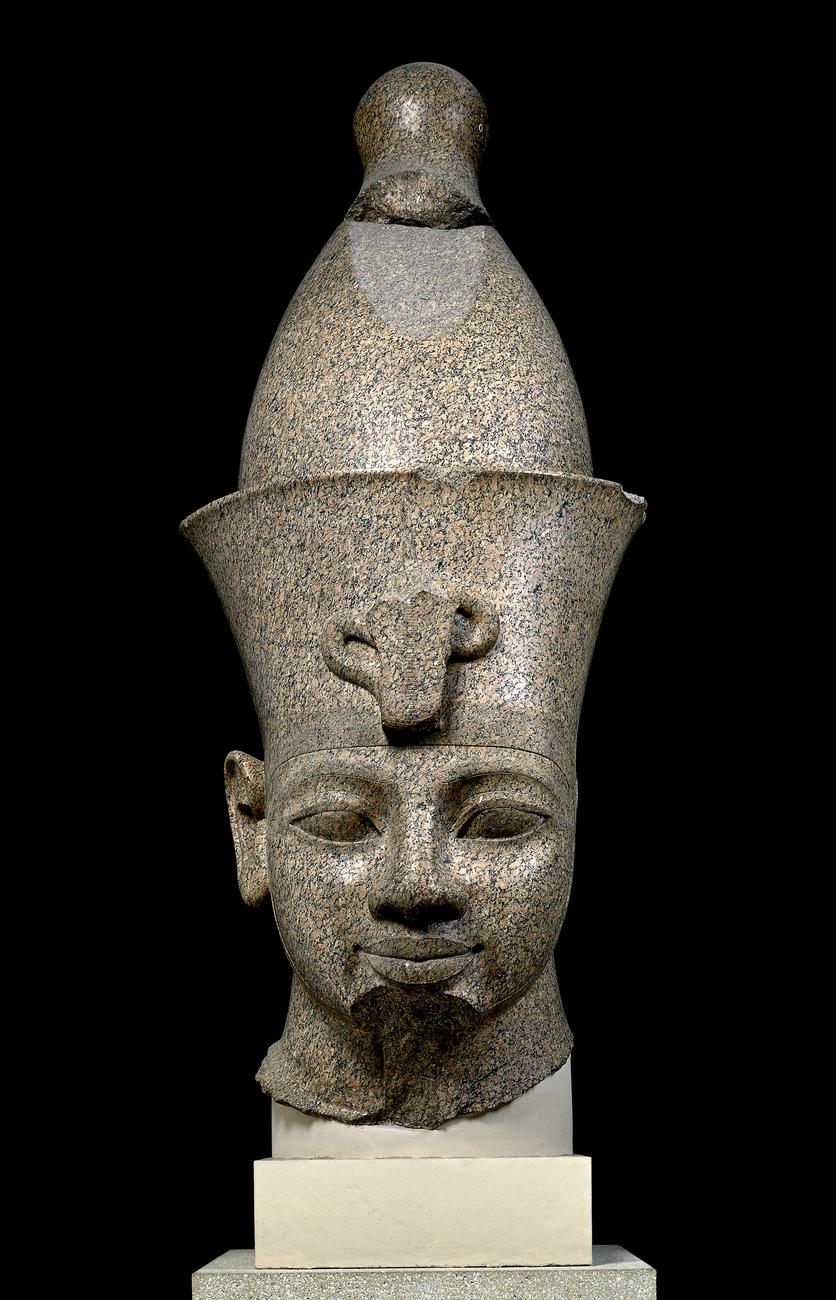
This is a head from a monumental red granite statue, created during Egypt’s 18th Dynasty, around 1370 BC. The stone is of striking quality, showcasing the craftsmanship of ancient sculptors. The head once belonged to a massive statue, likely depicting Pharaoh Amenhotep III, or possibly later modified to represent Ramesses II. The features show signs of alteration—such as the mouth, subtly reshaped by drilling to change its appearance.
This head was discovered in 1817 near Thebes, at the temple of Khonsupakhered. It had been buried, with only part of the statue visible until workers uncovered the head. Getting it to Luxor took eight days over just one mile.
Historically, Ramesses II was known to repurpose older statues to match his own image, as seen here. The original inscriptions are now lost, but the style aligns with the artistic trends of Amenhotep III’s reign. You might notice the heavy cosmetic lines on the face, a detail typical of the time. This head is a powerful reminder of Egypt’s grand sculptural heritage and the reuse of royal imagery across generations.
See it in person
18th Dynasty statue is on display in Room 4 at the British Museum on Great Russell Street, Bloomsbury, London — free to enter. Choose British Museum on audioguide.london and take a photo of it to hear this free audio guide in six languages — no app download needed.
New, in beta. British Museum support has just launched and is still improving: over 1,000 objects so far, with more added all the time.