Williams-Wynn Candlestand
- Gallery: British Galleries, Room 118; The Wolfson Gallery
- Maker: Robert Adam (designer)
- Made in: London
- Date: ca. 1771-1774
- Object type: Candlestand
- Style: Neo-classicism
- Dimensions: Height 122 cm; Width 57.2 cm
- Museum: V&A South Kensington
- Collection record: V&A website
- Image © Victoria and Albert Museum, London.
Listen to the free audio guide
In the museum now? Point your phone at the next object and hear its guide.
About this object
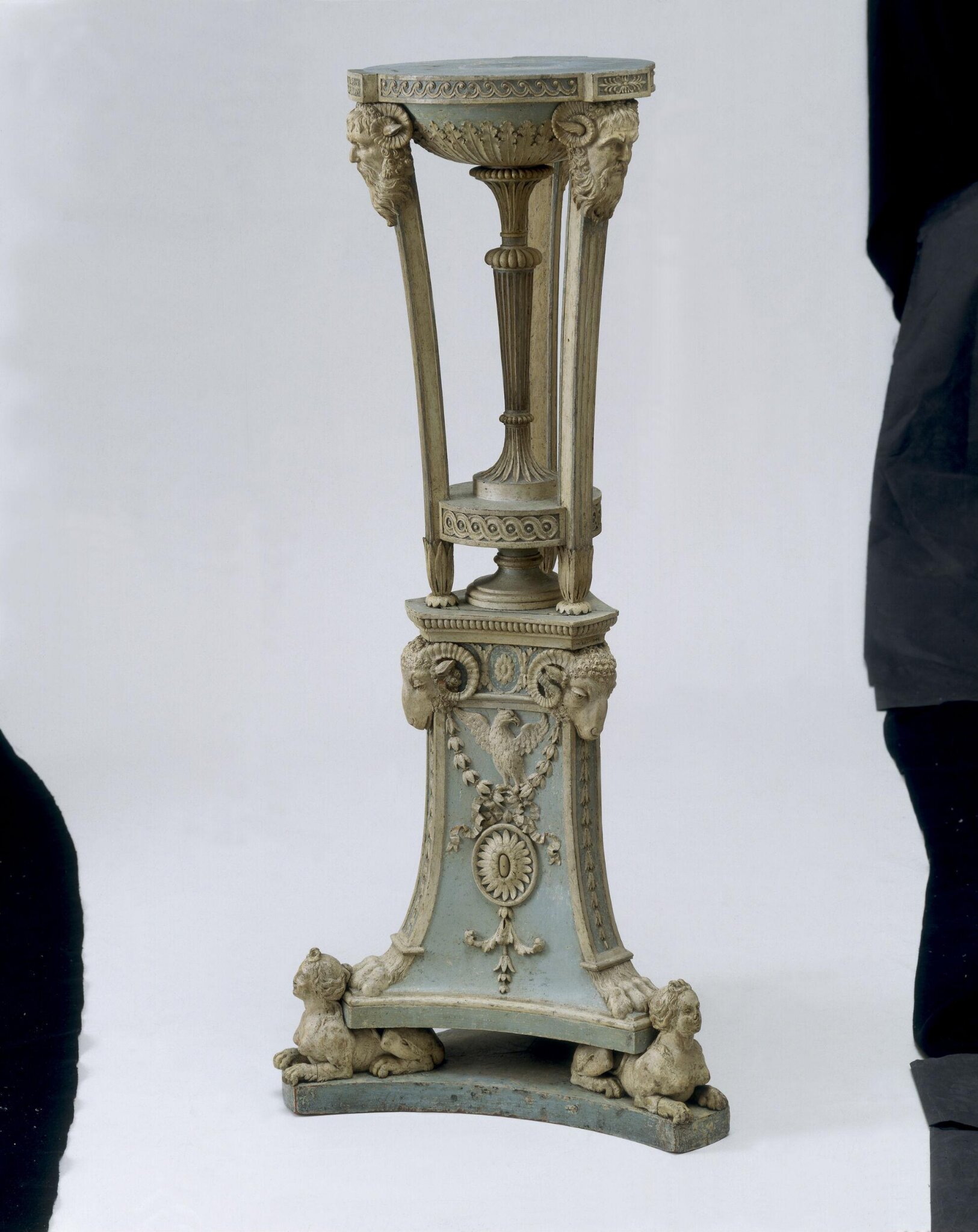
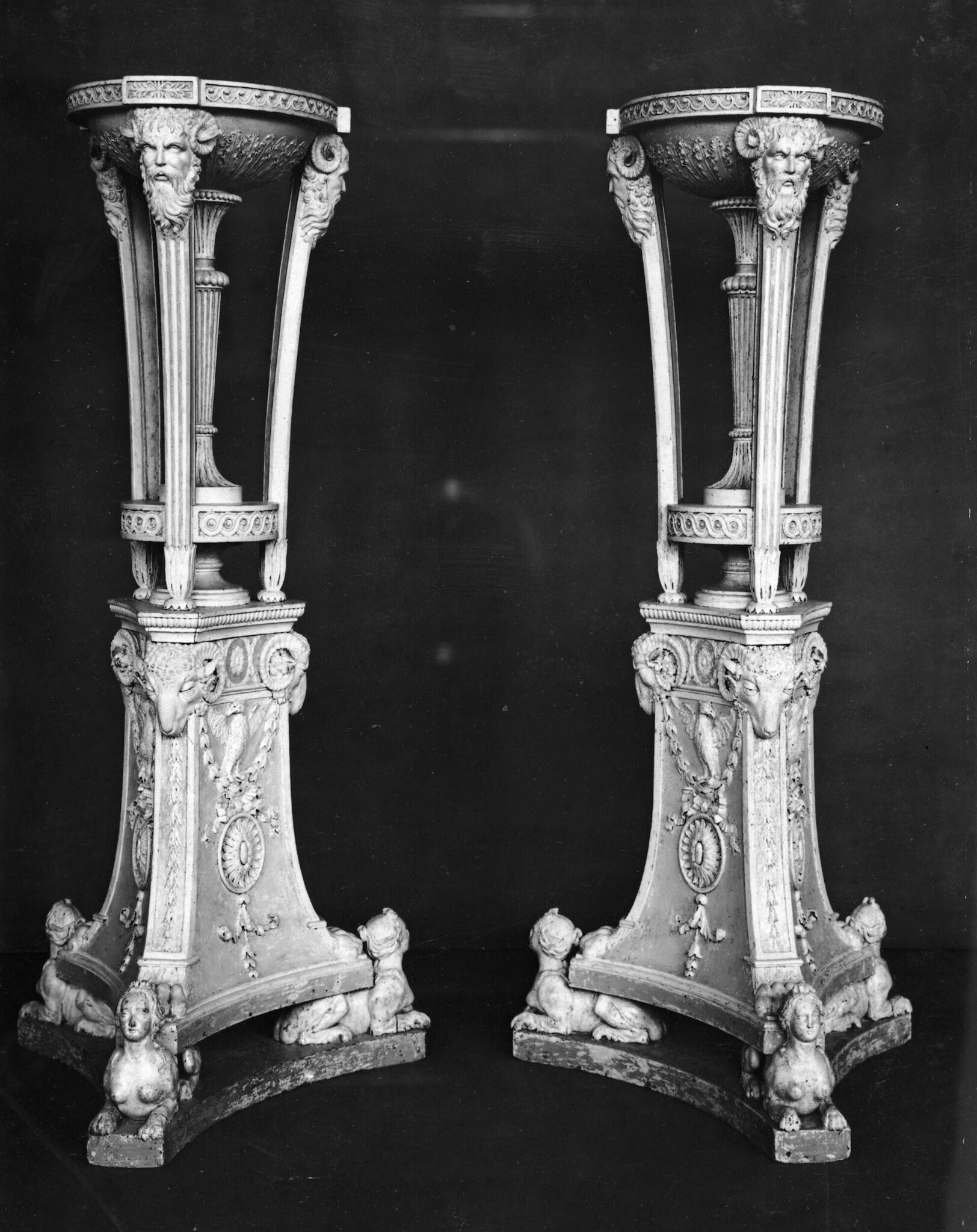
Before you is the "Williams-Wynn Candlestand," a striking example of Neo-classical design. It was created in London around 1771 to 1774, designed by the architect Robert Adam.
As you look closely, notice the intricate carvings. The stand is made of mahogany and pine, painted in a pale blue with white ornaments. This specific color scheme was chosen to match the decoration of the eating room in the London house of Sir Watkin Williams-Wynn.
The shape is inspired by an ancient Roman tripod altar. You can see various high-quality details, including acanthus leaves, rams' heads, and garlands. At the base, the entire structure rests on three carved Etruscan sphinxes.
These candlestands were originally part of a pair. They would have been placed on either side of a mirror to reflect the candlelight and brighten the room. While the exact maker remains unknown, the piece shows the highly detailed, archaeological style that Robert Adam used to decorate his most celebrated houses.
See it in person
Williams-Wynn Candlestand is on display in British Galleries, Room 118; The Wolfson Gallery at the V&A South Kensington on Cromwell Road, London — free to enter. Choose V&A South Kensington on audioguide.london and take a photo of it to hear this free audio guide in six languages — no app download needed.
New, in beta. V&A support has just launched and is still improving: 1,000 objects with audio so far, with more added all the time.