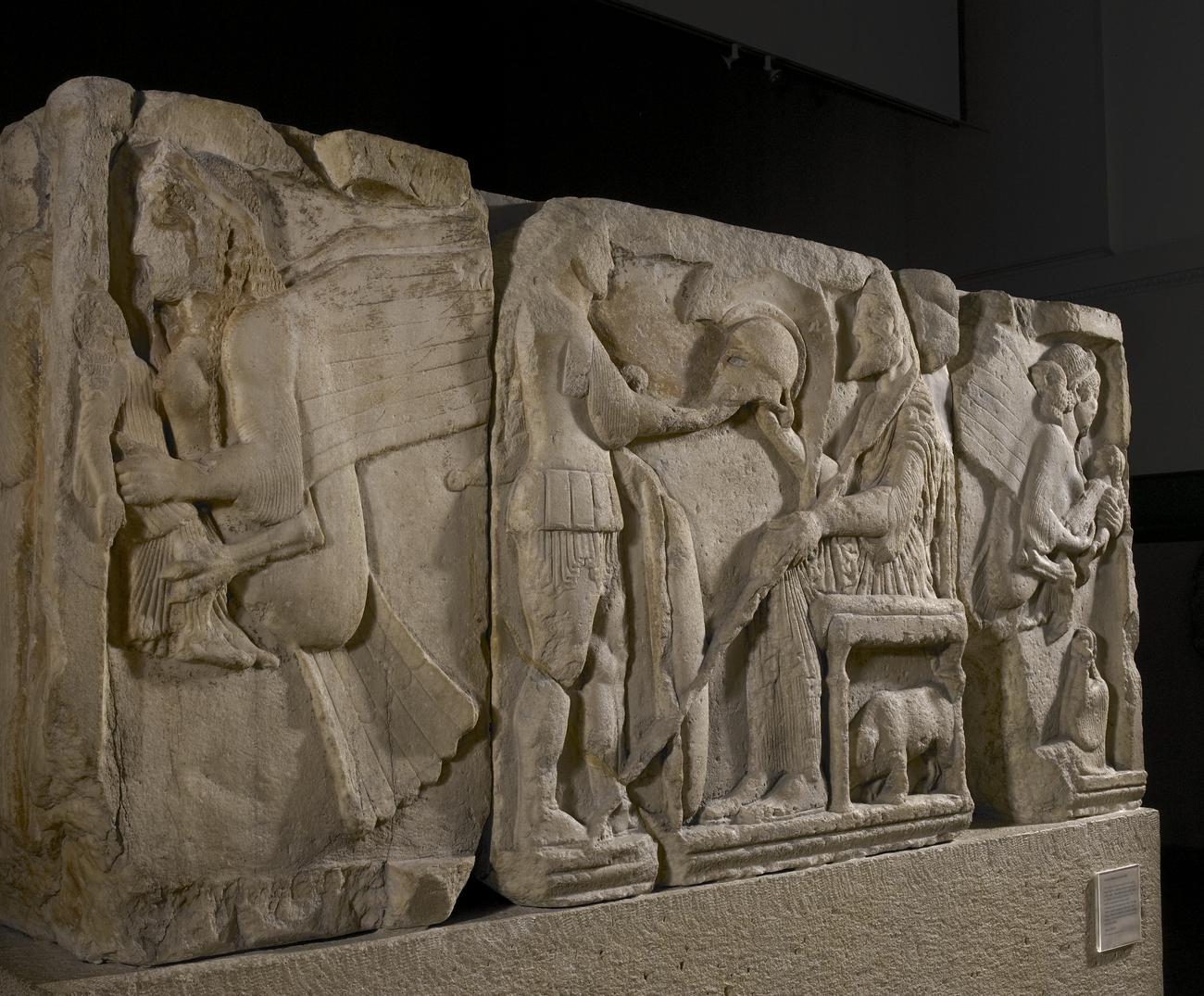
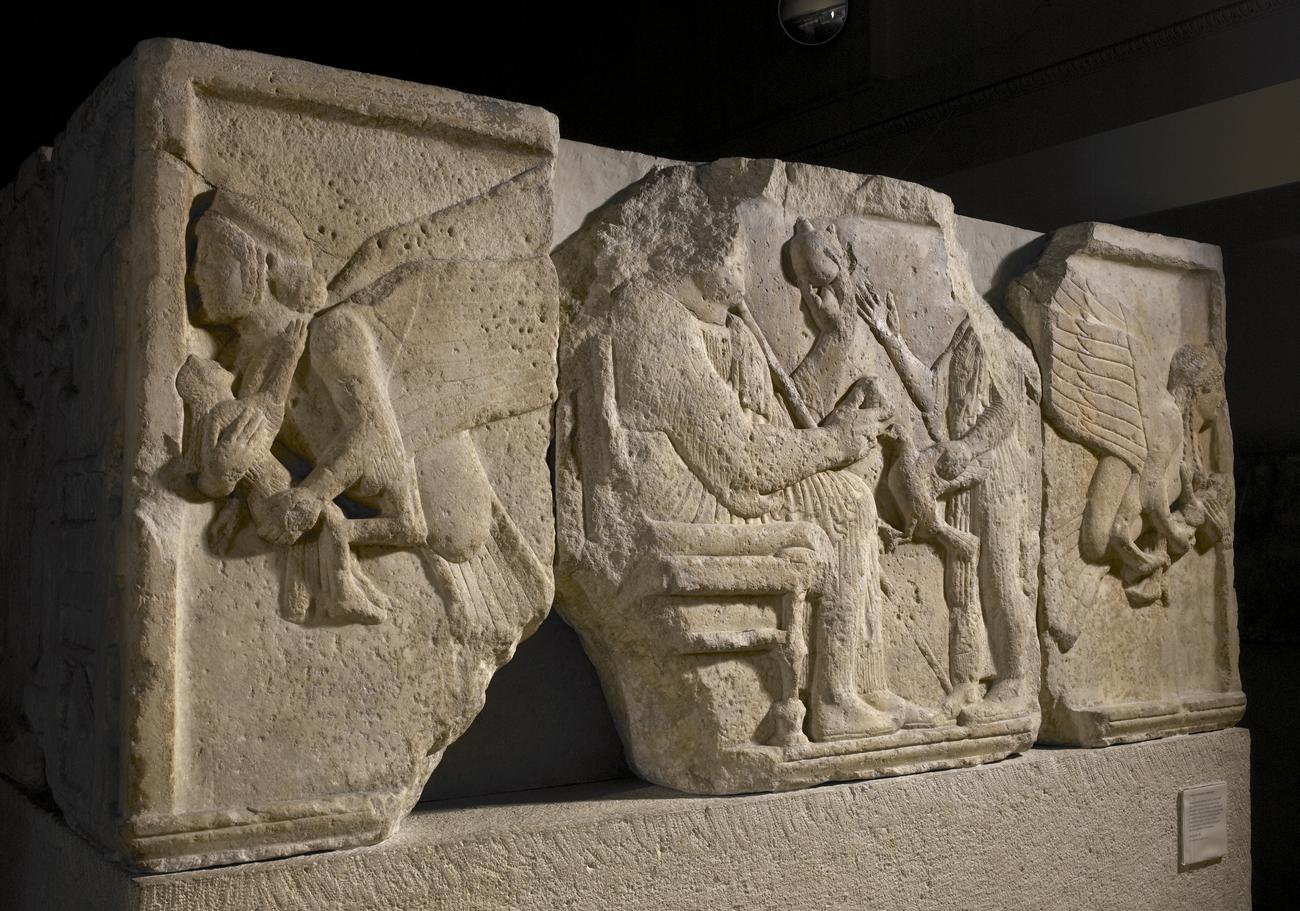
West, central panel from the Harpy Tomb (Panel 7)
- Gallery: Room 15
- Culture: Classical Greek; Achaemenid
- Made in: Lycia (historic)
- Date: 480BC-470BC
- Object type: tomb
- Materials: marble
- Museum number: 1848,1020.1.7
- Museum: The British Museum
- Collection record: British Museum website
- Image © The Trustees of the British Museum, shared under a CC BY-NC-SA 4.0 licence.
Listen to the free audio guide
About this object
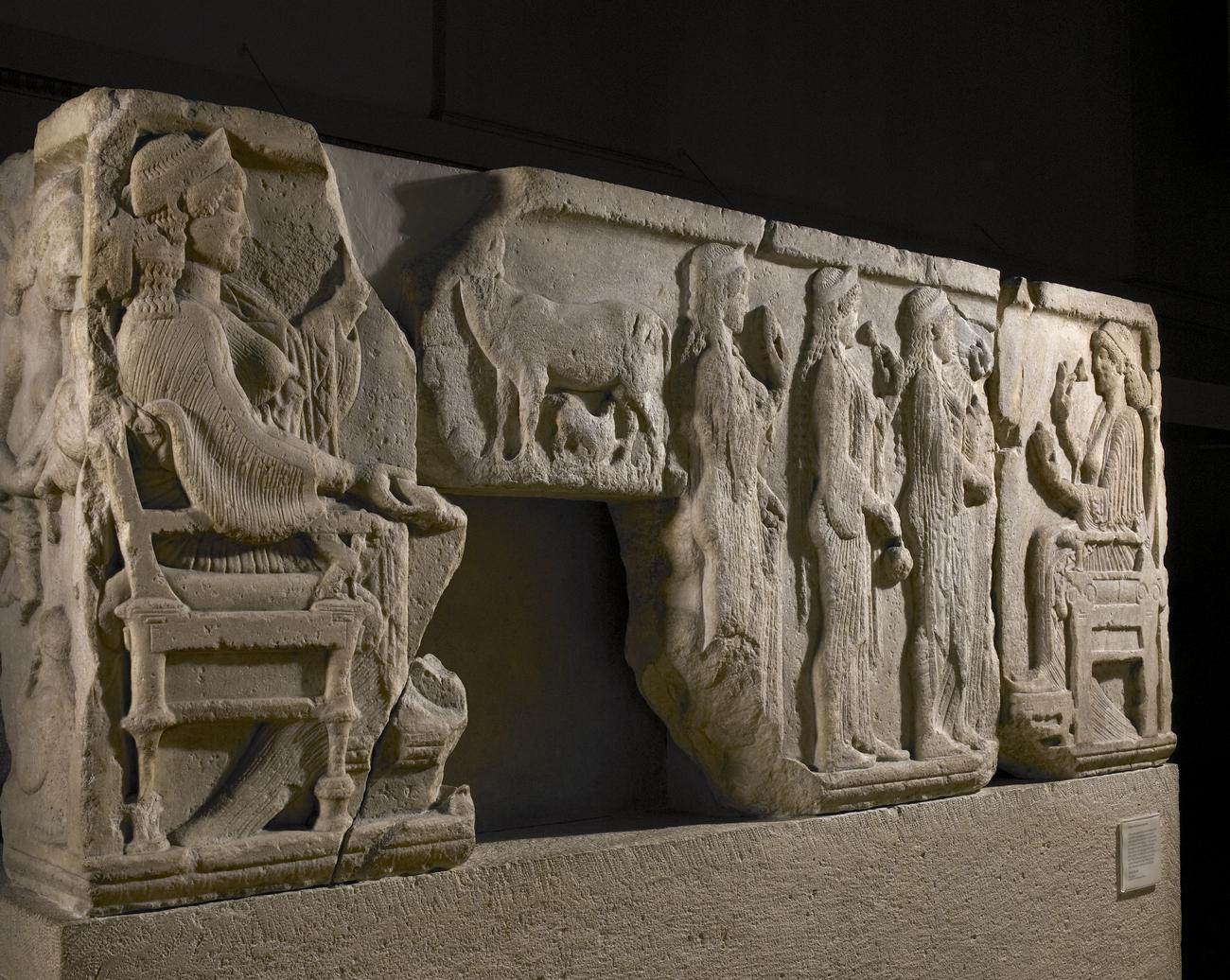
This central panel from the "Harpy Tomb" reveals a carefully composed procession of three women moving toward a seated figure. All figures wear elaborate drapery, including Ionic-style chitons and mantles, and wear diadems and bracelets. Their gestures vary—some lift a pomegranate, others a poppy or an egg—demonstrating the attention to detail in the hand-carved marble.
The tomb originally crowned a Lycian sepulchral tower near Xanthus and dates to between 480 and 470 BCE. Crafted in a Classical Greek style, the reliefs show soft, flowing drapery and carefully rendered facial expressions, including delicate wavy lines in the hair.
The western side of the tomb is the most well-preserved and highlights a doorway with a relief of a cow and calf above it, possibly symbolizing renewal of life. This work gives insight into funerary art from ancient Lycia and reflects Greek sculptural traditions in marble.
Acquired through the efforts of Sir Charles Fellows, this piece stands as a powerful example of Hellenistic craftsmanship and ancient funerary symbolism.
See it in person
West, central panel from the Harpy Tomb (Panel 7) is on display in Room 15 at the British Museum on Great Russell Street, Bloomsbury, London — free to enter. Choose British Museum on audioguide.london and take a photo of it to hear this free audio guide in six languages — no app download needed.
New, in beta. British Museum support has just launched and is still improving: over 1,000 objects so far, with more added all the time.