Wall reliefs from Persepolis
- Audio guide stop: 425
- Gallery: Room 52
- Audio guide: one commentary for a group of objects shown together
- Museum: The British Museum
- Image © The Trustees of the British Museum, shared under a CC BY-NC-SA 4.0 licence.
Listen to the free audio guide
About these objects
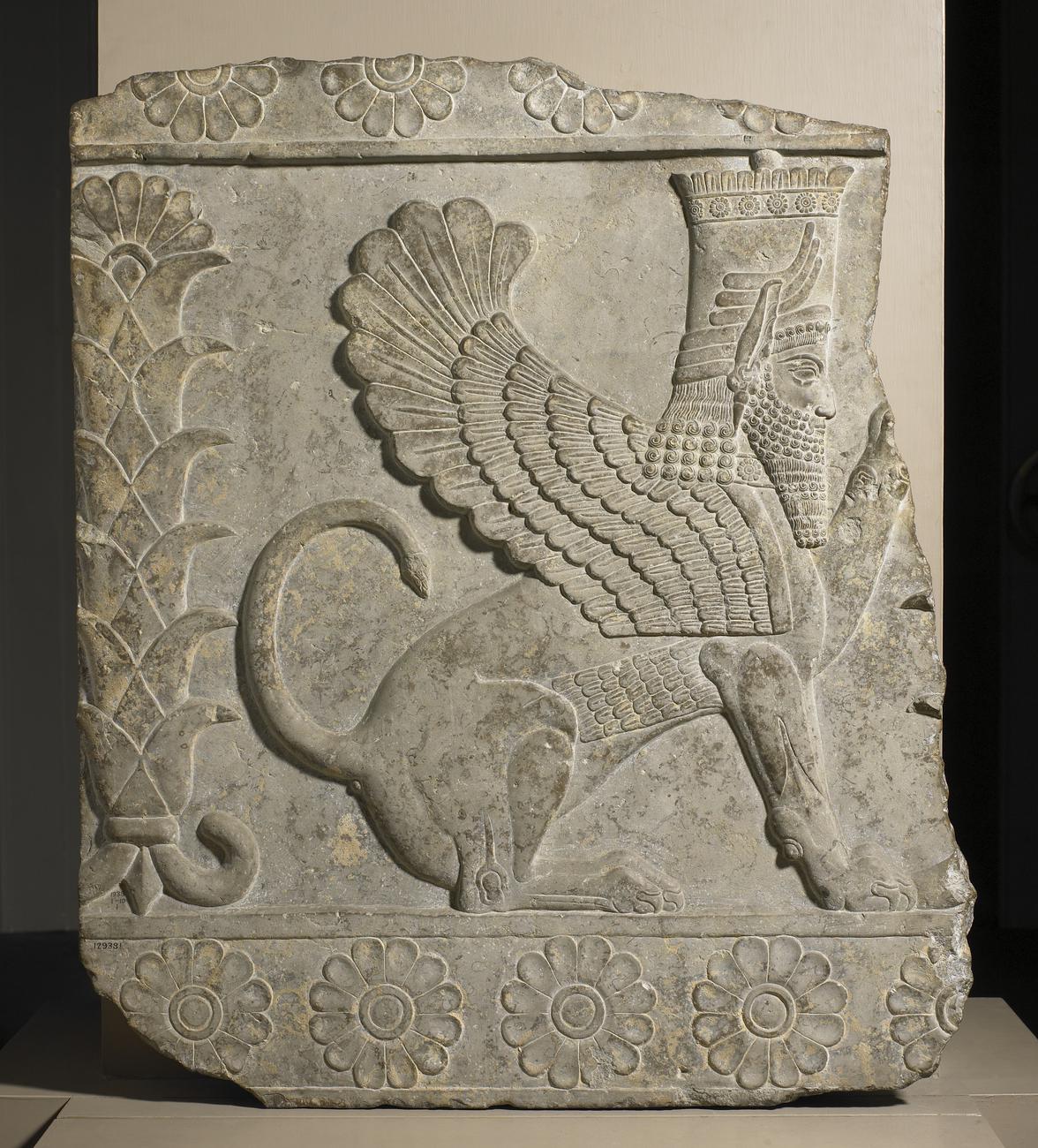
This is a remarkable group of wall reliefs from Persepolis, capturing fragments of once grand Achaemenid palaces. These limestone sculptures were carved as part of monumental façades—scenes of gods, guards, and ceremonies once lined grand staircases, palaces, and halls celebrating the might of Persian kings.
One striking relief shows a bearded male sphinx in a divine horned head-dress, its raised paw in a gesture of veneration toward Ahuramazda, the supreme Zoroastrian deity. This fragment was originally part of a pair flanking a winged disc and dates to the 4th century BC. The rosette patterns and the delicate lotus stem behind it reveal a careful and detailed hand.
Nearby, you’ll find a fragment of a chariot scene. Here, a Persian-dressed charioteer wears a twisted fillet and holds the reins of two horses. This relief comes from one of the grand staircases of the Apadana at Persepolis, a site excavated early in the 19th century. Its history is tied to British diplomats like Sir John McNeill and Sir Gore Ouseley, who brought these pieces to public collections in Britain.
These fragments are more than carved stone—they are windows into the splendor of an empire that once stretched from Egypt to the Indus.
See it in person
Wall reliefs from Persepolis is on display in Room 52 at the British Museum on Great Russell Street, Bloomsbury, London — free to enter. Choose British Museum on audioguide.london and type its audio guide stop number, 425, from the gallery label, or take a photo of it, to hear this free audio guide in six languages — no app download needed.
New, in beta. British Museum support has just launched and is still improving: over 1,000 objects so far, with more added all the time.