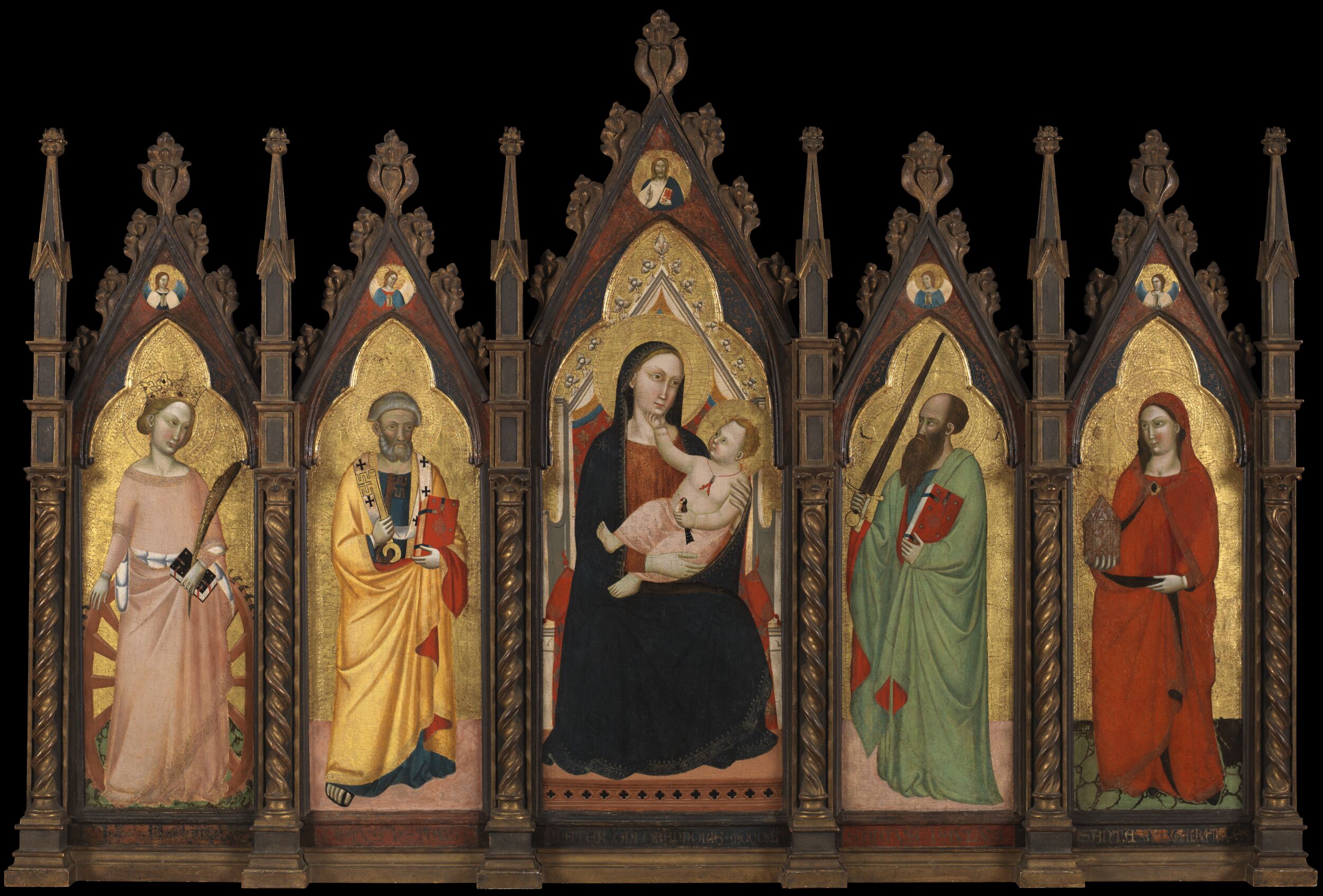
Virgin and Child (centre panel)
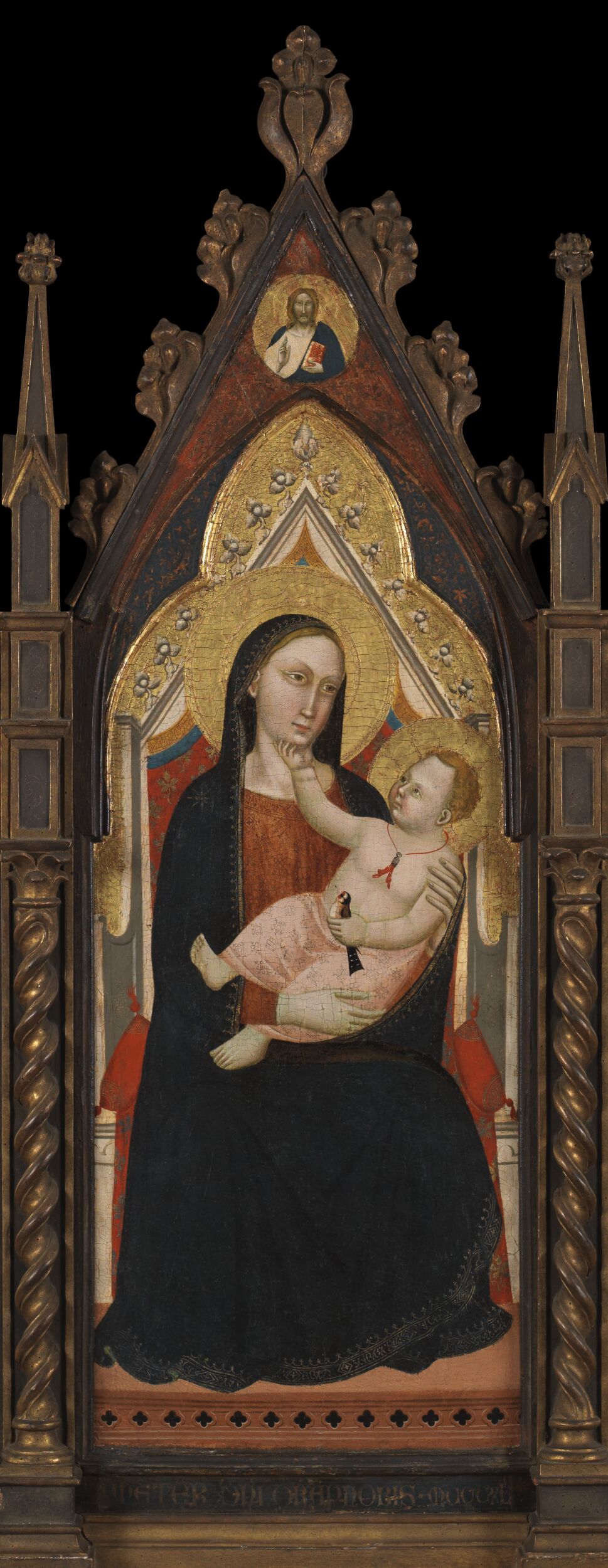
- Artist: Master of the Dominican Effigies
- Date: 1345
- Medium: tempera on panel
- Museum: The Courtauld Gallery
- Collection record: The Courtauld Gallery website
Listen to the free audio guide
In the museum now? Point your phone at the next artwork and hear its guide.
About this artwork
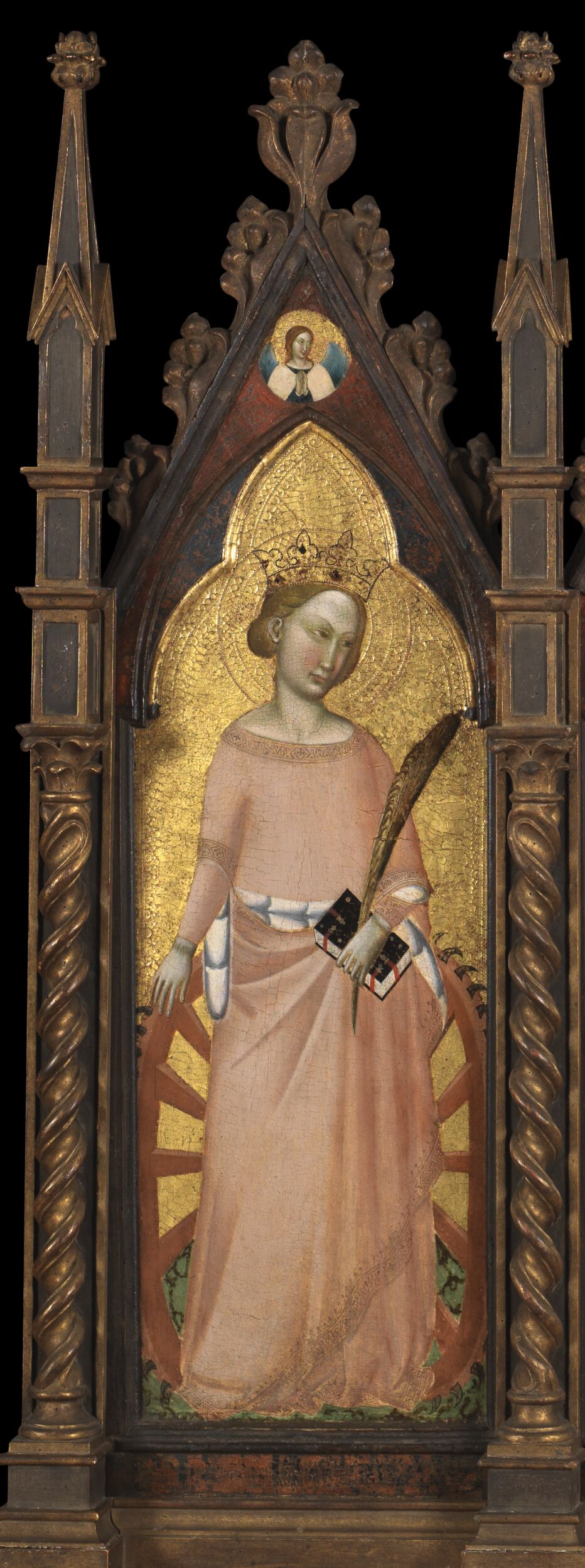
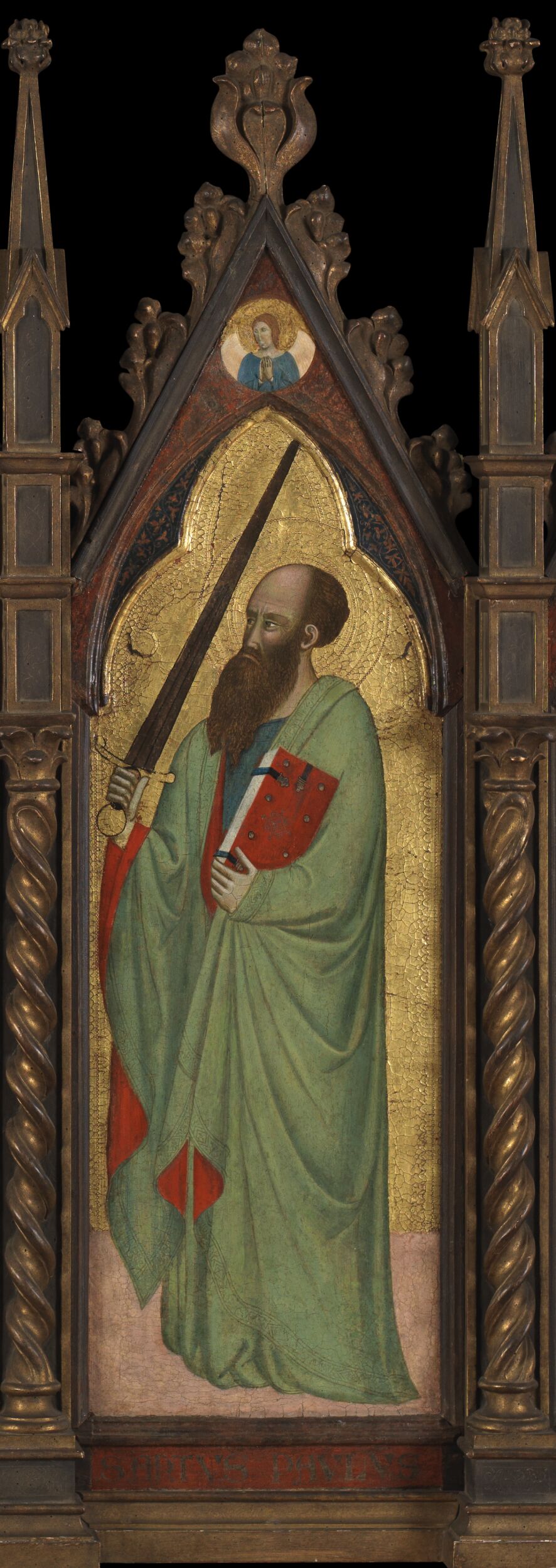
This is the Virgin and Child (centre panel) by Master of the Dominican Effigies. Created in 1345, it’s a tempera on panel that shows the Florentine master’s gift for illumination – a skill he likely honed under Pacino di Bonaguida. The composition echoes Bernardo Daddi, the influence visible in the delicate drapery and the serene gestures of the Virgin and Child.
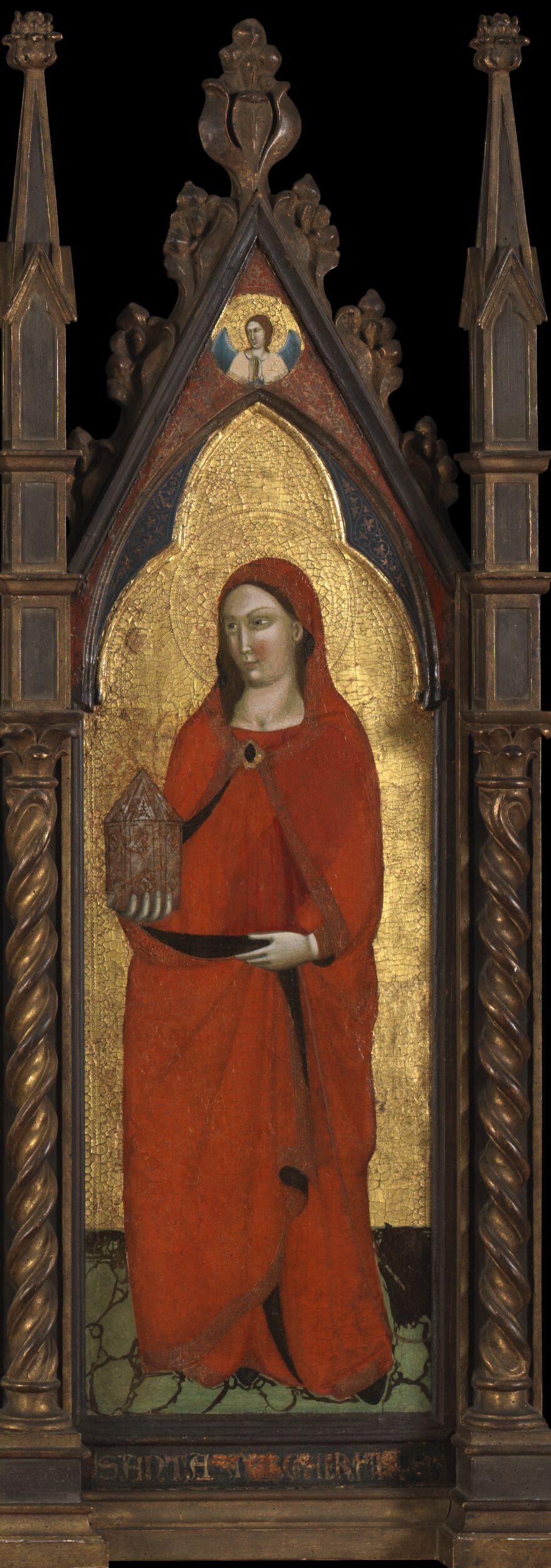
Surrounding the holy couple, the saints are all familiar faces from the devotional canon of the time. One detail that catches the eye is the figure at the far right: she bears the inscription that identifies her as Saint Margaret, although the painting ultimately depicts Mary Magdalene. The dragon that once marked Margaret’s patronage still clings to her left wrist, a subtle reminder of her early identity. This small iconographic trick hints at the workshop’s quick adaptation to changing icon demands.
Notice the play of light on the Virgin’s veil – a testament to the artist’s mastery of tempera, allowing the gold leaf to shimmer in a way that feels almost manuscript‑like. The overall harmony between the central panel and its supporting figures reflects the master’s dual love for narrative clarity and theological depth, hallmarks of mid‑14th‑century Florentine art.
See it in person
Virgin and Child (centre panel) hangs in The Courtauld Gallery at Somerset House, London. Point your phone at any artwork there and audioguide.london plays a free audio guide in six languages — no app download needed.