Polyptych - Virgin and Child Enthroned with Four Saints
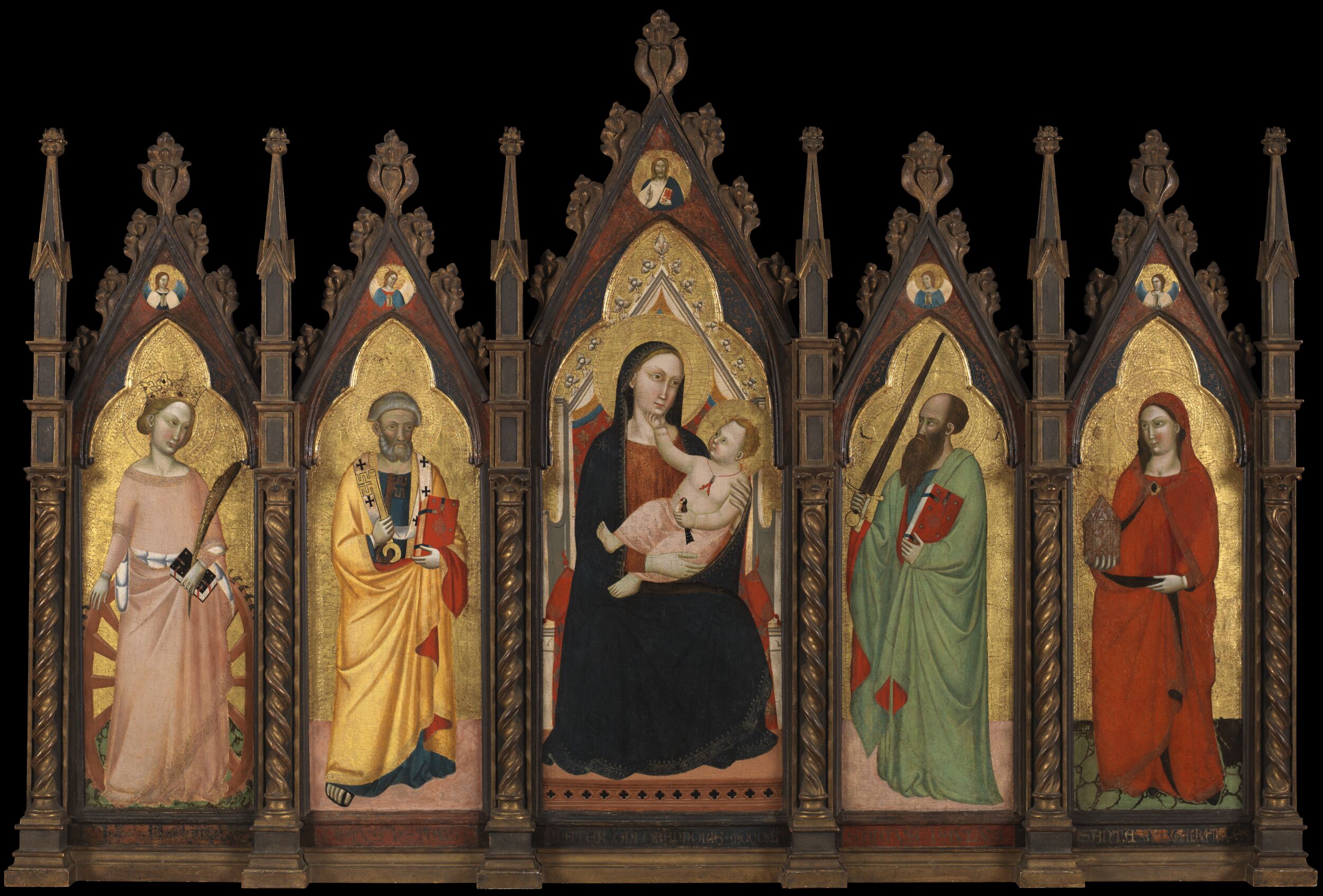
- Artist: Master of the Dominican Effigies
- Date: 1345
- Medium: tempera on panel
- Museum: The Courtauld Gallery
- Collection record: The Courtauld Gallery website
Listen to the free audio guide
In the museum now? Point your phone at the next artwork and hear its guide.
About this artwork
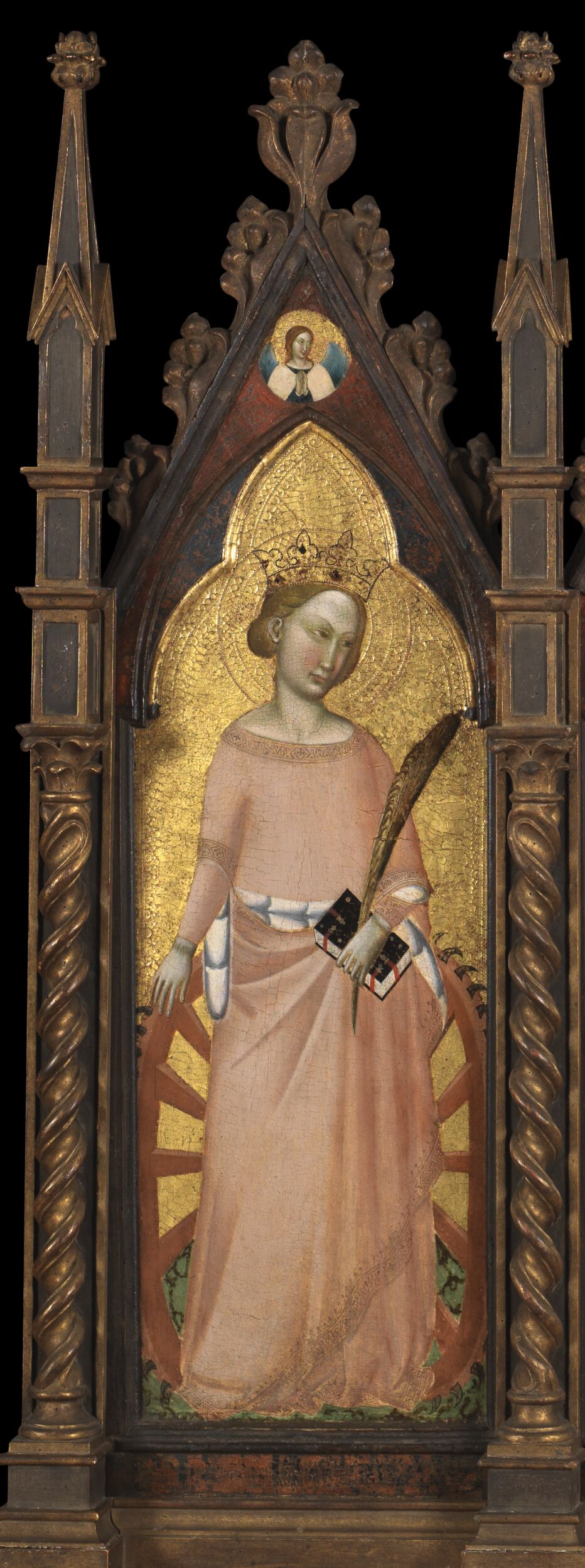
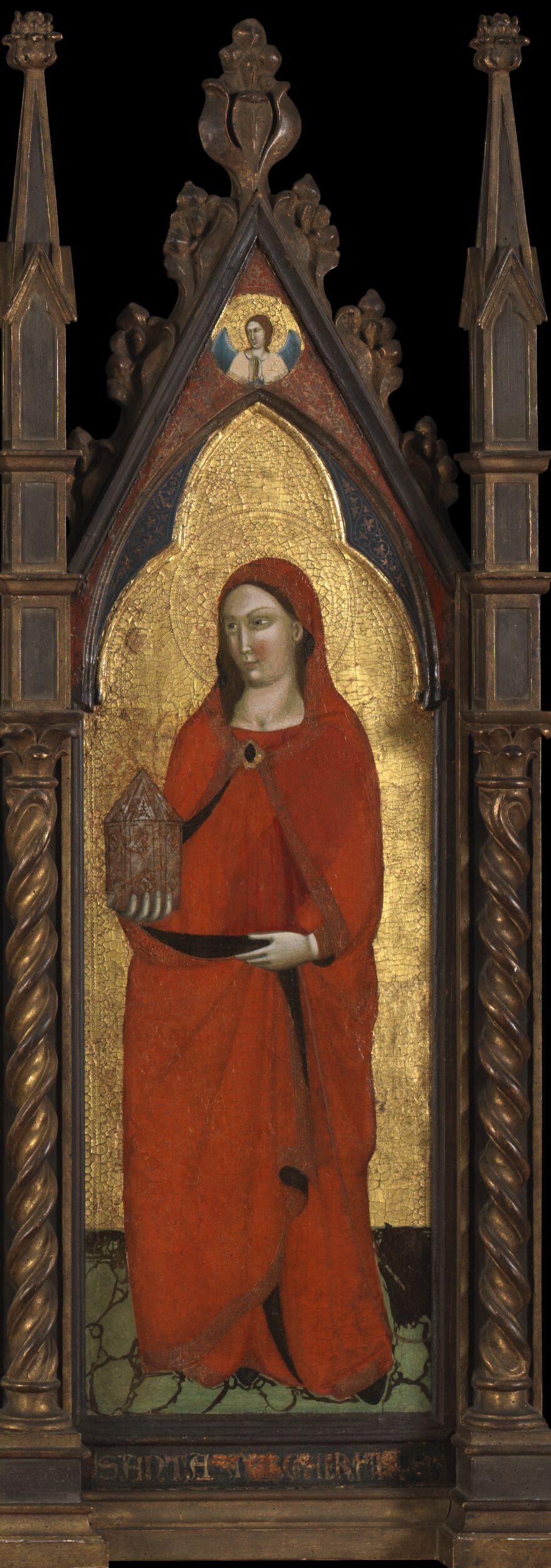
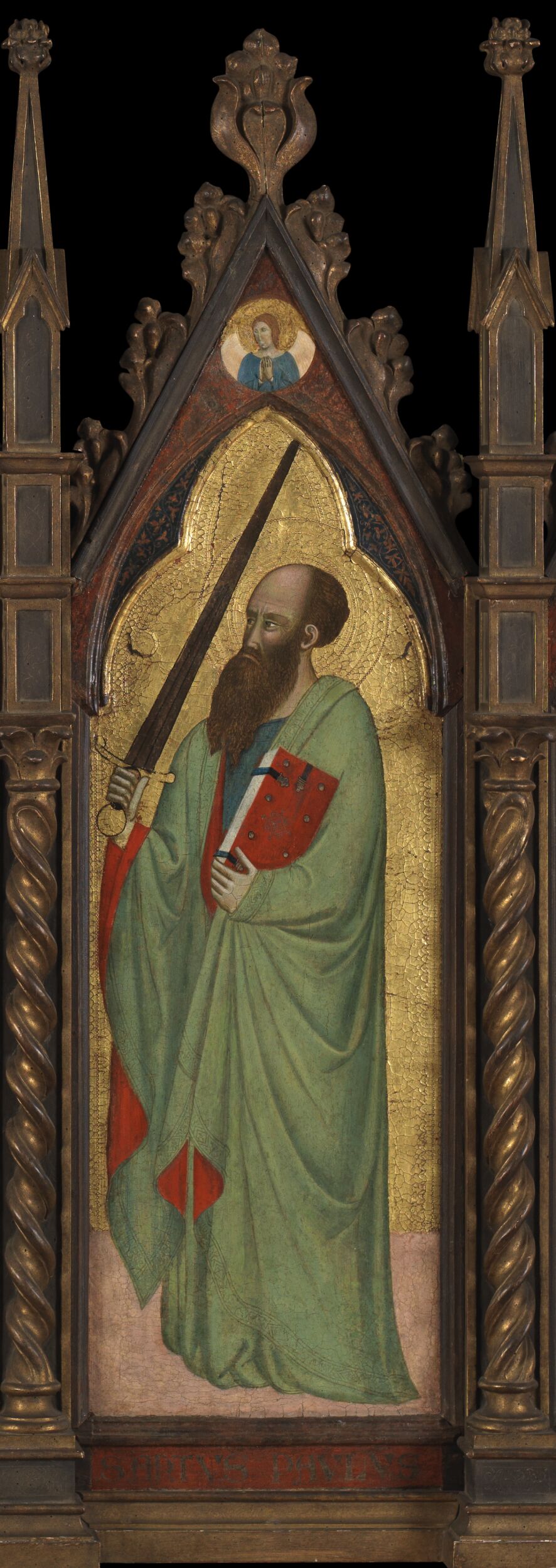
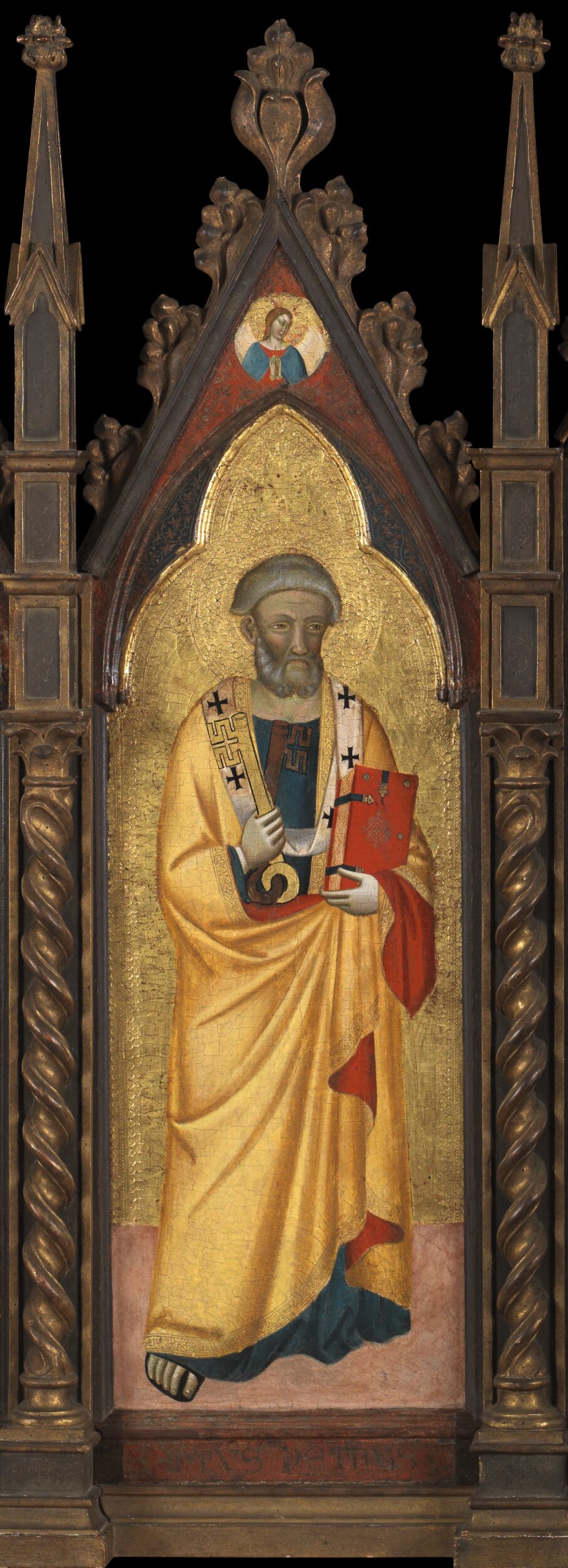
This is the Polyptych – Virgin and Child Enthroned with Four Saints by Master of the Dominican Effigies. Painted in 1345 in Florence, the piece shows a man who probably apprenticed under Pacino di Bonaguida, a master of manuscript illumination. You can see that skill here – the tiny, intricate details around the edges, the delicate gilding that catches the light like a manuscript page.
The composition itself follows a clear hierarchy: the Virgin and Child sit center stage, radiating calm, while four saints flank them. None of the saints are surprising – they’re the usual suspects for a Florentine altarpiece. What’s fascinating is Mary Magdalene’s placement at the far right. She was originally painted as Saint Margaret, as the inscription beneath her confirms. Even more intriguing, you can still spot Margaret’s dragon—her traditional attribute—hovering near her, a subtle hint that the artist didn’t abandon her iconography entirely.
The tempera on panel shows a delicate, almost translucent quality, typical of the mid‑14th century. Notice how the master’s hand echoes Bernardo Daddi’s influence, especially in the way the figures are rendered: rounded, soft, and imbued with a quiet dignity. It’s a masterful blend of manuscript precision and altarpiece grandeur, making this polyptych a remarkable snapshot of Florentine art in the 1300s.
See it in person
Polyptych - Virgin and Child Enthroned with Four Saints hangs in The Courtauld Gallery at Somerset House, London. Point your phone at any artwork there and audioguide.london plays a free audio guide in six languages — no app download needed.