Vessel with flowers (kundika)
- Audio guide stop: 326
- Gallery: Room 67
- Culture: Goryeo Dynasty
- Made in: Korea
- Date: 12thC-13thC
- Object type: sprinkler, kundika
- Materials: stoneware
- Museum number: 1936,1012.198.a-b
- Museum: The British Museum
- Collection record: British Museum website
- Image © The Trustees of the British Museum, shared under a CC BY-NC-SA 4.0 licence.
Listen to the free audio guide
About this object
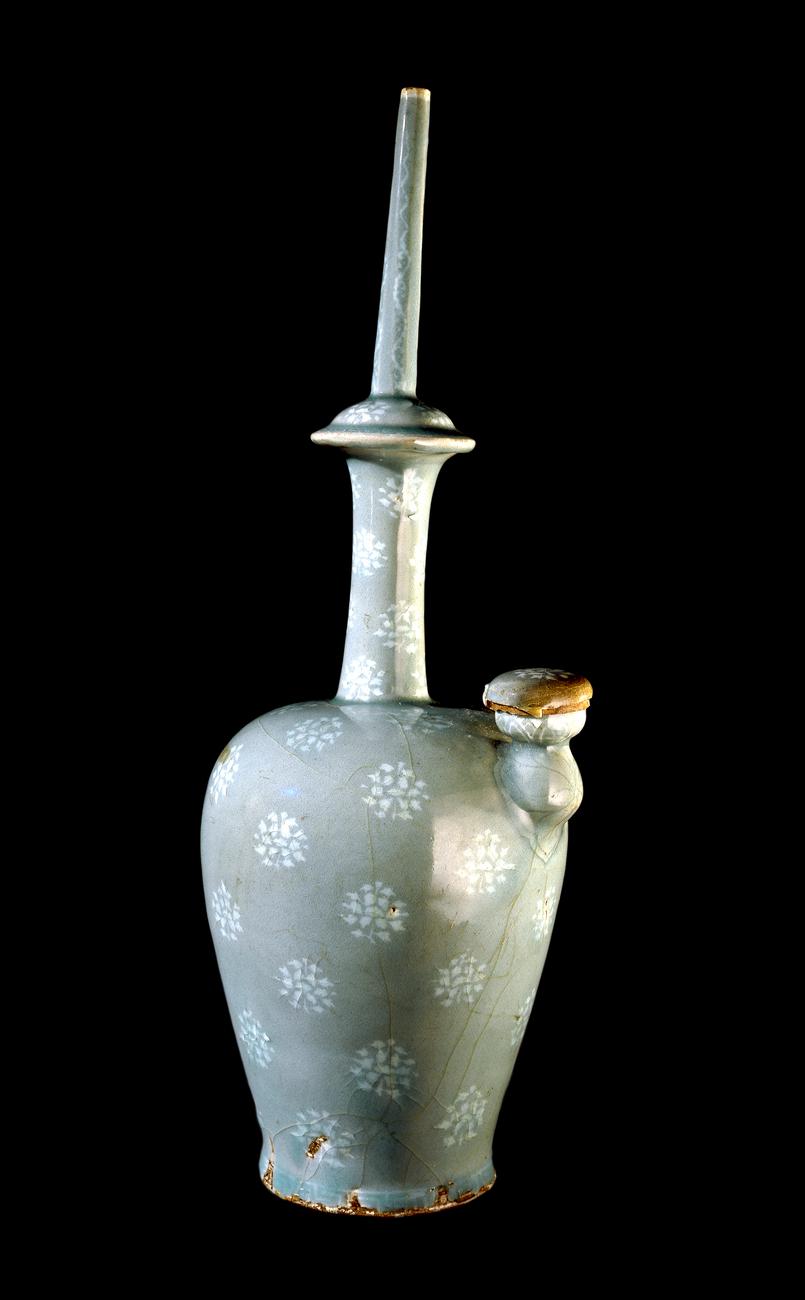
This is a beautiful Goryeo Dynasty stoneware sprinkler known as a kundika or jeongbyeong. It was used in Buddhist rituals to purify the ground—very much like a ceremonial watering can.
Take a look at the detailed inlaid decoration. The surface is covered in stylized peonies and branches, created using a white slip inlay technique beneath a celadon glaze. The color is a soft, semi-transparent green, with the intricate design clearly visible.
Notice the slender, spouted shape and the hinged lid. Water was poured in through the spout and poured out through the top. This object reflects the craftsmanship and aesthetics of 12th to 13th century Korea. The design echoes common floral and fret motifs found in Korean Buddhist art of the same era.
This kundika is a remarkable example of Goryeo celadon work and is very similar to pieces preserved in Korea’s Goryeo Celadon Museum.
See it in person
Vessel with flowers (kundika) is on display in Room 67 at the British Museum on Great Russell Street, Bloomsbury, London — free to enter. Choose British Museum on audioguide.london and type its audio guide stop number, 326, from the gallery label, or take a photo of it, to hear this free audio guide in six languages — no app download needed.
New, in beta. British Museum support has just launched and is still improving: over 1,000 objects so far, with more added all the time.