Vase
- Gallery: Room 2a
- Maker: Workshop of Orazio Fontana
- Made in: Urbino (vase); Paris (France) (mounts)
- Date: 1565-1571 (circa (vase)); 1765 (circa (mounts))
- Object type: vase
- Materials: earthenware
- Museum number: WB.61.b
- Museum: The British Museum
- Collection record: British Museum website
- Image © The Trustees of the British Museum, shared under a CC BY-NC-SA 4.0 licence.
Listen to the free audio guide
In the museum now? Point your phone at the next object and hear its guide.
About this object
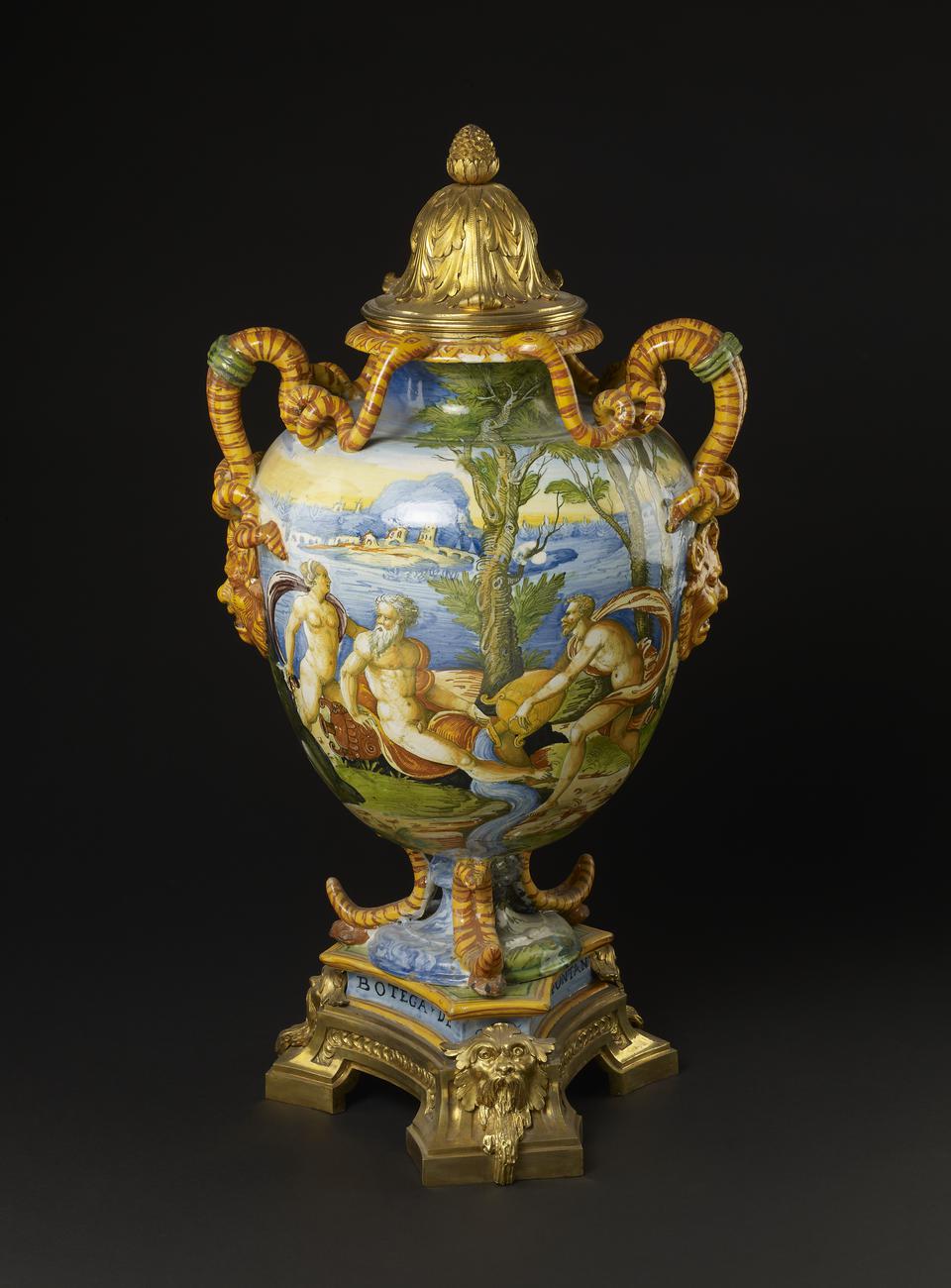
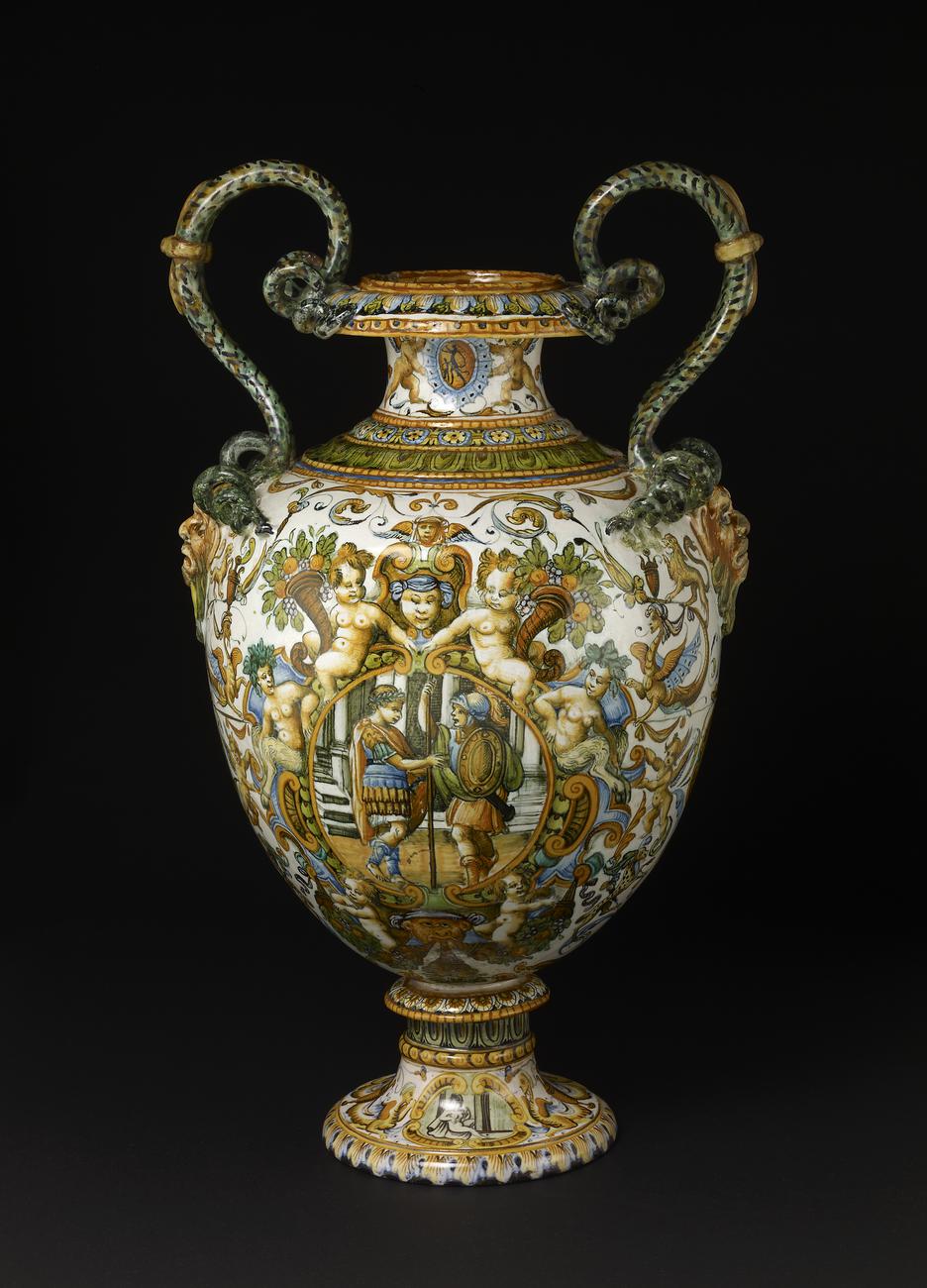
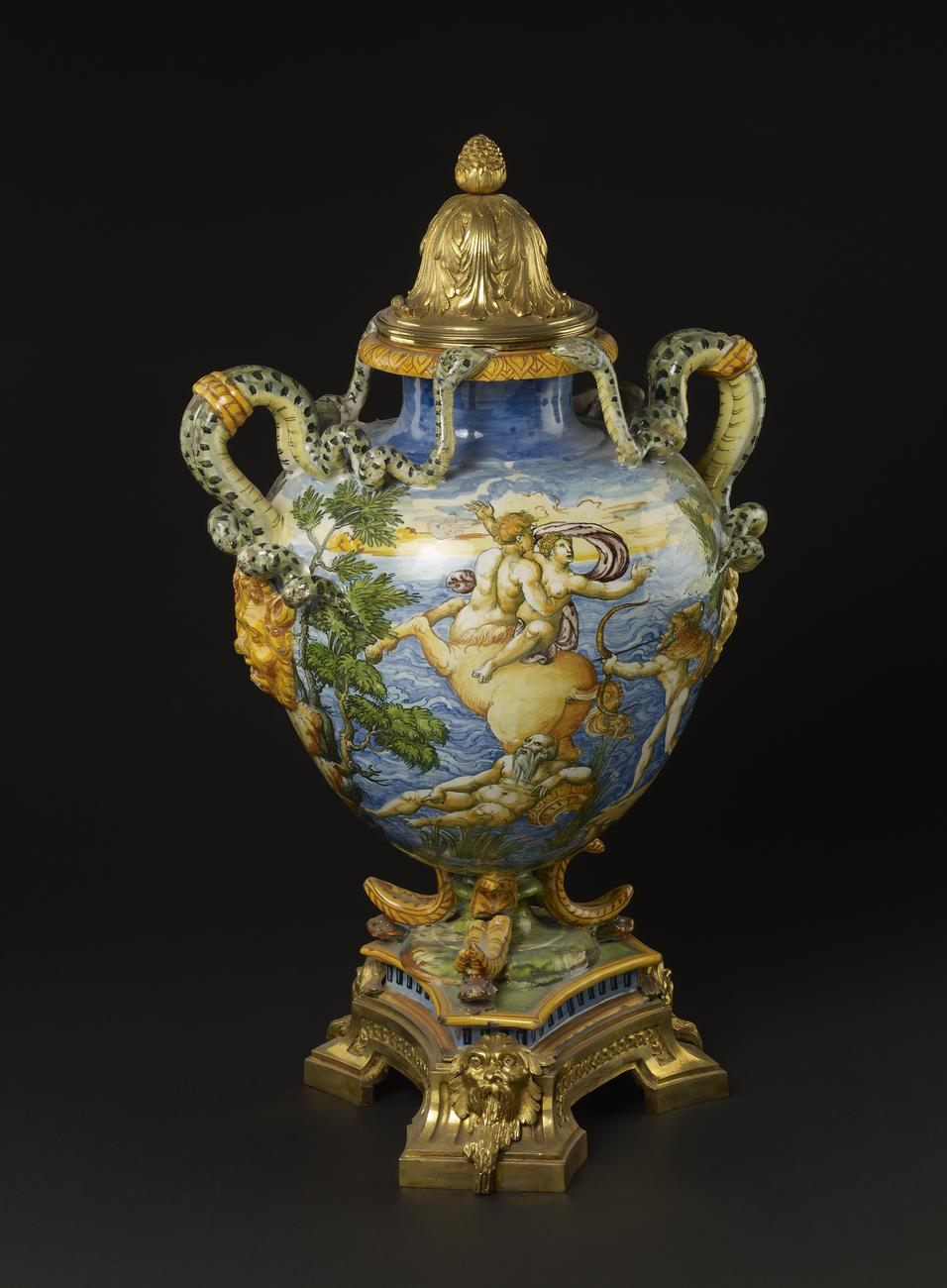
Before you is a large oval vase, created in Urbino, Italy. Its standout feature is the double-serpent handles on the shoulders, a striking and elegant touch. The vase is made of earthenware and coated in a tin-glaze, giving it a smooth, pale surface. One side is painted with a scene of Hercules and Deianeira—mythological figures known from the stories of Ovid.
These vases were once functional, perhaps used in pharmacies in the 16th century. But over time, they became prized for decoration. This example came to Britain in the 1700s, when it was bought in Paris and later passed through a series of notable collectors. Gilt-metal mounts were added in Paris to enhance its appearance, making it appear even more special and ornate. By the 19th century, it was among the treasures donated to the British Museum by Baron Ferdinand Rothschild.
The design is closely related to Renaissance art, and the painted scene was likely based on prints by master artist Caraglio.
See it in person
Vase is on display in Room 2a at the British Museum on Great Russell Street, Bloomsbury, London — free to enter. Choose British Museum on audioguide.london and take a photo of it to hear this free audio guide in six languages — no app download needed.
New, in beta. British Museum support has just launched and is still improving: over 1,000 objects so far, with more added all the time.