Triptych with the Crucifixion
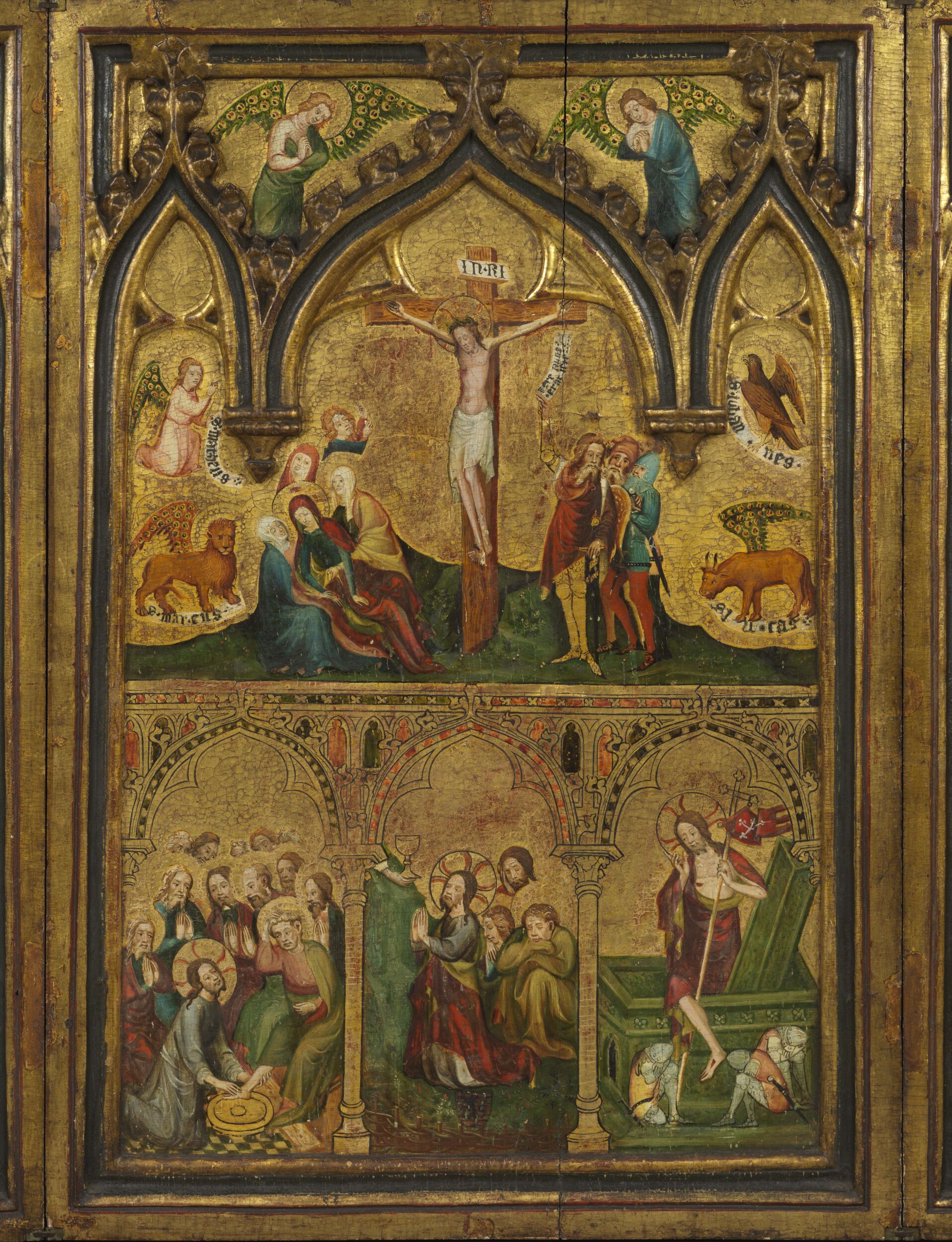
- Artist: Germany (West) late 14th century
- Date: c. 1374
- Medium: oil on panel
- Museum: The Courtauld Gallery
- Collection record: The Courtauld Gallery website
Listen to the free audio guide
About this artwork
This is "Triptych with the Crucifixion," a 14th‑century work painted in West Germany around 1374, executed in oil on panel. The piece is one of the very few surviving triptychs from northern Europe of that era. As you see it, the three hinged panels are opened, but the wings have been sawn apart at some point, allowing us to view the fronts and backs separately—so you can imagine the closed and open states side by side.
The outer panels feature saints closely linked to the Franciscan order, including the famous scene of Saint Francis preaching to the birds. These side scenes set a devotional tone and frame the central narrative. Inside, the triptych reads like an illustrated gospel: small, delicately rendered figures capture key moments from the life of Christ and the Virgin Mary. The main panel centers on the Crucifixion, surrounded by panels that trace the Passion’s sequence, echoing the miniature style of contemporary religious manuscripts.
Notice how the artist balances dramatic narrative with fine detail—each figure is small enough to feel intimate, yet the overall composition remains clear and impactful. This work not only reflects the devotional practices of its time but also showcases the technical skill and storytelling prowess of West German artisans in the late 14th century.
See it in person
Triptych with the Crucifixion hangs in The Courtauld Gallery at Somerset House, London. Point your phone at any artwork there and audioguide.london plays a free audio guide in six languages — no app download needed.
More from The Courtauld Gallery

Crucifixion triptych (formerly known as the Estouteville Triptych)

Crucifixion triptych (formerly known as the Estouteville Triptych) (left wing)

Crucifixion triptych (formerly known as the Estouteville Triptych) (panel previously attached to back of left wing, bottom) - audience of birds

Crucifixion triptych (formerly known as the Estouteville Triptych) (panel previously attached to back of left wing, top) - Saints Clare and Paul