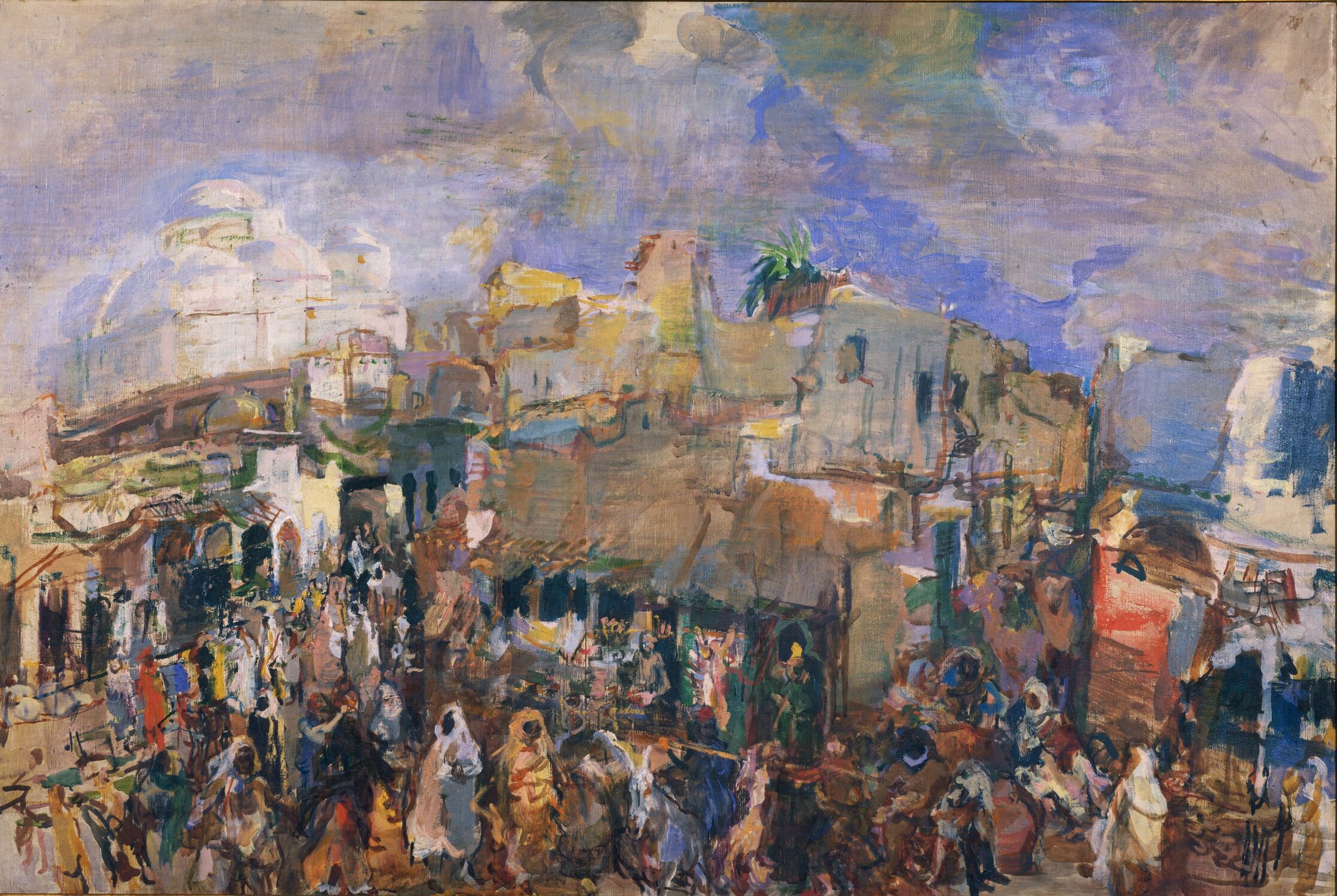
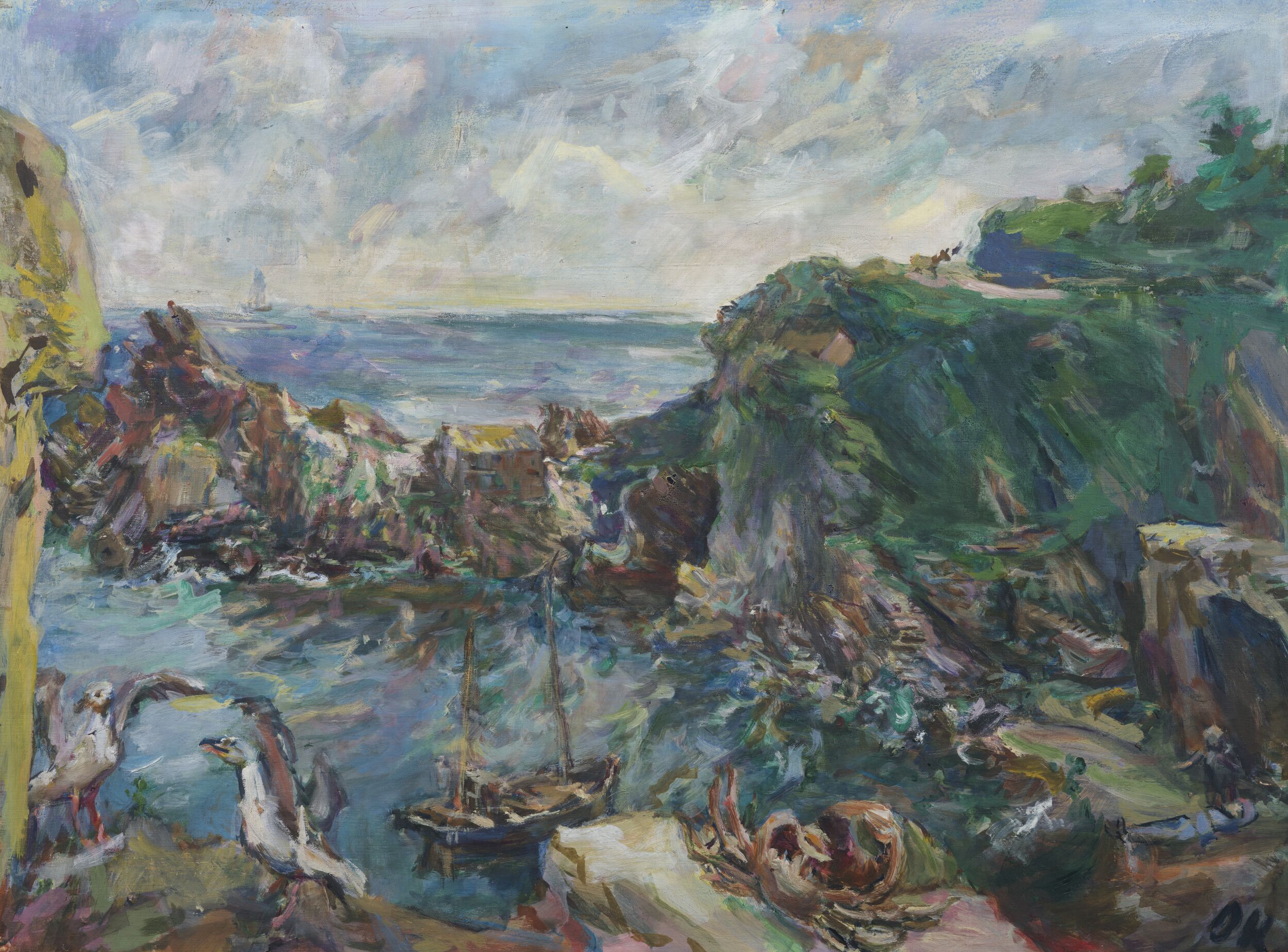
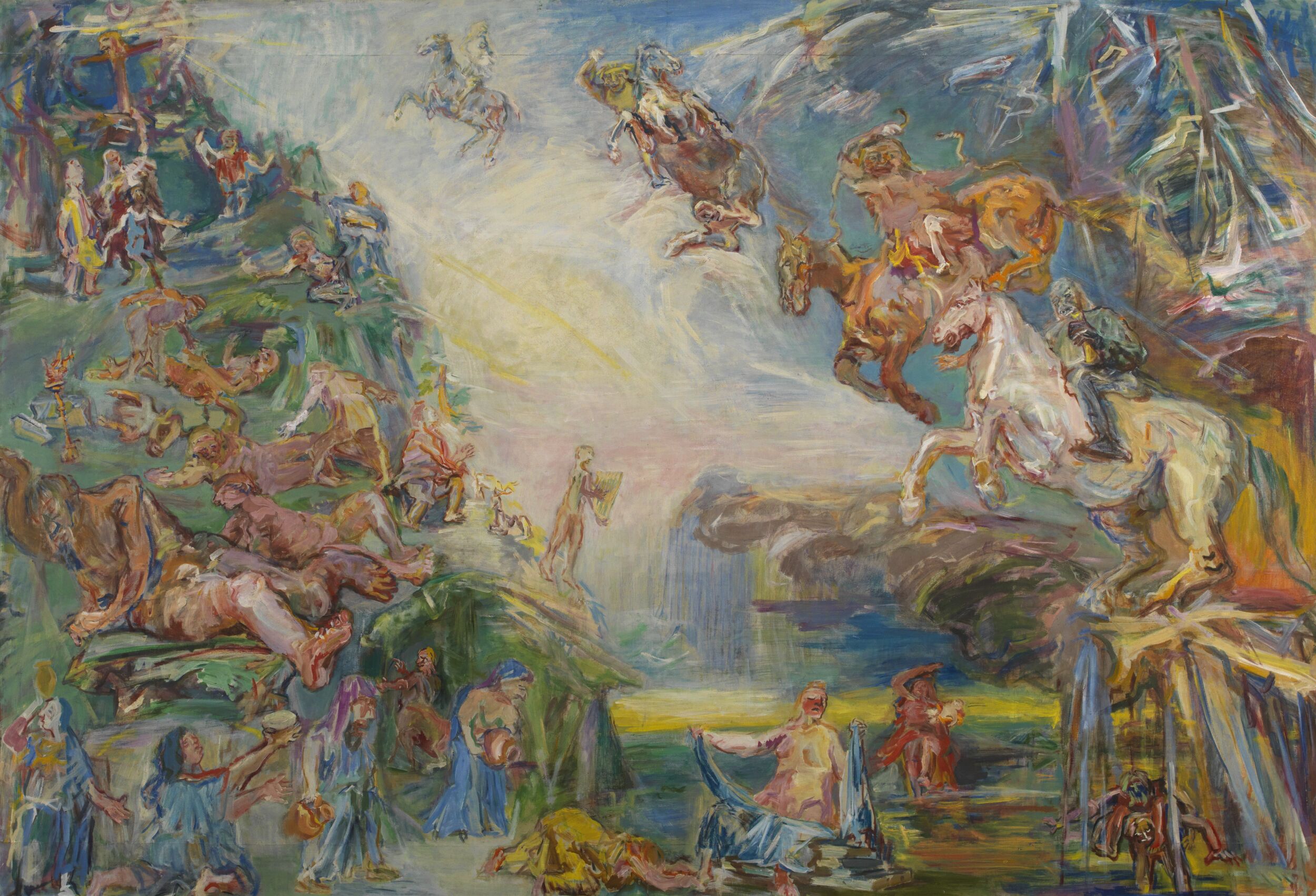
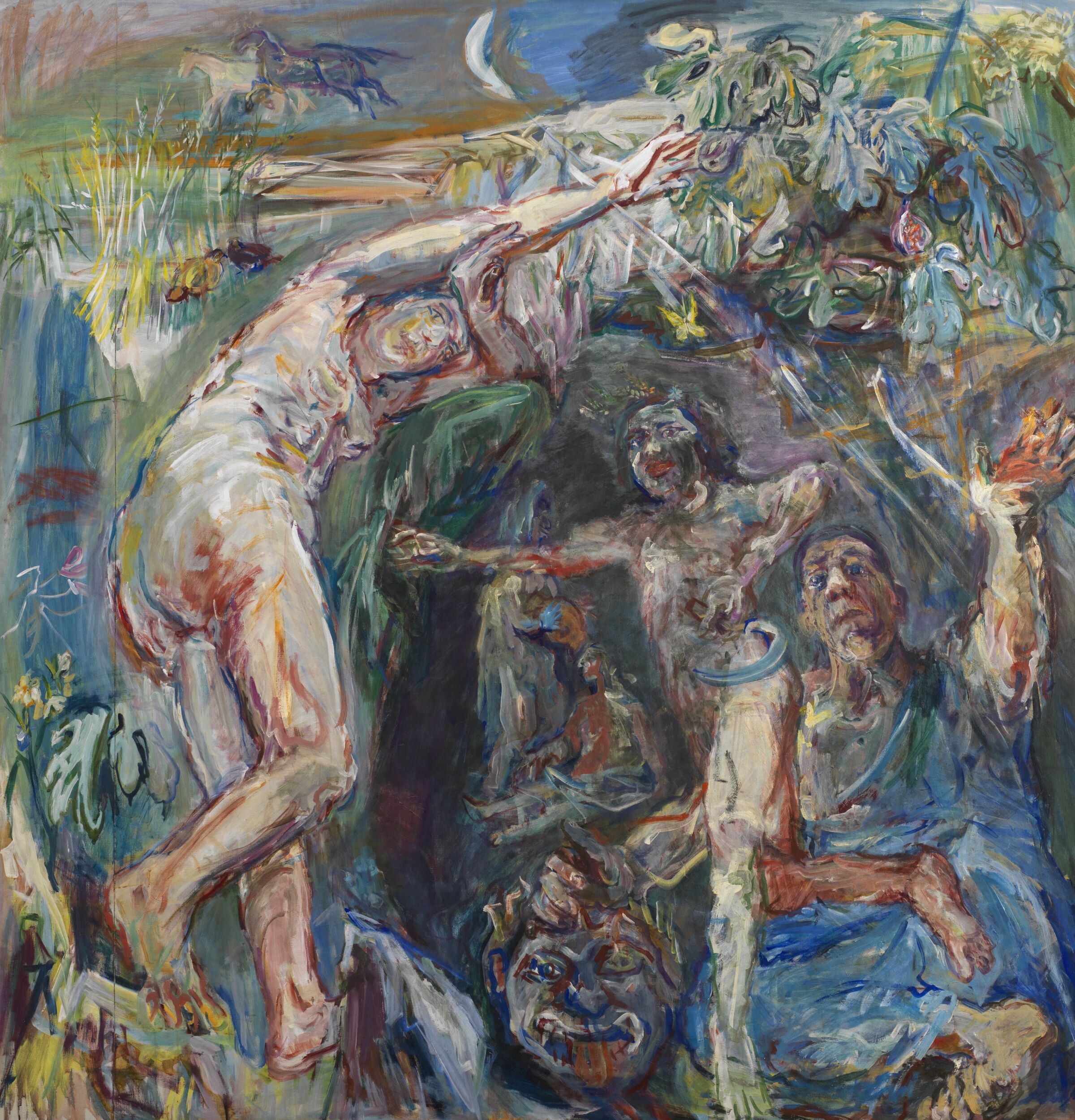
Triptych - The Myth of Prometheus
- Artist: Oskar Kokoschka
- Date: (January to July) 1950
- Medium: medium : material : oil & tempera & support : material : canvas
- Museum: The Courtauld Gallery
- Collection record: The Courtauld Gallery website
Listen to the free audio guide
About this artwork
This is the Triptych - The Myth of Prometheus by Oskar Kokoschka. Painted between January and July 1950 in oil and tempera on canvas, it was commissioned by Count Antoine Seilern for the ceiling of his London townhouse at 56 Princes Gate, South Kensington. Seilern, an Austrian émigré like Kokoschka, had gathered the artist’s work during World War II after both fled Nazi‑occupied Europe. After the war the house became a hub for scholars and students, and the triptych was meant to echo the Baroque masterpieces of Rubens and Tiepolo that dominated Seilern’s collection.
Kokoschka channels vigorous figural movement and emotional intensity, using turbulent brushwork and deep perspectives that pull viewers into the scene. He deliberately opposes the then‑rising abstraction, calling it cold and two‑dimensional. In the centre he places an explosive depiction of the biblical Apocalypse; on the left, Persephone’s escape from Hades; on the right, the punishment of Prometheus. The juxtaposition serves as a warning against human intellectual arrogance, a lesson shaped by the devastation of World War II. Kokoschka believed art could awaken society to the peril of losing compassion in the name of progress.
See it in person
Triptych - The Myth of Prometheus hangs in The Courtauld Gallery at Somerset House, London. Point your phone at any artwork there and audioguide.london plays a free audio guide in six languages — no app download needed.