Polperro I
- Artist: Oskar Kokoschka
- Date: 1939 - 1940
- Medium: oil on canvas
- Museum: The Courtauld Gallery
- Collection record: The Courtauld Gallery website
Listen to the free audio guide
About this artwork
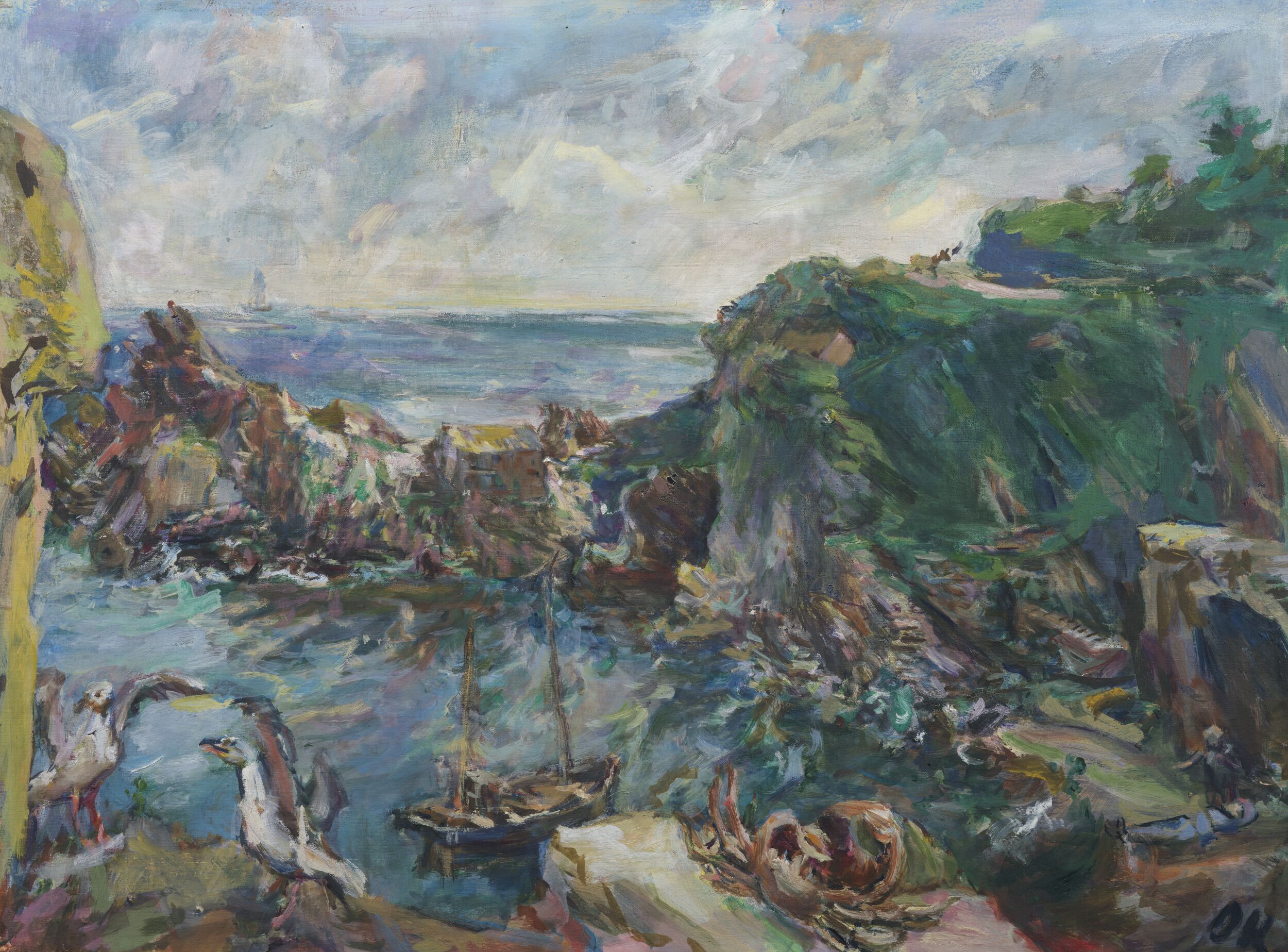
This is the “Polperro I” by Oskar Kokoschka. Painted in 1939‑1940, oil on canvas, it captures a quiet harbor in the Cornish fishing village of Polperro, a place where Kokoschka stayed briefly after fleeing Prague for London on the eve of World War II.
The scene is deceptively calm: a fishing boat snug against the shore, the water reflecting a muted sky. Yet the composition holds a darker undercurrent. In the lower right corner a woman kneels beside a prostrate body, a stark, mournful gesture that hints at loss and the looming conflict.
More unsettling is the foreground, where an oversized crab dominates the frame. Kokoschka described it as a monster of disaster—its exaggerated, almost grotesque proportions jarring against the otherwise picturesque setting. This visual intrusion feels like a foreshadowing of the artist’s growing unease as war approached.
Through these symbolic elements—mourning, the crab, the harbor’s stillness—Kokoschka shifts toward a more political, allegorical voice. “Polperro I” invites viewers to read between the calm waves and confront the anxieties that marked the late 1930s.
See it in person
Polperro I hangs in The Courtauld Gallery at Somerset House, London. Point your phone at any artwork there and audioguide.london plays a free audio guide in six languages — no app download needed.