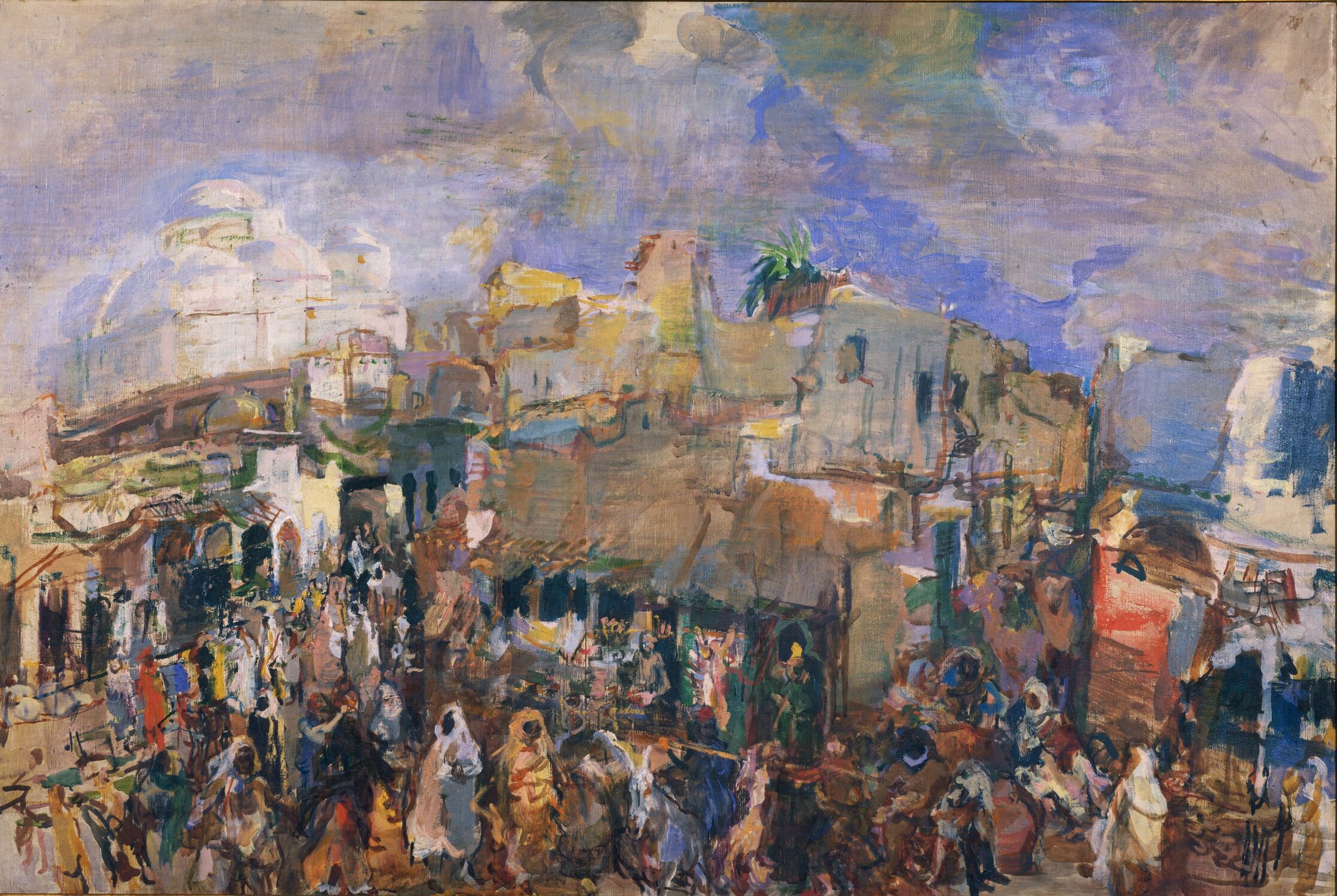
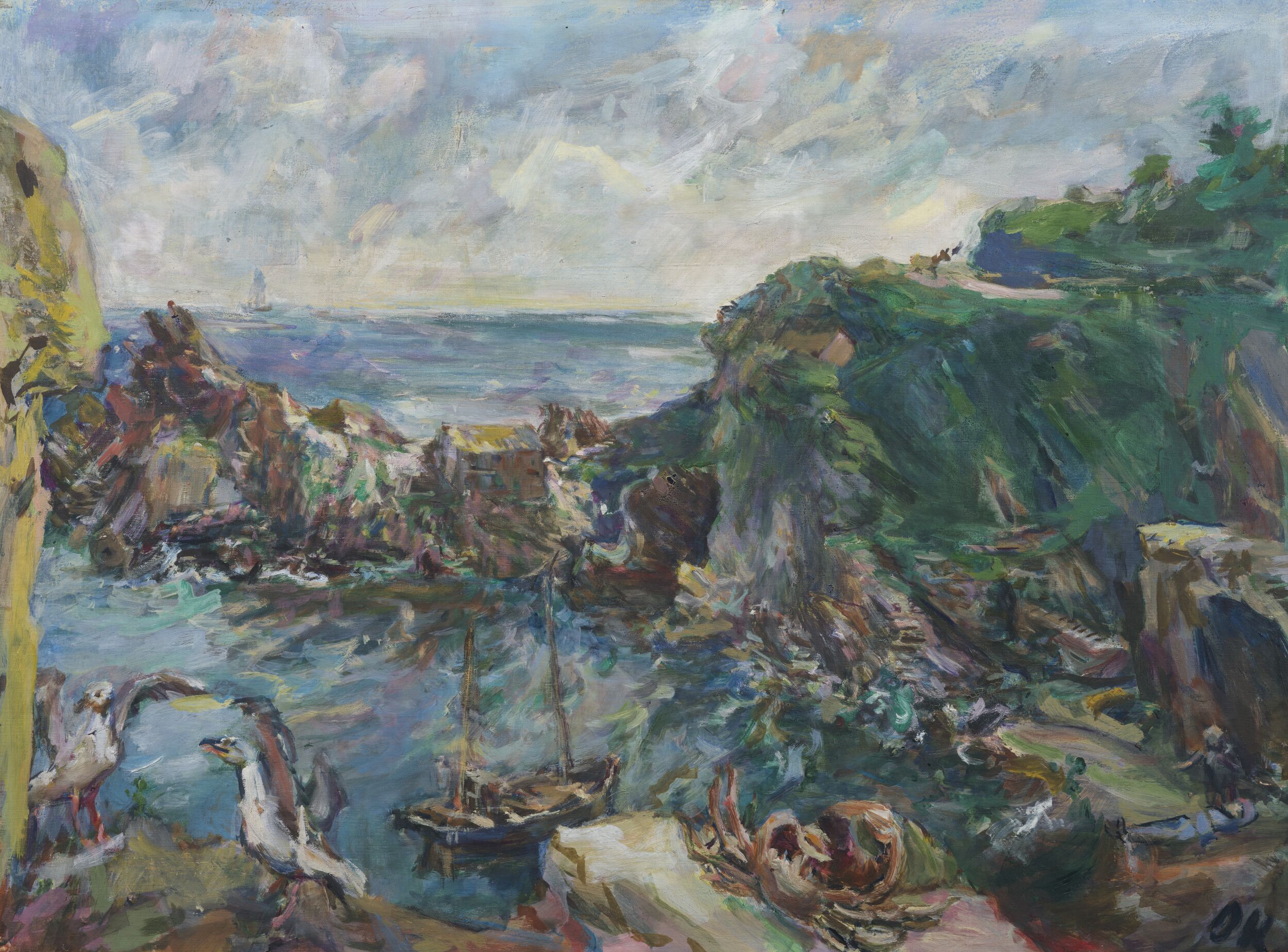
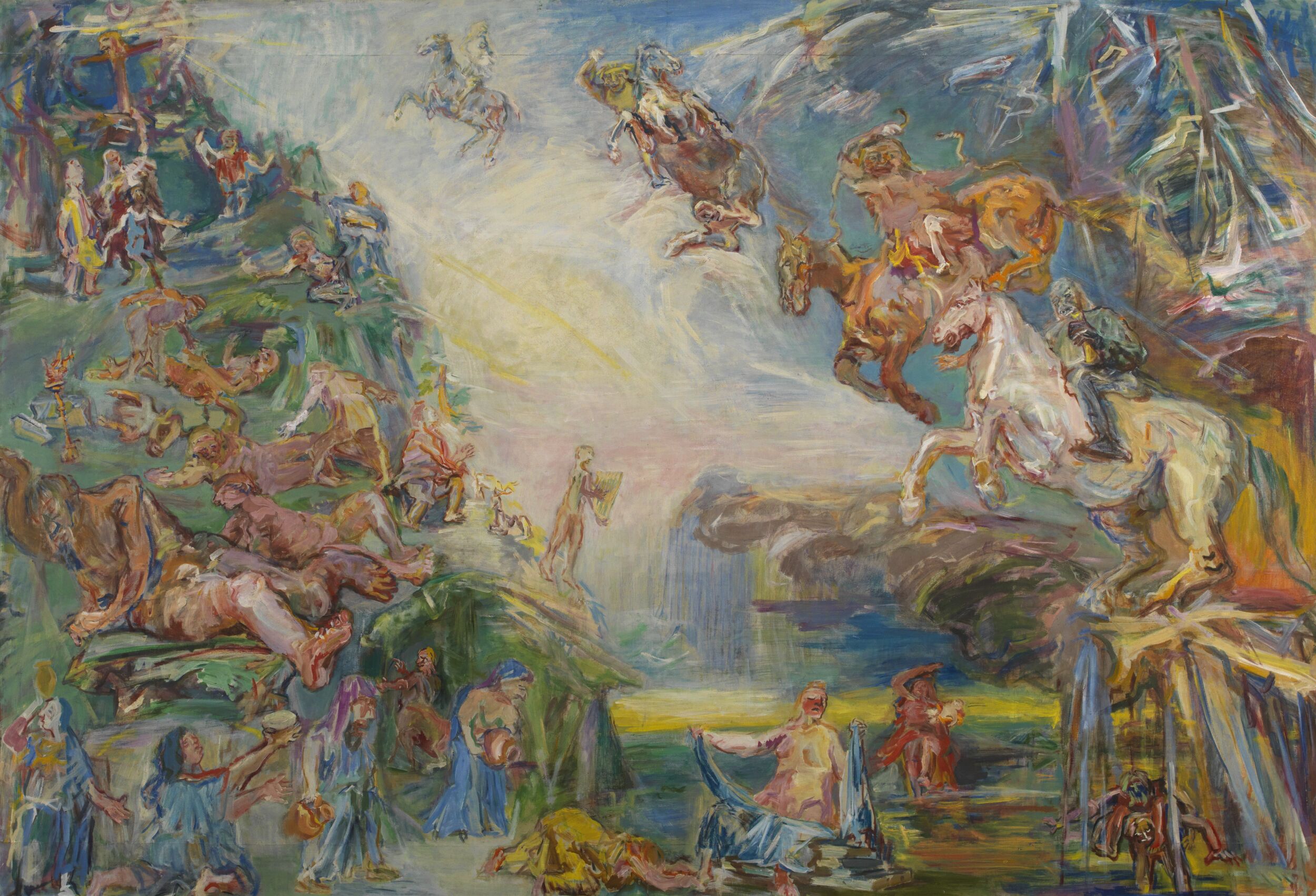
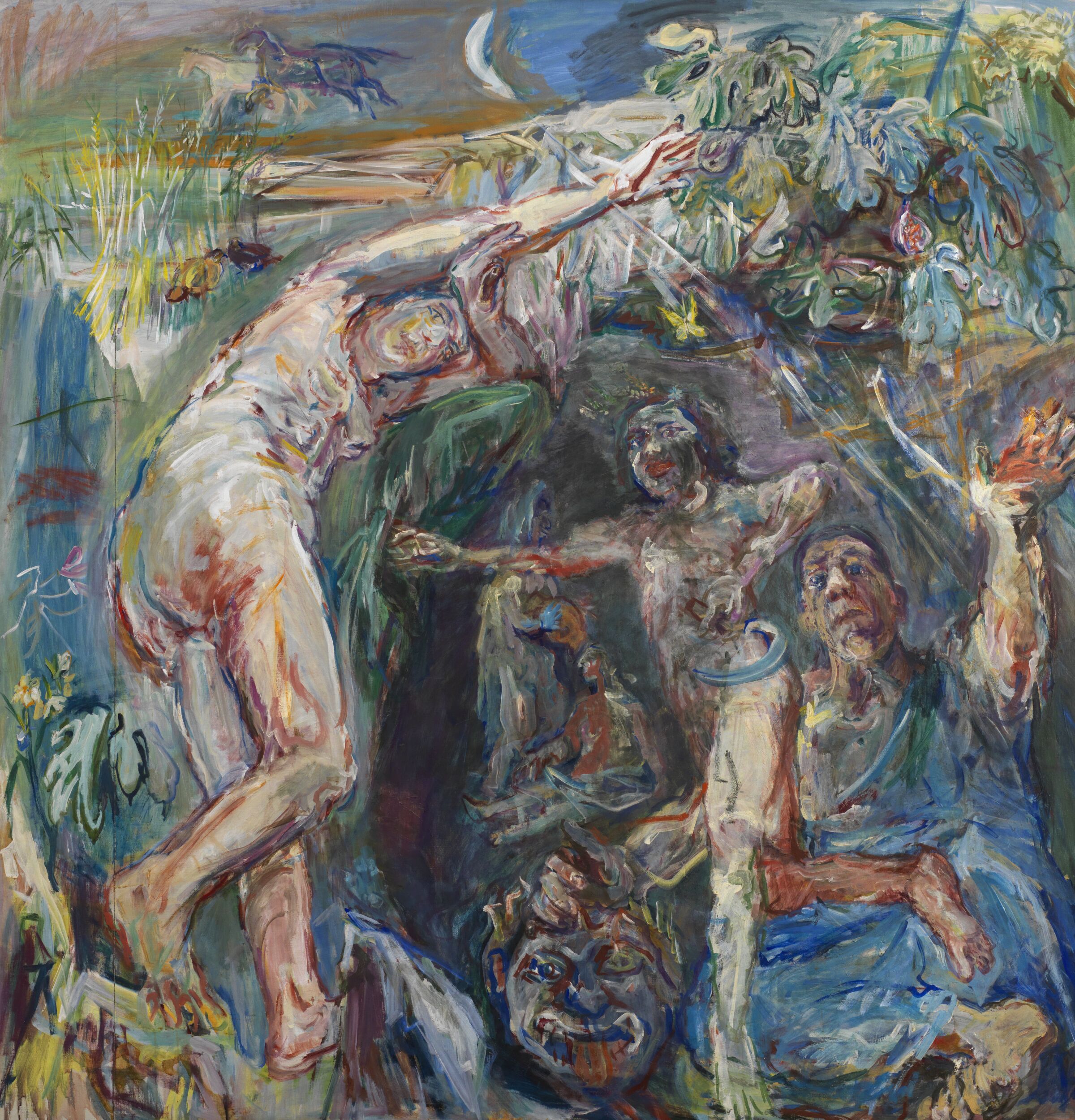
Triptych - Hades and Persephone
- Artist: Oskar Kokoschka
- Date: (January to July) 1950
- Medium: oil and tempera on canvas
- Museum: The Courtauld Gallery
- Collection record: The Courtauld Gallery website
Listen to the free audio guide
About this artwork
This is the "Triptych – Hades and Persephone" by Oskar Kokoschka. Picture a large, oil‑and‑tempera canvas that covers a ceiling in a London townhouse. Count Antoine Seilern commissioned it in 1950 for the entrance hall of his home at 56 Princes Gate, South Kensington. Seilern and Kokoschka were both Austrian émigrés who fled Nazi persecution; the Count had already begun collecting the artist’s work during the war, and the house became a hub for scholars who admired his Old Master paintings.
Kokoschka, a passionate advocate of Baroque dynamism, uses this triptych to revive the vigorous movement and emotional intensity of artists like Rubens and Tiepolo. The brushwork is turbulent, the perspectives plunge, pulling you into the scene. By doing so, he rebuffs the abstract trend he saw as flat and cold, arguing that art must preserve humanity’s emotional core.
At the center we find an explosive depiction of the biblical Apocalypse. On the left, Persephone slips away from Hades, while on the right, Prometheus faces punishment. Together they form a cautionary tableau against human intellectual arrogance, a theme sharpened by Kokoschka’s experience of WWII, when he felt civilization had lost compassion in its march toward technological progress. The work, finished between January and July 1950, remains a powerful reminder of art’s potential to awaken society to looming crises.
See it in person
Triptych - Hades and Persephone hangs in The Courtauld Gallery at Somerset House, London. Point your phone at any artwork there and audioguide.london plays a free audio guide in six languages — no app download needed.