The Wrath of Achilles
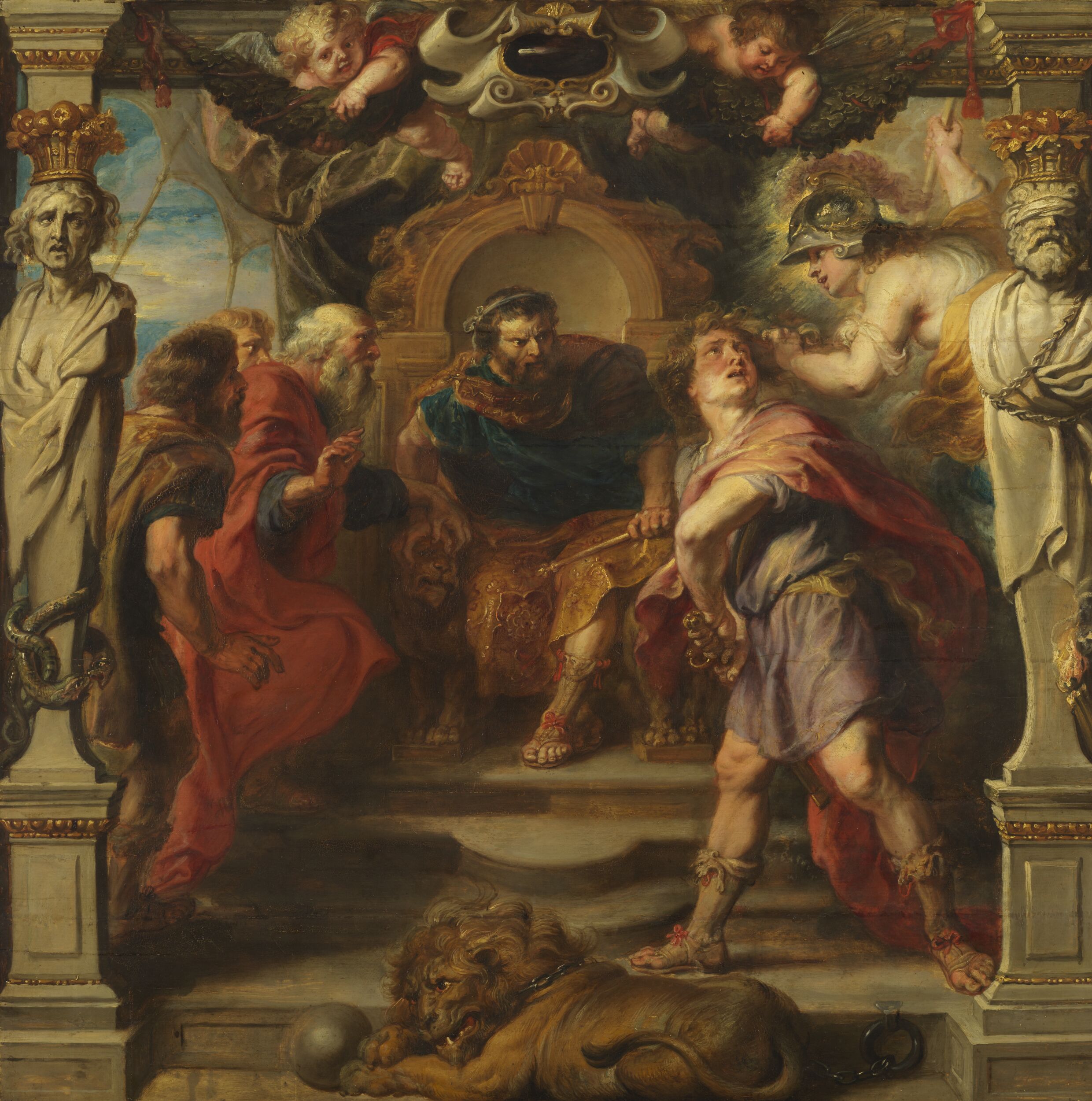
- Artist: Peter Paul Rubens
- Date: 1630-35
- Medium: oil on panel
- Museum: The Courtauld Gallery
- Collection record: The Courtauld Gallery website
Listen to the free audio guide
About this artwork
This is the “The Wrath of Achilles” by Peter Paul Rubens. Though it looks finished, the painting is actually a design for one of eight tapestries that portray the ancient Greek warrior Achilles. Rubens first sketched the scene in miniature before creating this oil on panel, and that sketch became the blueprint for a much larger, full‑scale tapestry.
The moment captured comes straight from Homer’s *Iliad*: the goddess Minerva seizes Achilles’s hair, trying to stop him from drawing his sword and charging at his ruler, Agamemnon. Achilles is furious because the king has taken Briseis, a young woman he had enslaved. Rubens conveys that fury with dramatic gesture and intense color, while the subtle play of light emphasizes the tension between divine intervention and mortal wrath. The work dates from 1630–35, a period when Rubens was experimenting with large, dynamic compositions that would later translate into the grand tapestries of the Spanish court.
See it in person
The Wrath of Achilles hangs in The Courtauld Gallery at Somerset House, London. Point your phone at any artwork there and audioguide.london plays a free audio guide in six languages — no app download needed.