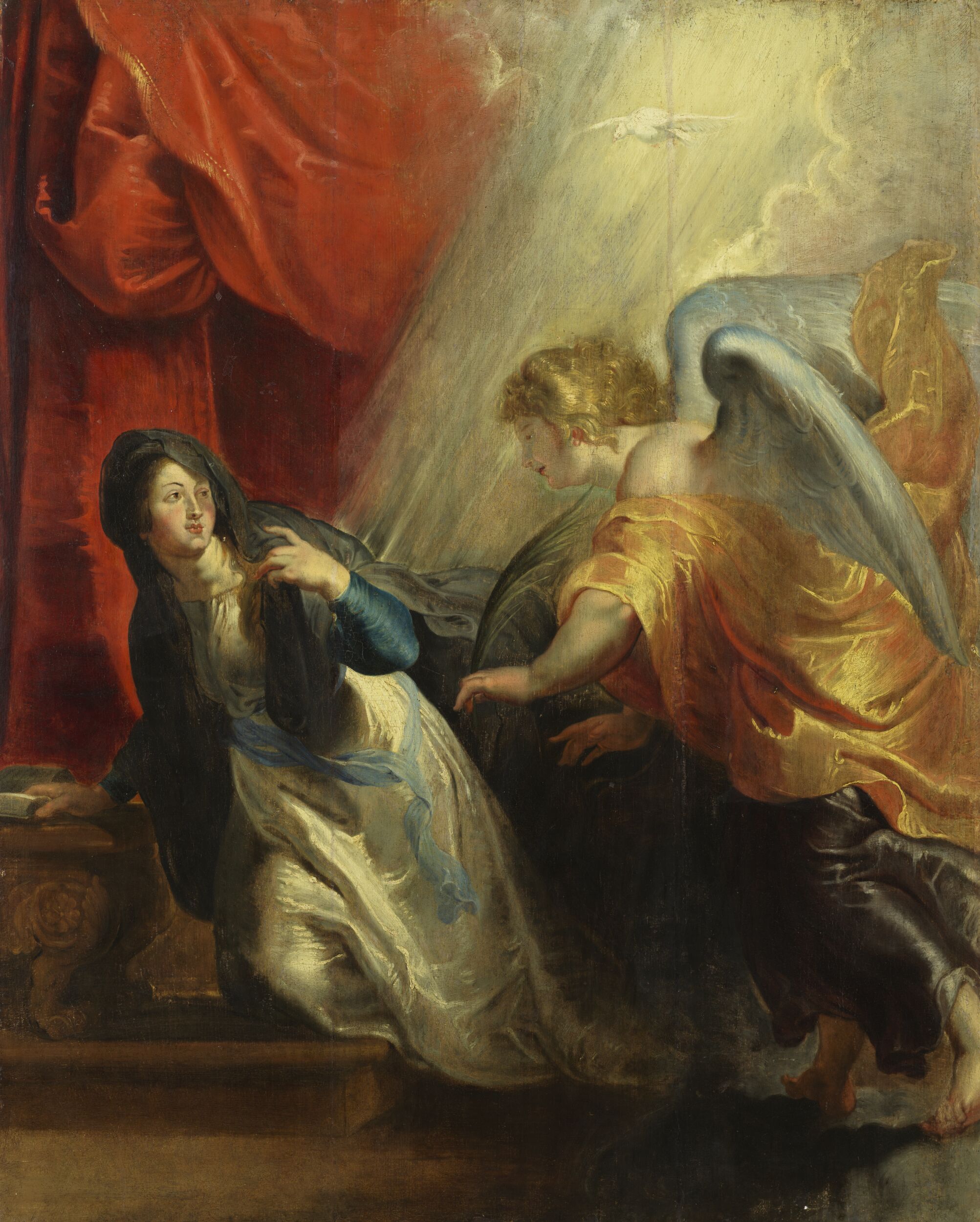
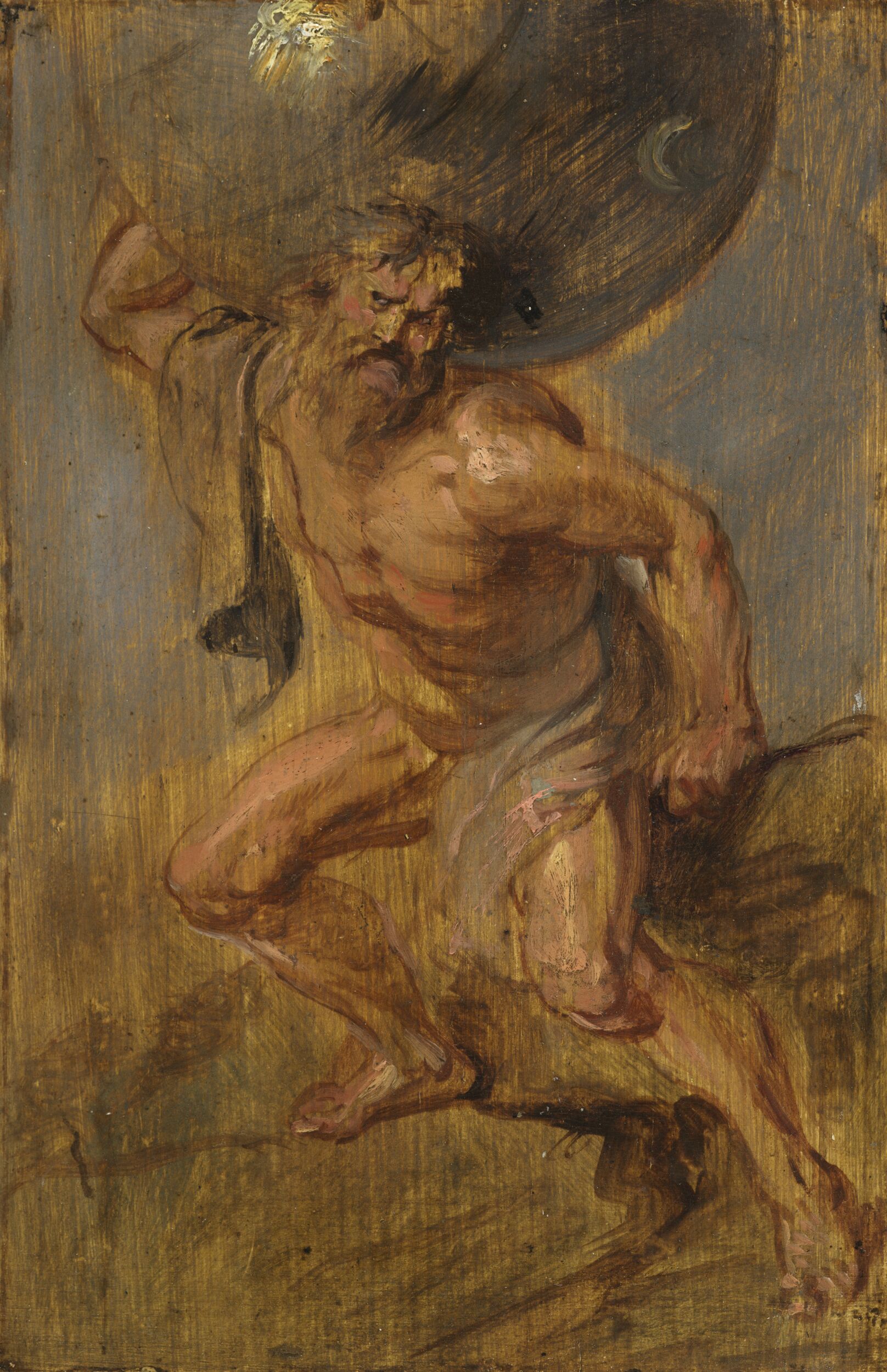
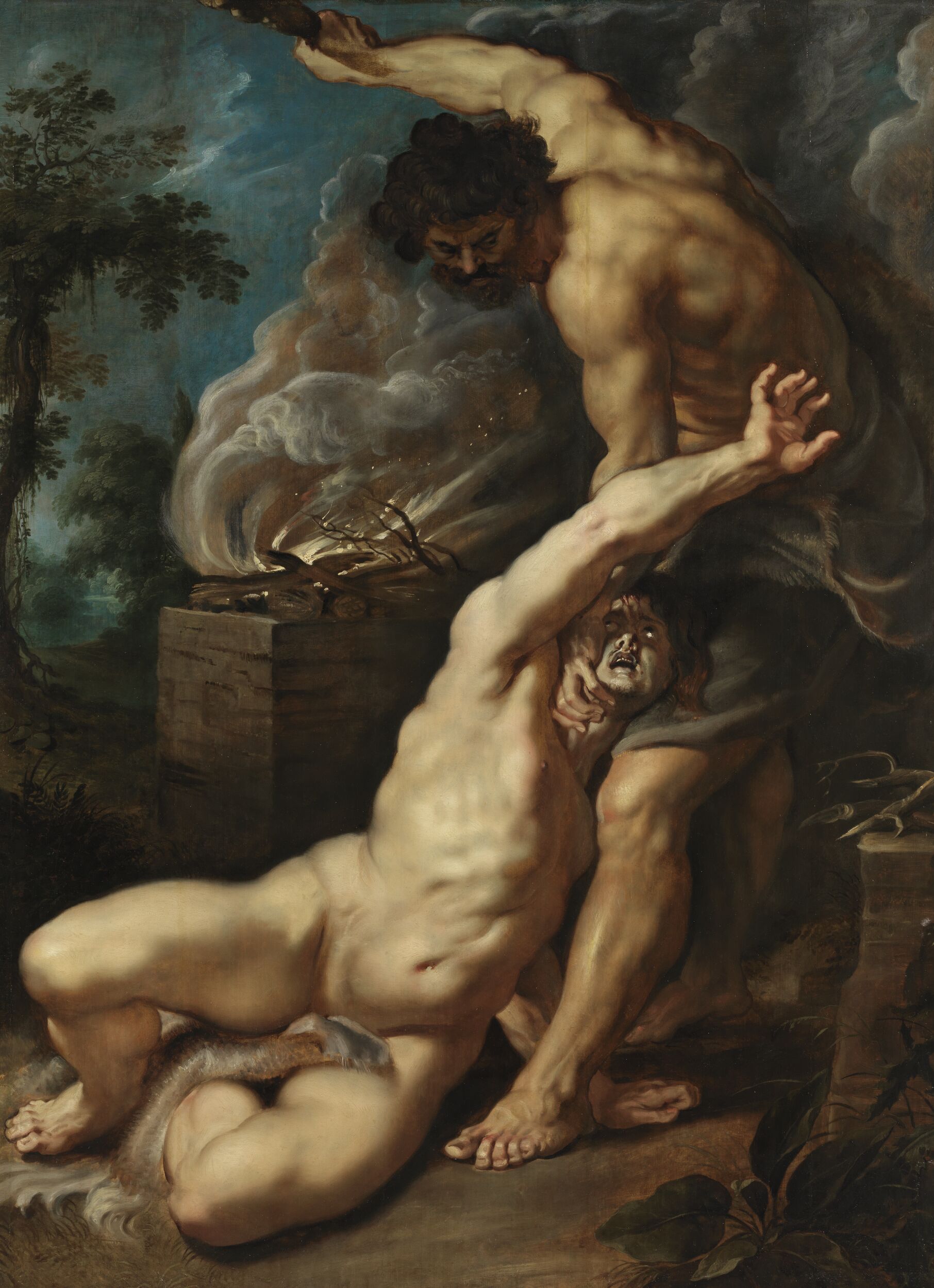
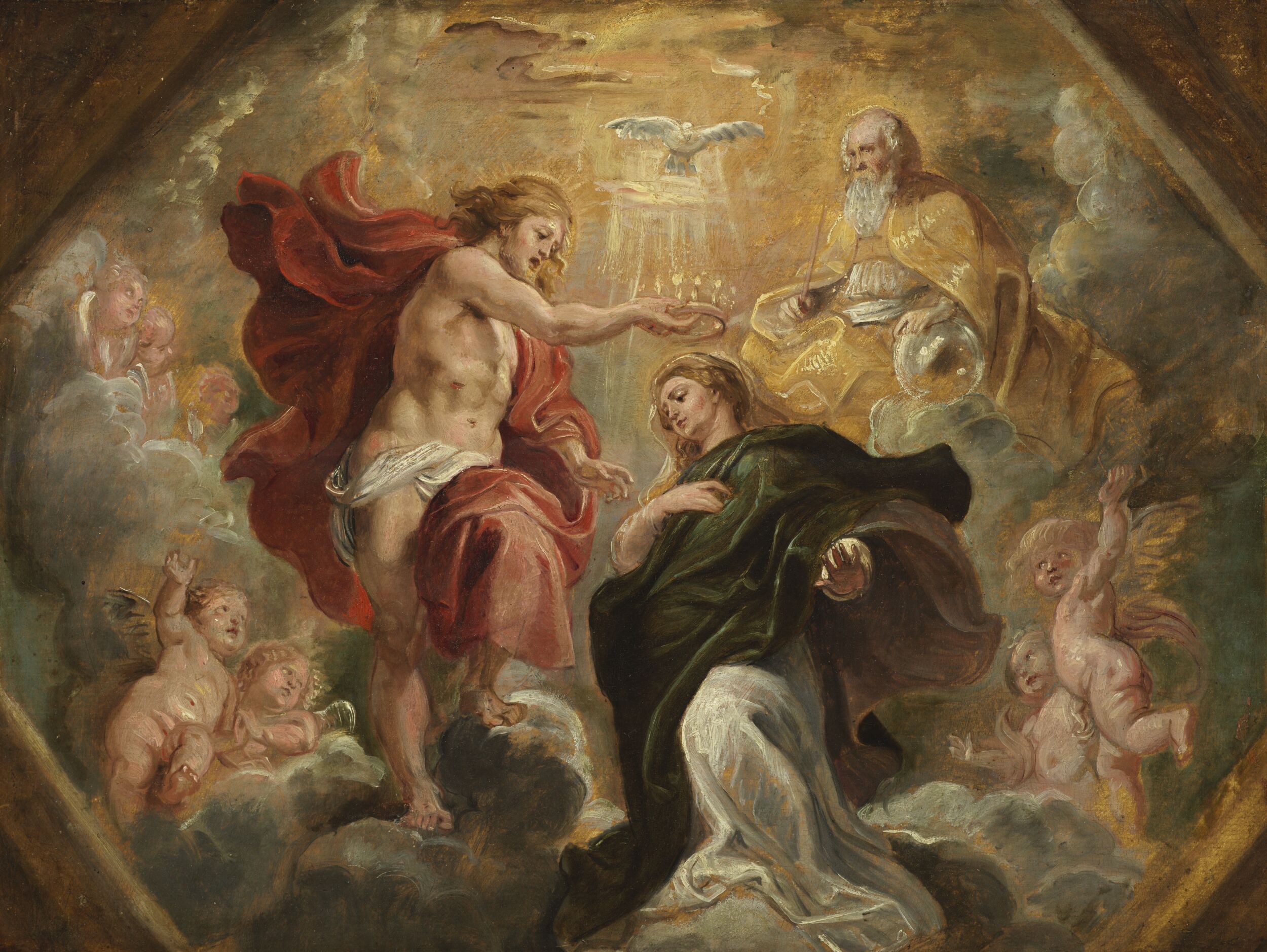
Assumption of the Virgin
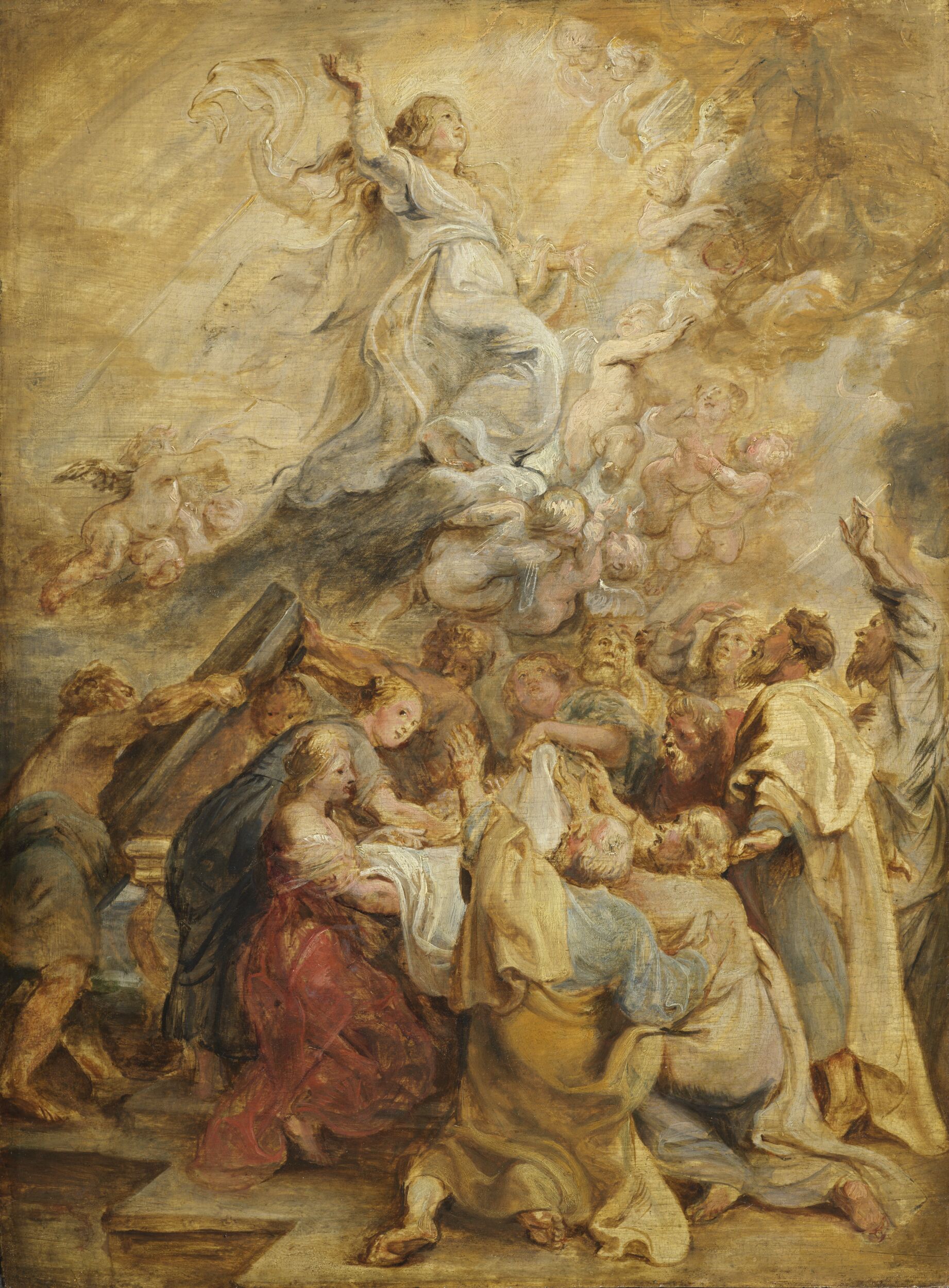
- Artist: Peter Paul Rubens
- Date: 1635
- Medium: oil on panel
- Museum: The Courtauld Gallery
- Collection record: The Courtauld Gallery website
Listen to the free audio guide
About this artwork
This is the Assumption of the Virgin by Peter Paul Rubens. Painted in 1635, this oil on panel is a preparatory sketch for a monumental altarpiece the artist created for the Carthusian church in Brussels. It marks Rubens’ final and most ambitious take on a theme he’d returned to many times.
In the composition the Apostles gather at an empty tomb, their faces a mix of awe and reverence as they witness the Virgin’s triumphant rise. The scene is drawn from the apocryphal books of the Bible and the 13th‑century Golden Legend by Jacopo da Voragine, giving the work a mythic depth that was popular in Rubens’ time.
One detail that immediately catches the eye is Mary’s white mantle, a deliberate departure from the traditional blue. This choice heightens the sense of purity and celestial light, emphasizing her divine status. The brushwork is vigorous, yet the composition remains balanced—Rubens’ mastery of movement and anatomy shines through even in this sketch.
The sketch serves not only as a study of form but also as a visual argument for the dramatic, almost theatrical lift that would come to life in the finished altarpiece. Through this preparatory work, Rubens experiments with light, gesture, and color to convey the spiritual drama of the Assumption, setting the stage for what would become a landmark of Baroque religious art.
See it in person
Assumption of the Virgin hangs in The Courtauld Gallery at Somerset House, London. Point your phone at any artwork there and audioguide.london plays a free audio guide in six languages — no app download needed.