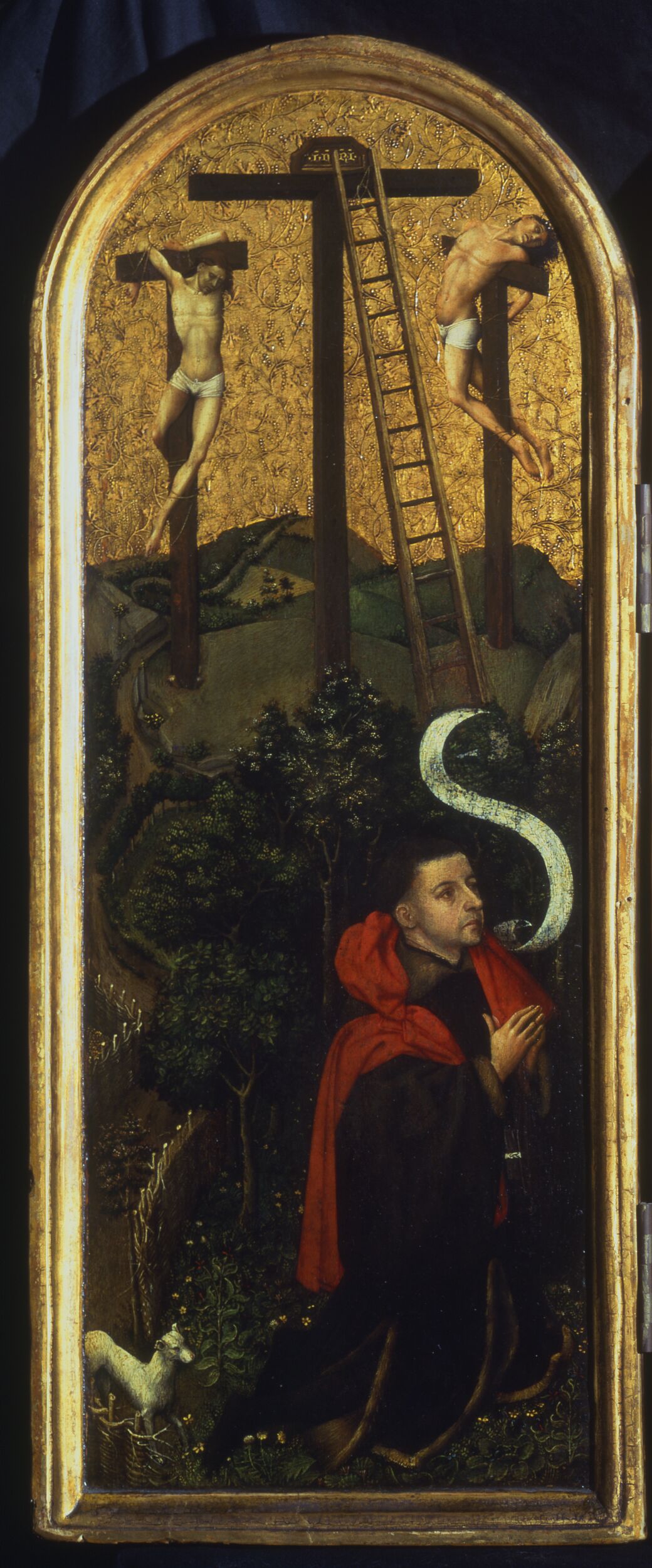
The Two Thieves with an Empty Cross (left panel)
- Artist: Robert Campin
- Date: (circa) 1425
- Medium: unidentified paint surface and goldleaf on panel
- Museum: The Courtauld Gallery
- Collection record: The Courtauld Gallery website
Listen to the free audio guide
About this artwork
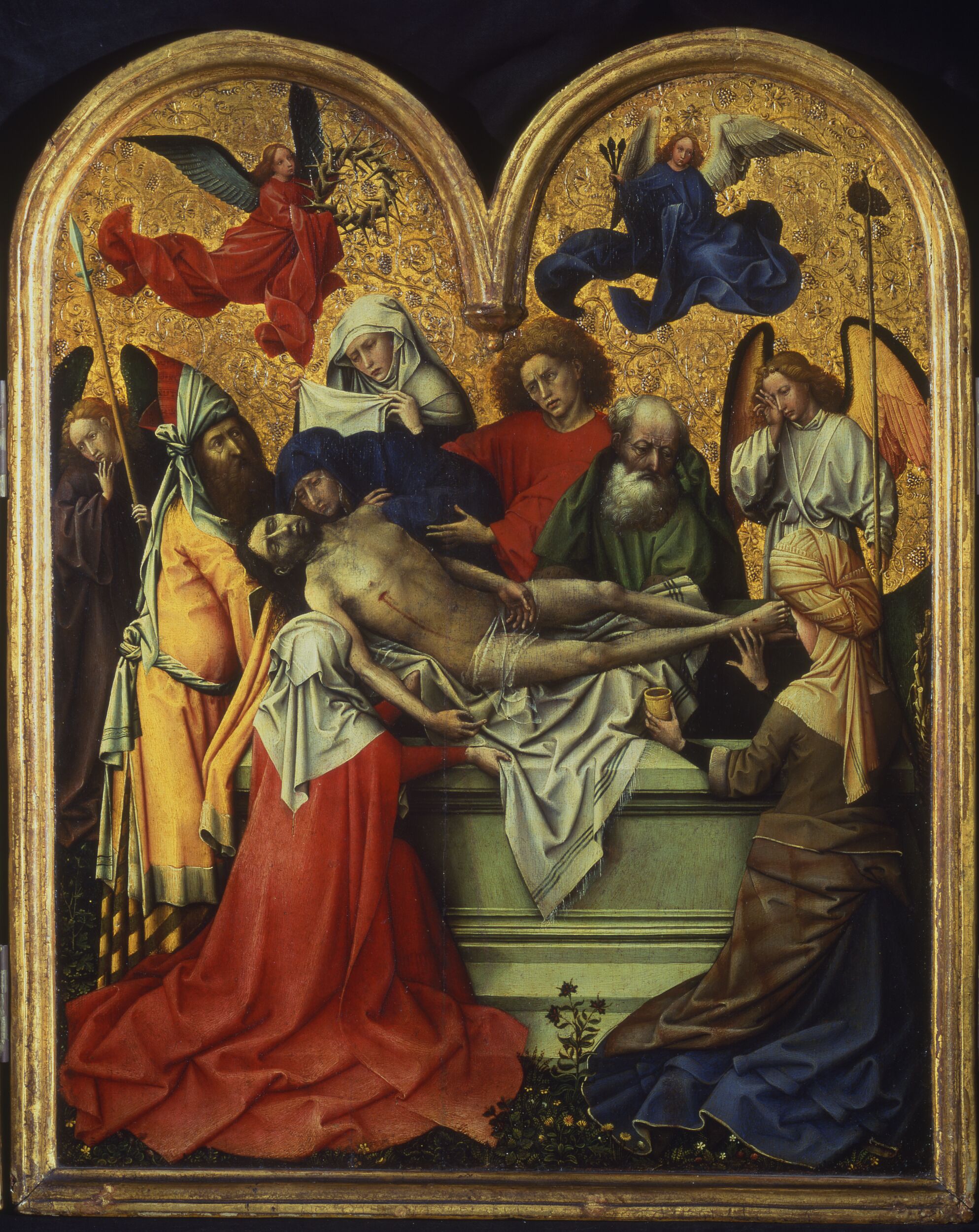
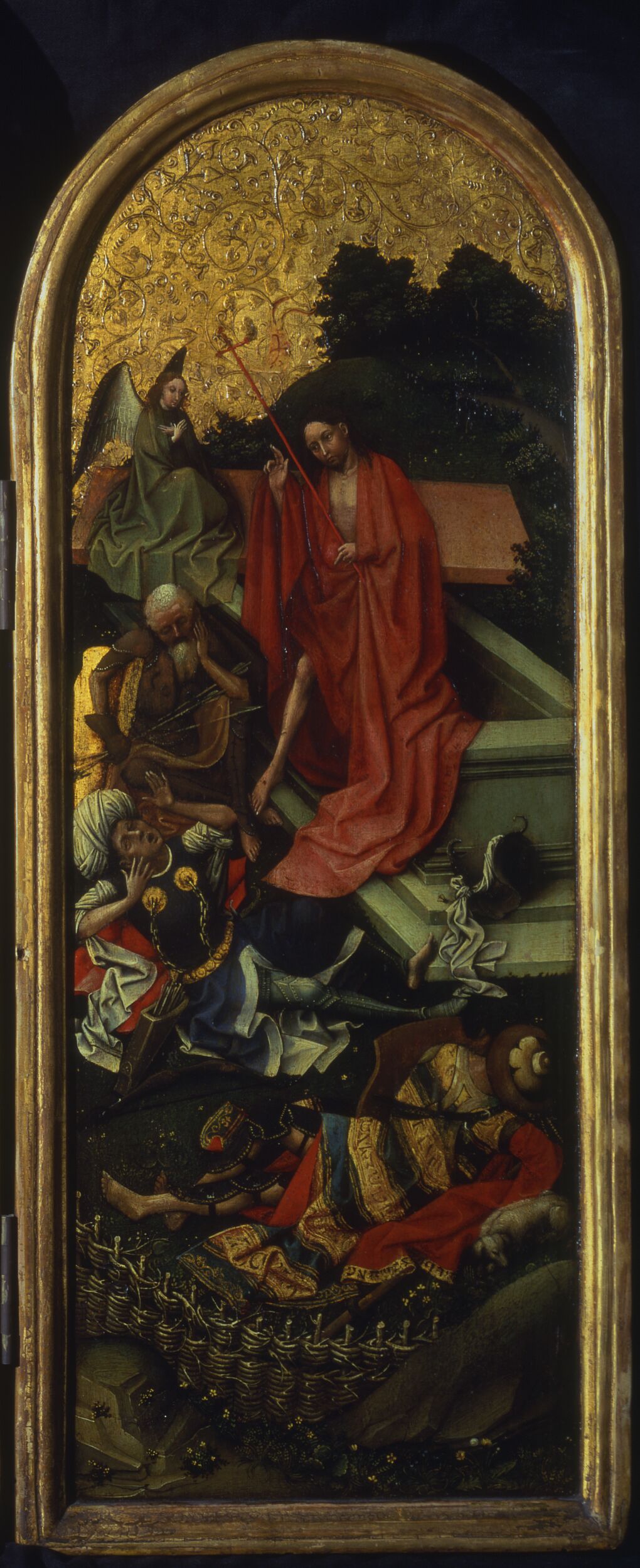
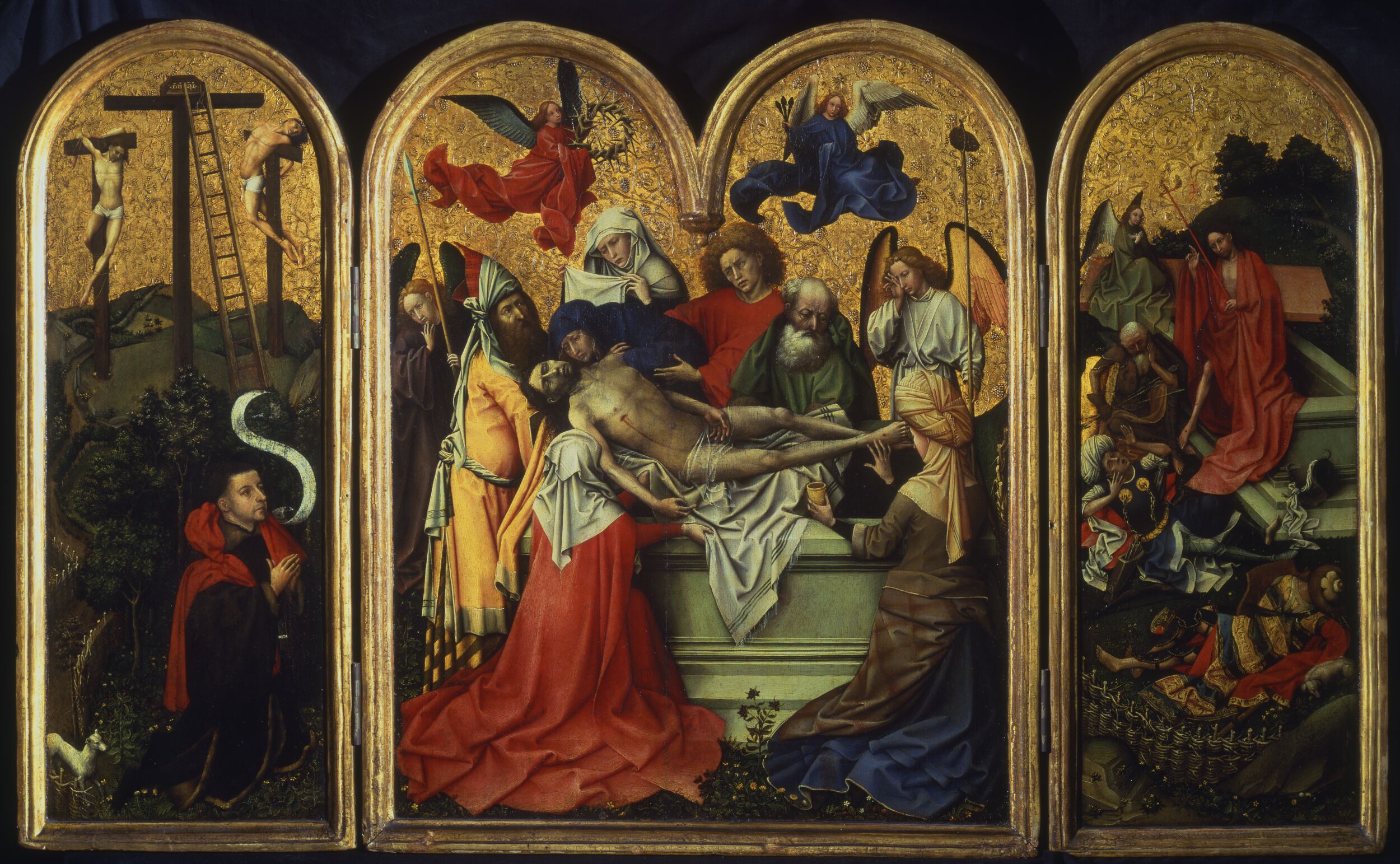
This is the “The Two Thieves with an Empty Cross (left panel)” by Robert Campin. Created around 1425, it sits at the crossroads of early Netherlandish painting and the emerging humanist focus on everyday scenes. Campin uses an unidentified paint surface layered with gold leaf—a technique that hints at both the religious significance of the empty cross and the wealth of patrons who could afford such luxury. The gold background not only provides a luminous halo but also serves to frame the two thieves in a dramatic, almost theatrical, light.
The composition is striking in its simplicity: two figures, likely representing a guilty and a repentant thief, are positioned at either side of a cross that hangs loosely, almost as if forgotten. Their expressions and gestures convey a subtle narrative—one appears contrite, the other indignant—suggesting a moral lesson about sin and redemption. The careful rendering of textiles and shadow demonstrates Campin’s early mastery of naturalism, foreshadowing the detailed realism that would later define the Northern Renaissance.
Because this is a panel work, the gold leaf remains visible on the surface, offering a tactile quality that feels almost alive to the eye. In a broader sense, the painting encapsulates a period when artists began to explore psychological depth and moral storytelling within modest domestic contexts, all while maintaining a reverence for sacred symbolism.
See it in person
The Two Thieves with an Empty Cross (left panel) hangs in The Courtauld Gallery at Somerset House, London. Point your phone at any artwork there and audioguide.london plays a free audio guide in six languages — no app download needed.