The Resurrection (right panel)
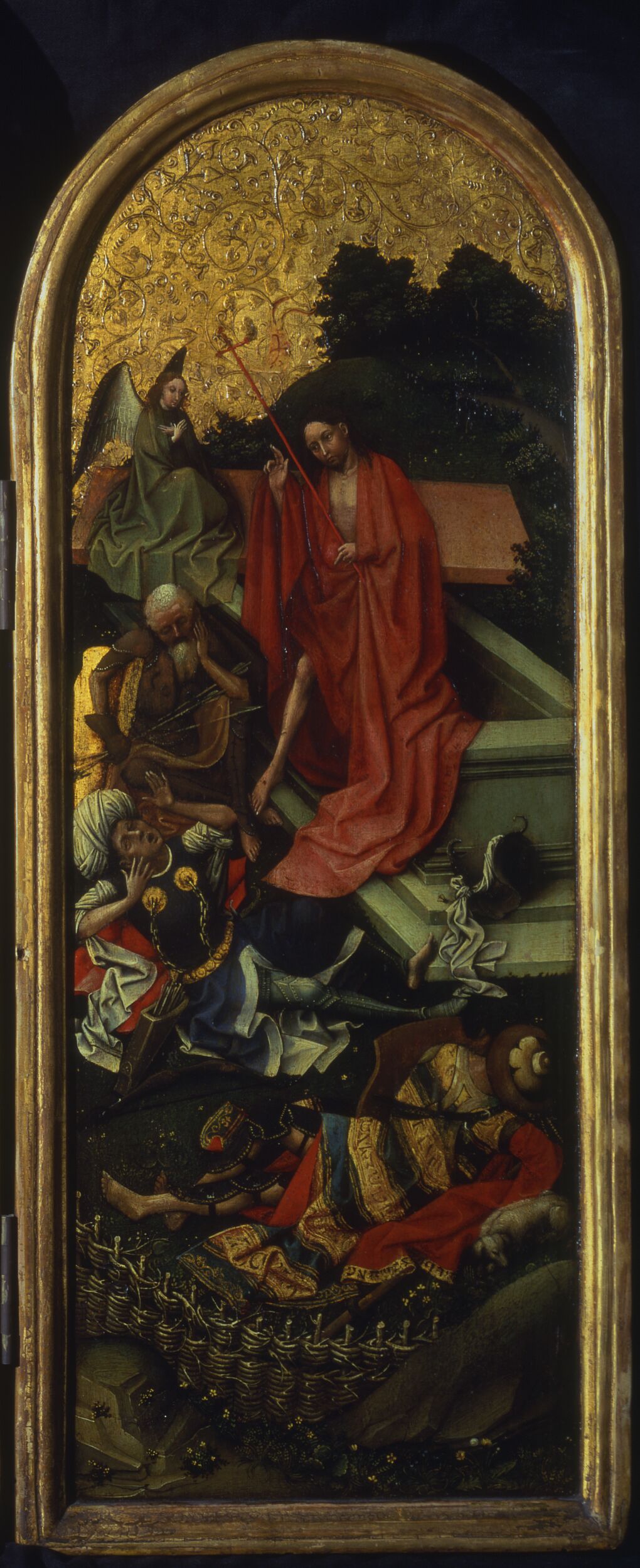
- Artist: Robert Campin
- Date: (circa) 1425
- Medium: unidentified paint surface and goldleaf on panel
- Museum: The Courtauld Gallery
- Collection record: The Courtauld Gallery website
Listen to the free audio guide
About this artwork
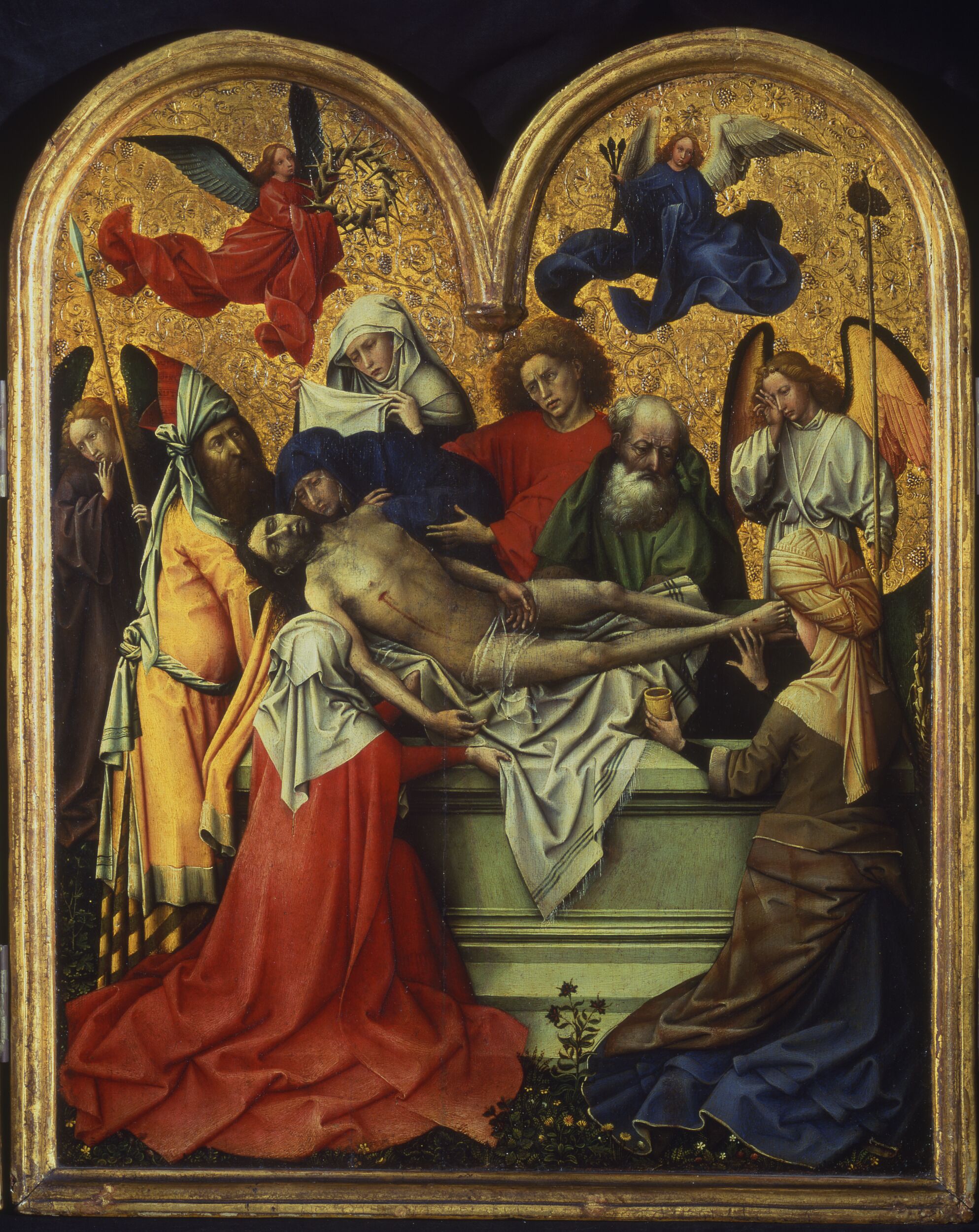
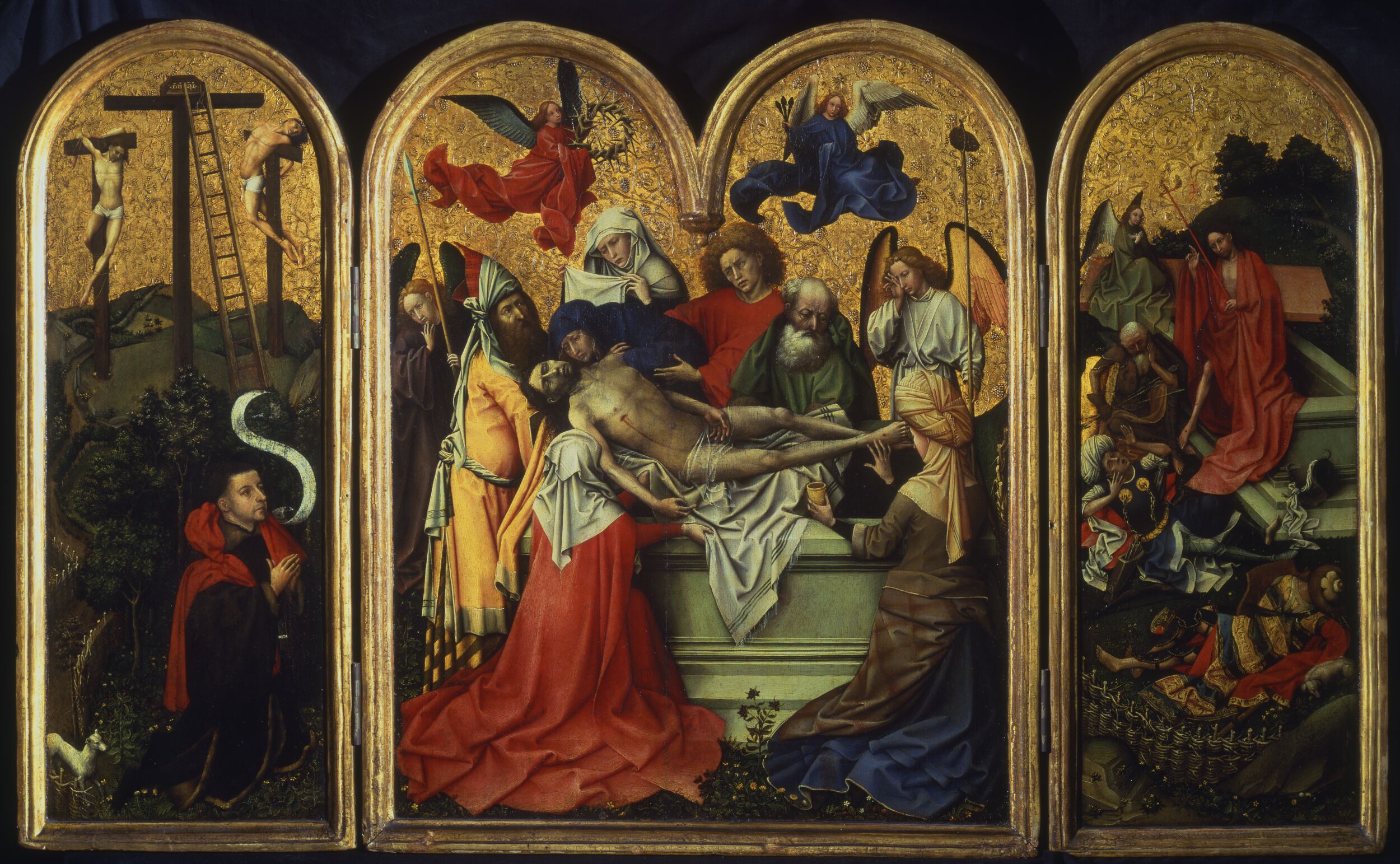
This is “The Resurrection (right panel)” by Robert Campin. Created around 1425, it’s a remarkable example of early Netherlandish panel painting, though the exact paint surface remains unidentified, with the artist layering it over a gold leaf backing.
Campin, often called the “founder of the Burgundian school,” uses a delicate palette here: soft ochres, cool blues, and subtle greens. The gold leaf is not merely decorative—it echoes the medieval tradition of using light as a divine symbol, suggesting the resurrection’s spiritual illumination.
The composition is intimate: the risen Christ is centrally placed, his hands raised in a gesture that invites viewers into the narrative. Below, the sorrowful mourners—Mary Magdalene, a soldier, and a young woman—look up in awe. Campin’s skillful use of light and shadow adds depth, making the figures appear almost tactile.
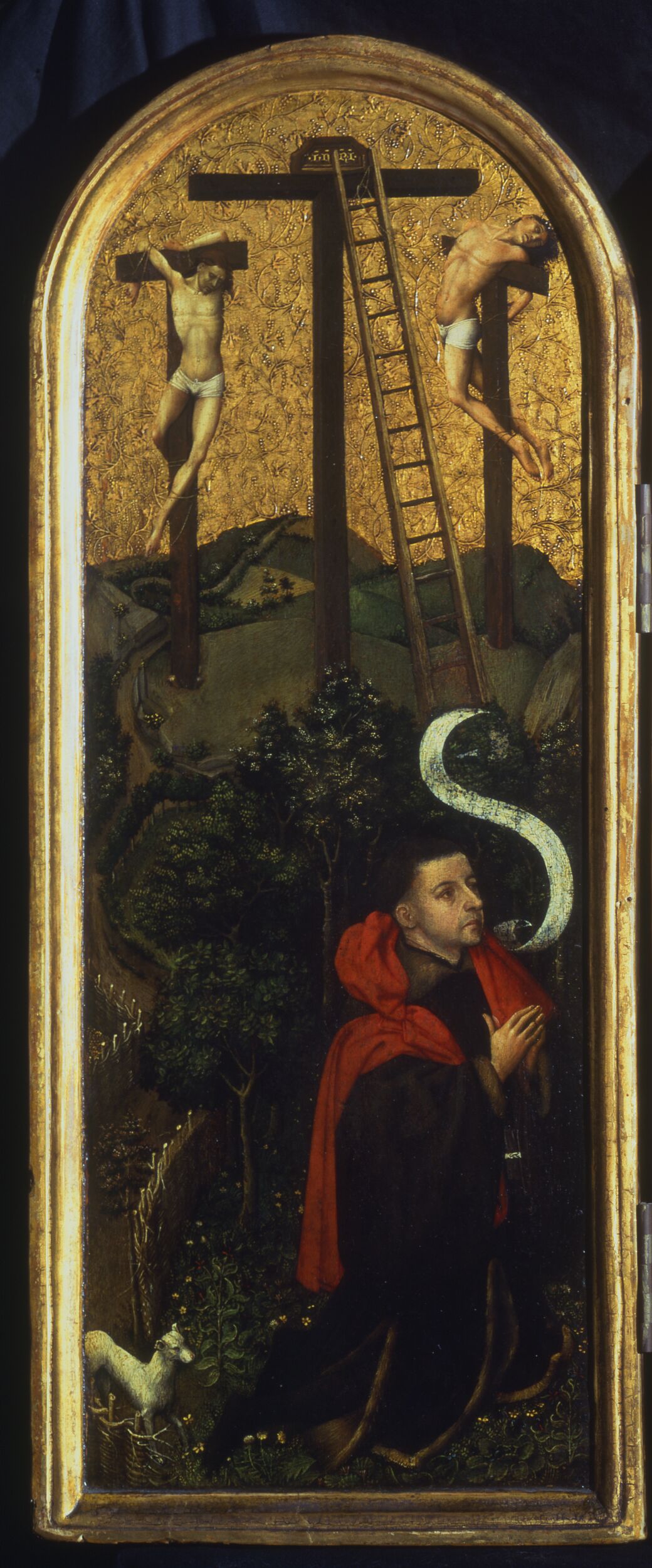
The right panel is part of a larger triptych, the left side depicting the burial, and the central panel showing the Passion. The triptych’s structure invites contemplation of the entire narrative arc—from death to resurrection—reflecting the theological emphasis of the period.
Overall, this panel showcases Campin’s early mastery of realism and symbolism, and it remains a key touchstone for understanding the evolution of Western painting in the early fifteenth century.
See it in person
The Resurrection (right panel) hangs in The Courtauld Gallery at Somerset House, London. Point your phone at any artwork there and audioguide.london plays a free audio guide in six languages — no app download needed.