The Tring Tiles
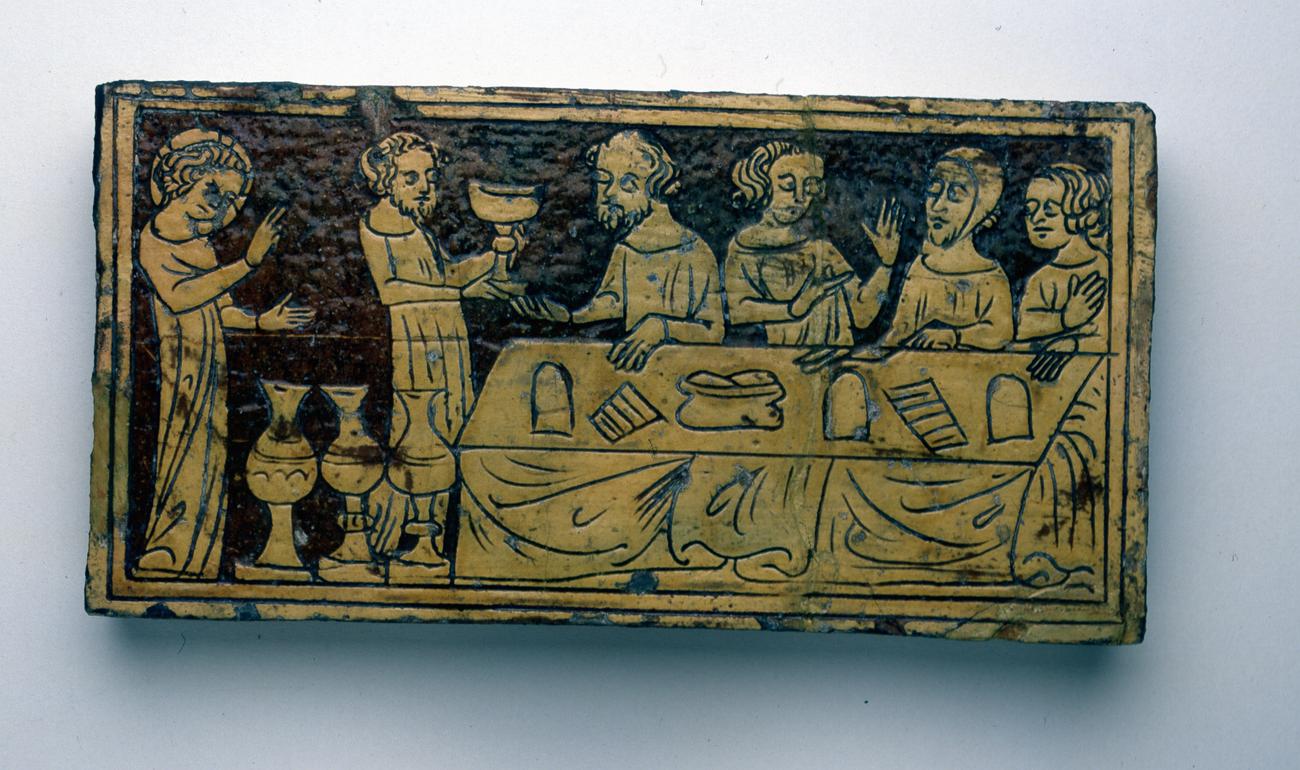
- Gallery: Room 40
- Culture: Late Medieval
- Made in: Tring (?)
- Date: 14thC
- Object type: tile
- Materials: earthenware
- Museum number: 1922,0412.8.CR
- Museum: The British Museum
- Collection record: British Museum website
- Image © The Trustees of the British Museum, shared under a CC BY-NC-SA 4.0 licence.
Listen to the free audio guide
About this object
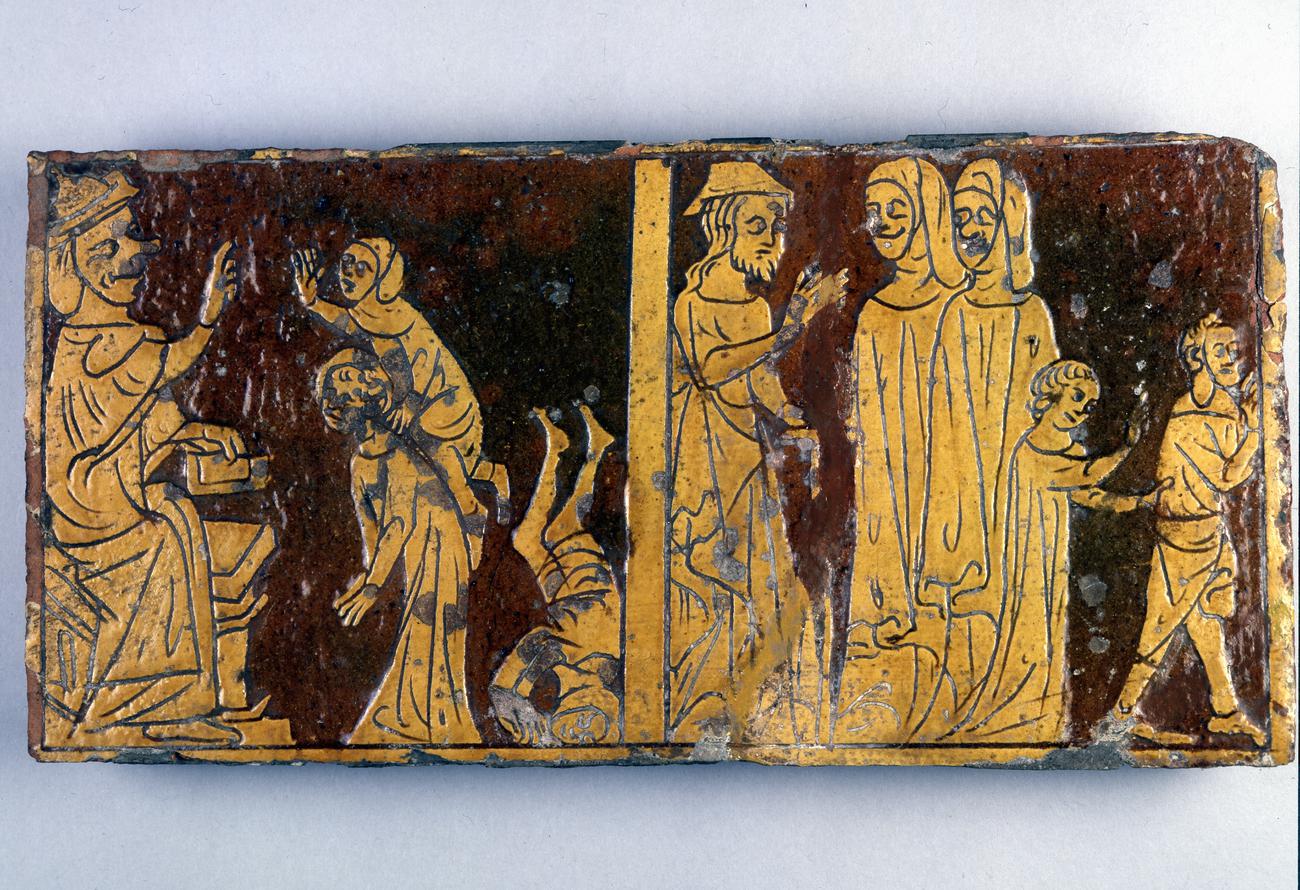
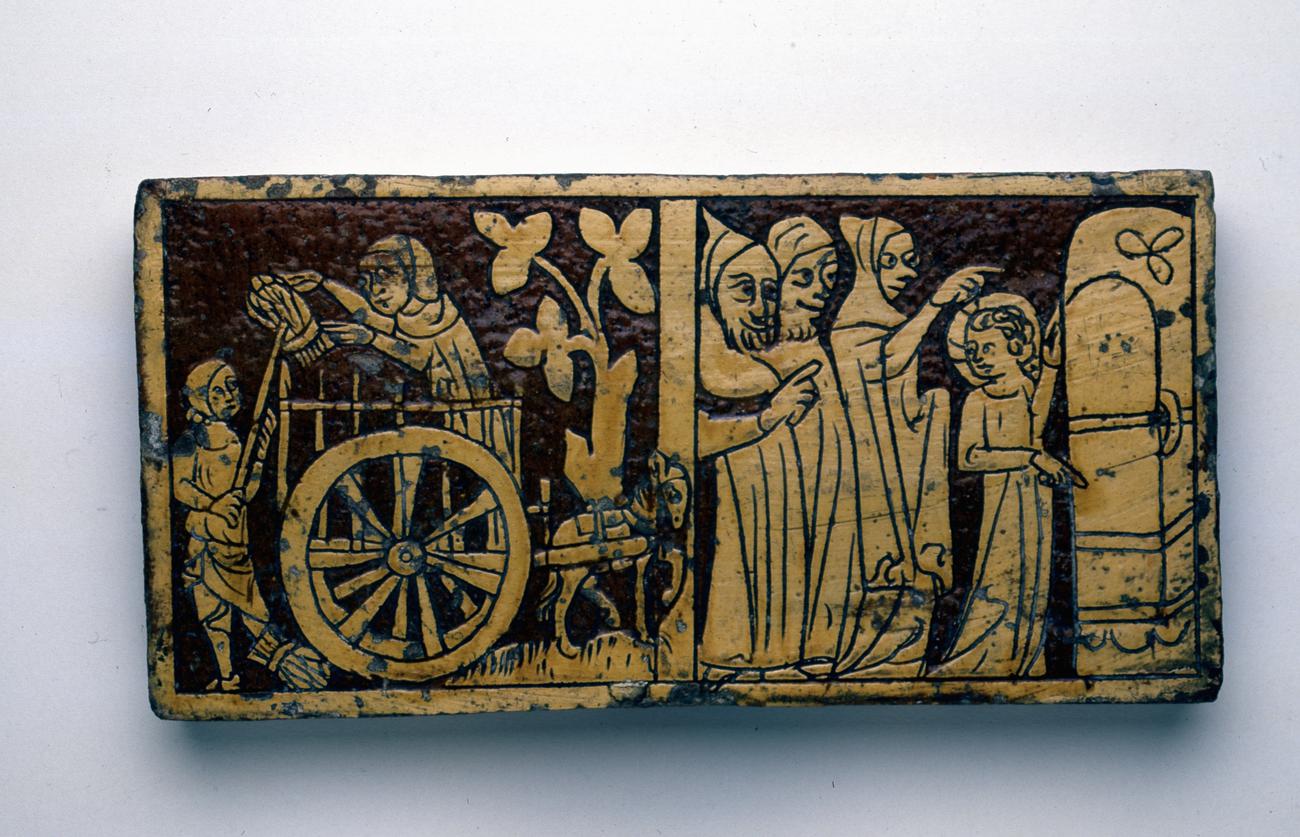
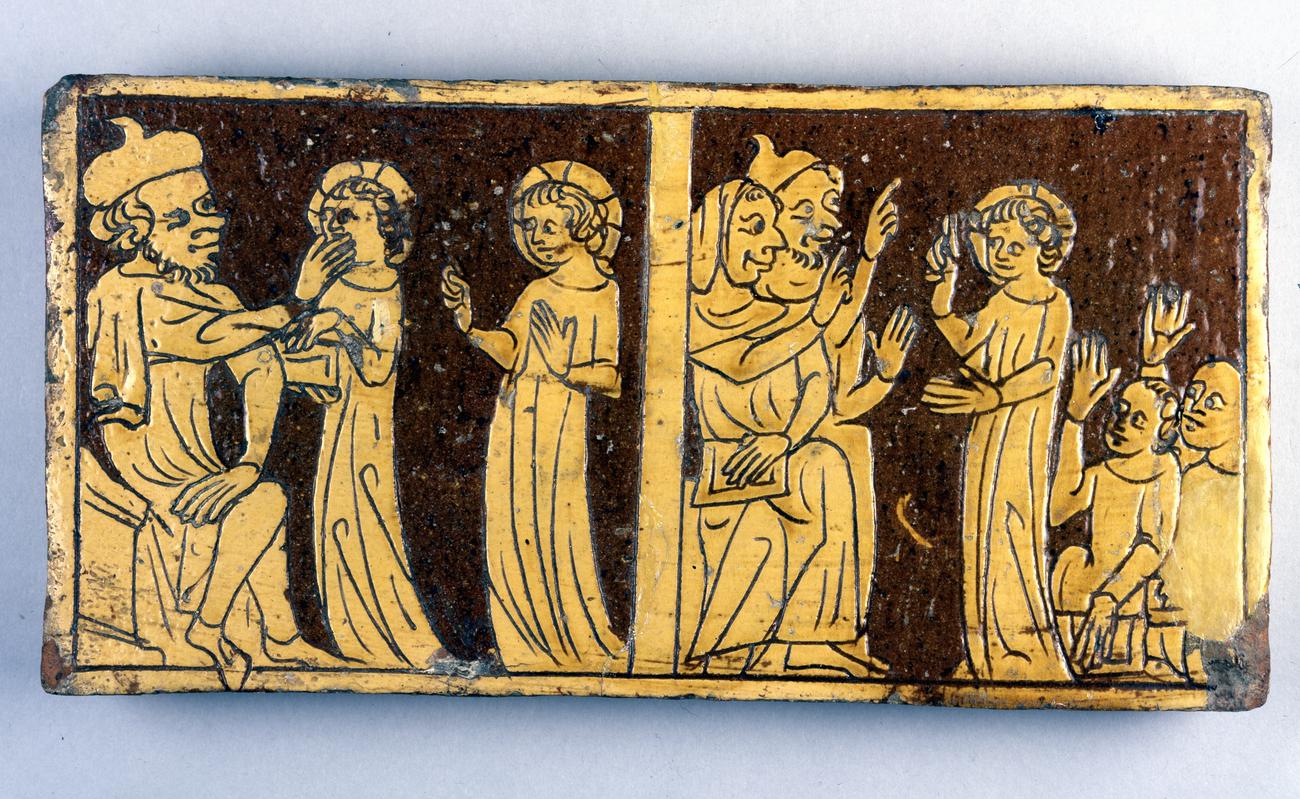
These are "The Tring Tiles," a striking example of medieval craftsmanship. Before you is an earthenware tile made from red clay with a white slip "sgraffito" decoration and a lead glaze. Look closely—you'll see a scene of a feast, likely representing the wedding feast at Cana, where Christ performed his first miracle.
The tile was made in the 14th century in Tring, a place in Hertfordshire. Skilled tilers applied a white clay slip to the red tile, then carefully carved through it with a stylus to reveal the red clay beneath. This intricate technique is known as sgraffiato.
These tiles are part of a set that once decorated a church, possibly as a frieze rather than floor paving. They reflect the popularity of apocryphal stories about Christ’s childhood at the time. Despite their age, the tiles preserve remarkable detail and artistry, a testament to the skill of the medieval artists who made them.
See it in person
The Tring Tiles is on display in Room 40 at the British Museum on Great Russell Street, Bloomsbury, London — free to enter. Choose British Museum on audioguide.london and take a photo of it to hear this free audio guide in six languages — no app download needed.
New, in beta. British Museum support has just launched and is still improving: over 1,000 objects so far, with more added all the time.