The Prunay vase
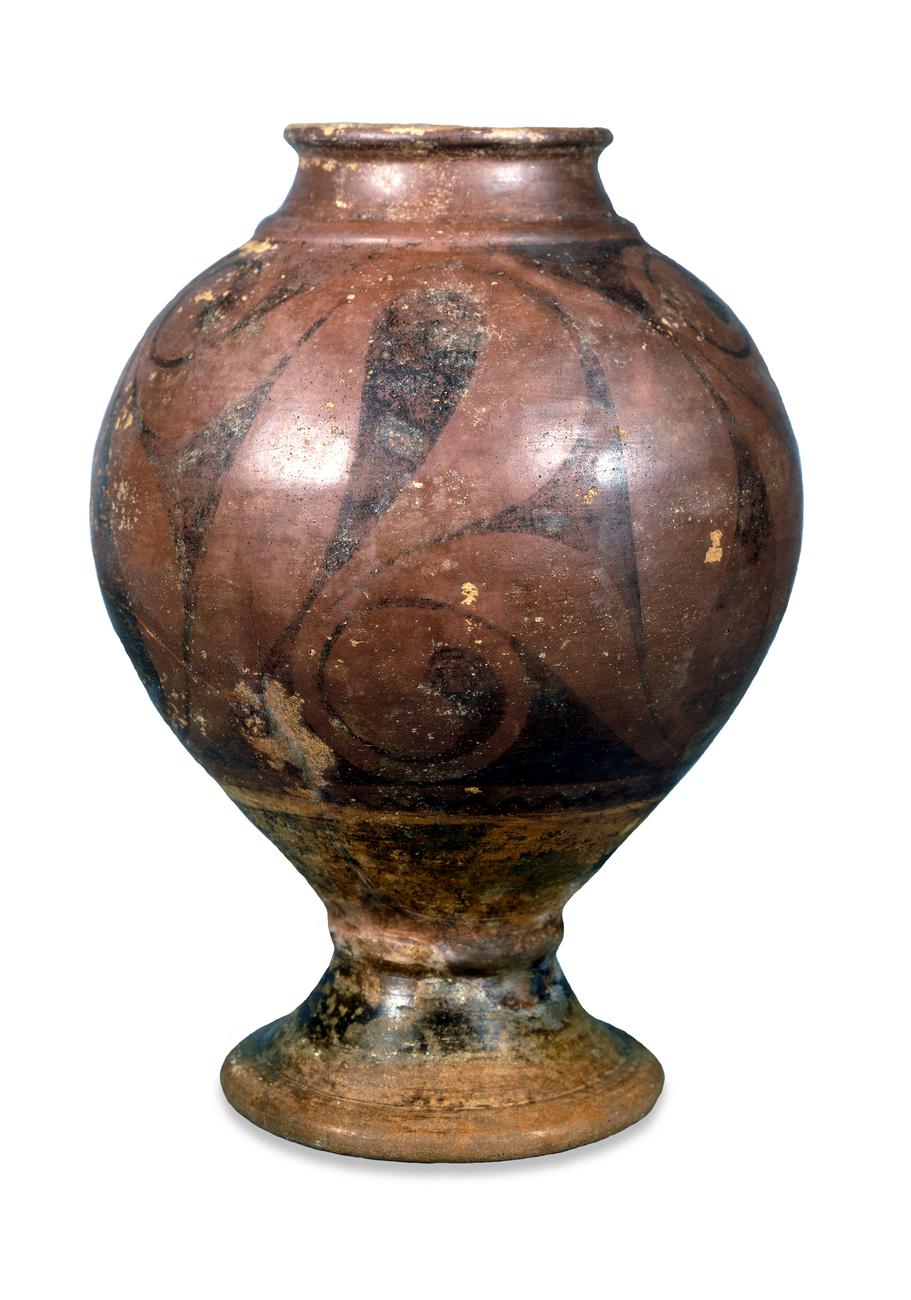
- Gallery: Room 50
- Culture: Iron Age; La Tène I
- Date: 400 BC - 350 BC (circa)
- Object type: pedestal vase
- Materials: pottery
- Museum number: ML.2734
- Museum: The British Museum
- Collection record: British Museum website
- Image © The Trustees of the British Museum, shared under a CC BY-NC-SA 4.0 licence.
Listen to the free audio guide
In the museum now? Point your phone at the next object and hear its guide.
About this object
This Iron Age pedestal vase is a remarkable example of early pottery craftsmanship from around 400 to 350 BC. Created in northern France, it features a tall, rounded shape resting on a wide pedestal. The exterior shows a striking bichrome design, where red and black areas contrast dramatically. A cordon at the base of the neck and intricate scroll patterns highlight the vase, with a careful use of negative and positive spaces.
The potter and painter achieved their design using a special double-stage firing technique. First, the vessel was fired in oxygen-rich conditions, then reheated to char and darken some areas. The result is a smooth, glossy finish with richly contrasting colors. The complex, symmetrical design indicates a highly skilled artist. Scientific analysis shows the vase was made with a gritty clay containing quartz and coated with powdered haematite, applied when the clay was leather-hard.
Found in a burial site near Prunay, the vase was later repaired and studied to reveal many unique fabrication methods. This piece is part of a known group of similar pots, suggesting a shared workshop tradition.
See it in person
The Prunay vase is on display in Room 50 at the British Museum on Great Russell Street, Bloomsbury, London — free to enter. Choose British Museum on audioguide.london and take a photo of it to hear this free audio guide in six languages — no app download needed.
New, in beta. British Museum support has just launched and is still improving: over 1,000 objects so far, with more added all the time.