The Payava Tomb
- Gallery: Room 20
- Culture: Greek
- Made in: Lycia (historic)
- Date: 375BC-362BC
- Object type: tomb
- Materials: limestone
- Museum number: 1848,1020.142
- Museum: The British Museum
- Collection record: British Museum website
- Image © The Trustees of the British Museum, shared under a CC BY-NC-SA 4.0 licence.
Listen to the free audio guide
About this object
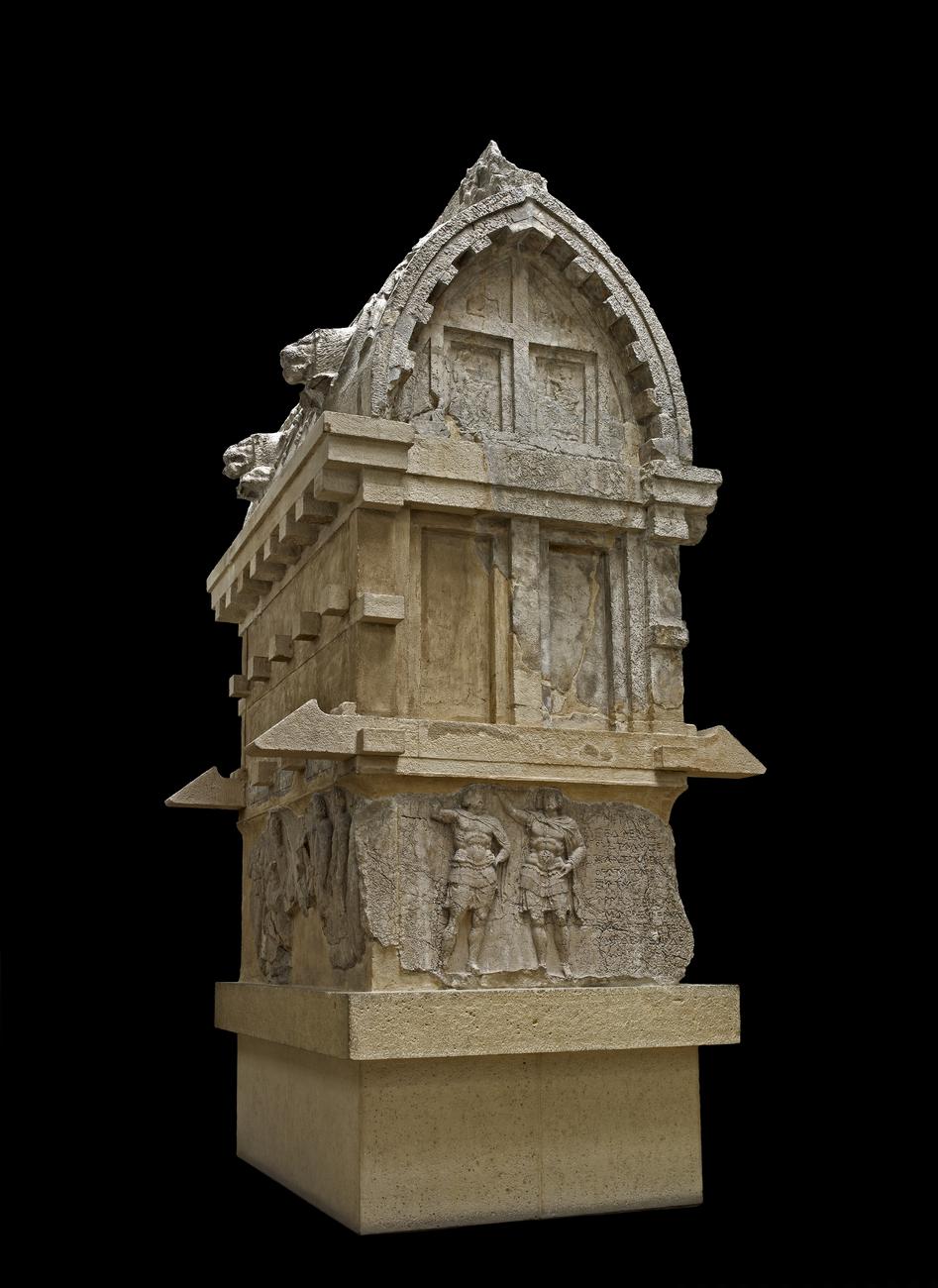
This is "The Payava Tomb," a striking limestone tomb from ancient Lycia, now in the Greek cultural tradition. Each side of the tomb is rich with relief sculptures and inscriptions. On the north side, a man places a wreath on a young athlete—the scene suggests victory or commemoration.
To the west, a seated Persian figure, likely a governor, is flanked by attendants and an inscription that may name Autophradates. On the south side, inscribed text names Payava, a Lycian official, and shows armed figures.
Intricate carvings line the roof: projecting lion heads, a decorated chariot, and a Persian seated couple flanked by sphinxes in the gable. The highest part features friezes of a wild animal hunt and a battle scene.
Dated to 375–362 BC, this tomb reflects Lycian craftsmanship with its blend of Greek and Persian artistic elements, offering a rare look at regional identity and funerary practices in antiquity.
See it in person
The Payava Tomb is on display in Room 20 at the British Museum on Great Russell Street, Bloomsbury, London — free to enter. Choose British Museum on audioguide.london and take a photo of it to hear this free audio guide in six languages — no app download needed.
New, in beta. British Museum support has just launched and is still improving: over 1,000 objects so far, with more added all the time.