The Parthenon Sculptures: metope
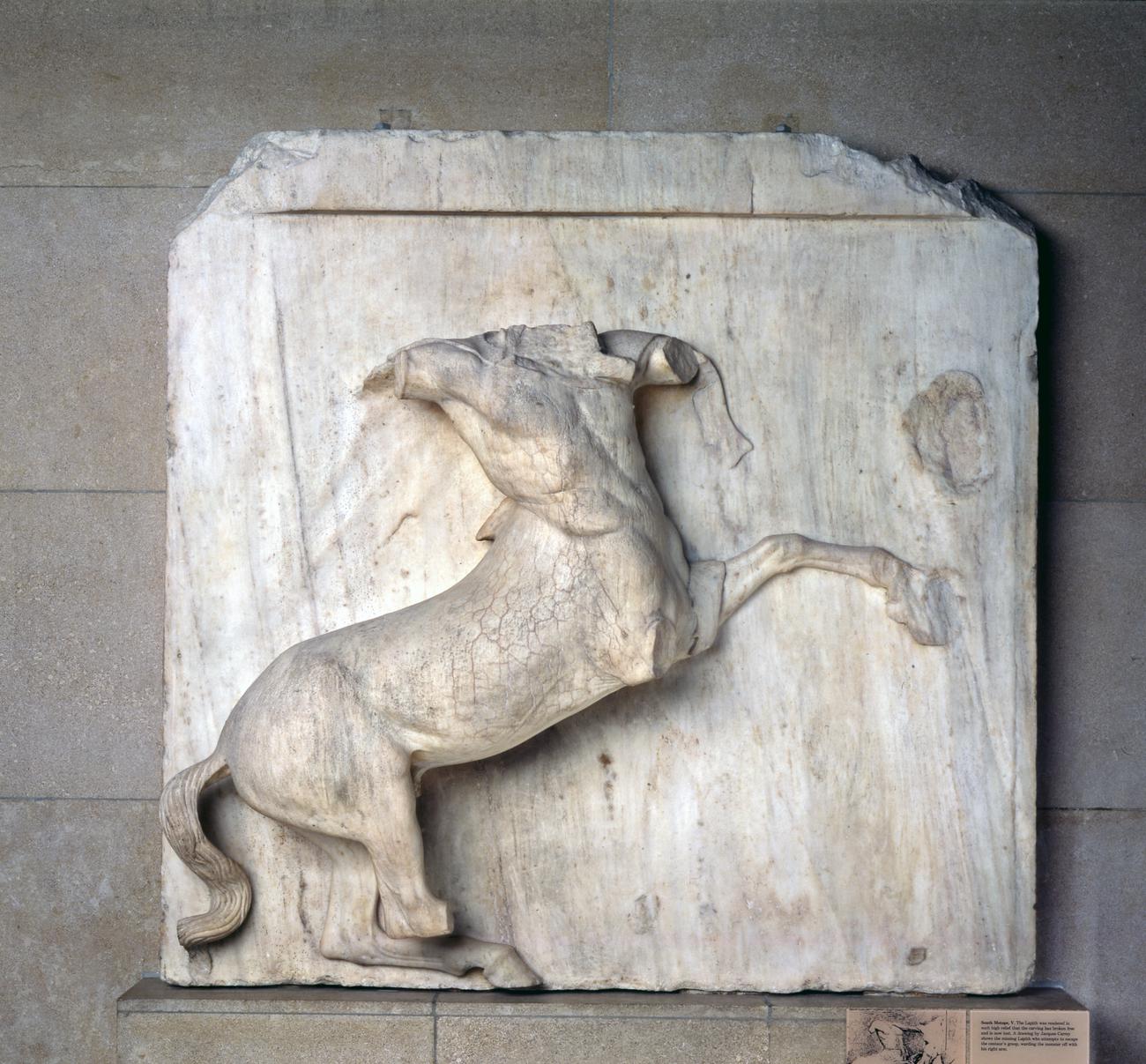
- Gallery: Room 18
- Maker: Pheidias
- Culture: Classical Greek
- Made in: Athens
- Date: 447BC-438BC
- Object type: metope
- Materials: marble
- Museum number: 1816,0610.4
- Museum: The British Museum
- Collection record: British Museum website
- Image © The Trustees of the British Museum, shared under a CC BY-NC-SA 4.0 licence.
Listen to the free audio guide
In the museum now? Point your phone at the next object and hear its guide.
About this object
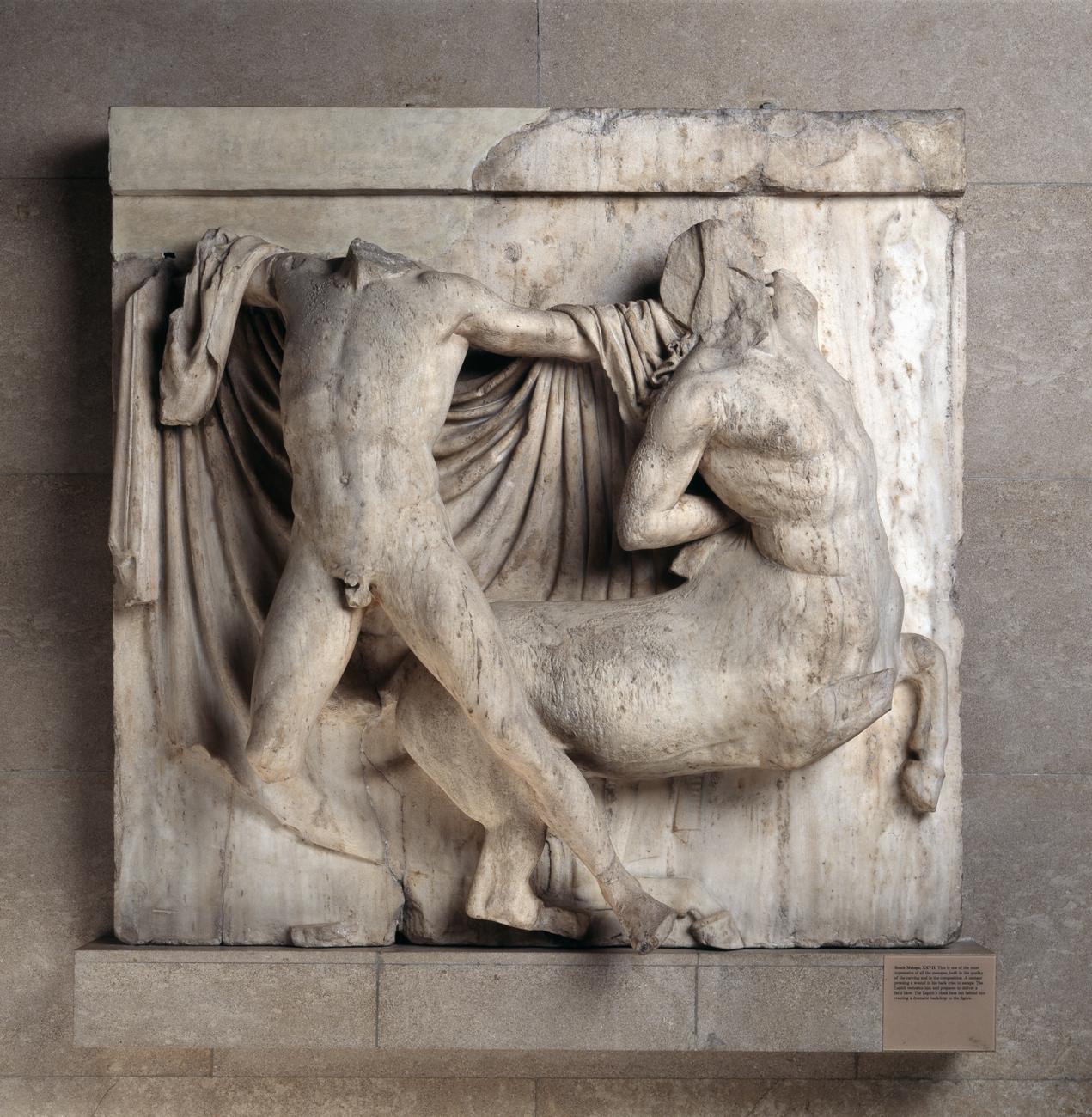
Before you is a fragment from one of the most iconic architectural masterpieces of ancient Greece: "The Parthenon Sculptures," specifically a metope. This marble panel dates to between 447 and 438 BC and was made in Athens. It depicts a centaur rearing up, one arm raised as his opponent, a Lapith, is largely lost except for a section of wrist attached to the Centaur’s throat.
The sculpture is part of a famous scene from the battle of the Centaurs and Lapiths, which decorated the Parthenon’s southern side. Originally, the Centaur is thought to have gripped the Lapith’s thigh while the Lapith tried to fend him off — a dramatic moment captured in stone.
Designed by Pheidias, this work reflects the Classical Greek mastery of three-dimensional storytelling. A partial head from this figure is now displayed in Würzburg, Germany.
The piece was acquired by the British Museum in a later period, purchased from Thomas Bruce, 7th Earl of Elgin.
See it in person
The Parthenon Sculptures: metope is on display in Room 18 at the British Museum on Great Russell Street, Bloomsbury, London — free to enter. Choose British Museum on audioguide.london and take a photo of it to hear this free audio guide in six languages — no app download needed.
New, in beta. British Museum support has just launched and is still improving: over 1,000 objects so far, with more added all the time.