The Nereid Monument: frieze
- Gallery: Room 17
- Culture: Classical Greek
- Made in: Lycia (historic)
- Date: 390BC-380BC (circa)
- Object type: frieze
- Materials: marble
- Museum number: 1848,1020.62
- Museum: The British Museum
- Collection record: British Museum website
- Image © The Trustees of the British Museum, shared under a CC BY-NC-SA 4.0 licence.
Listen to the free audio guide
About this object
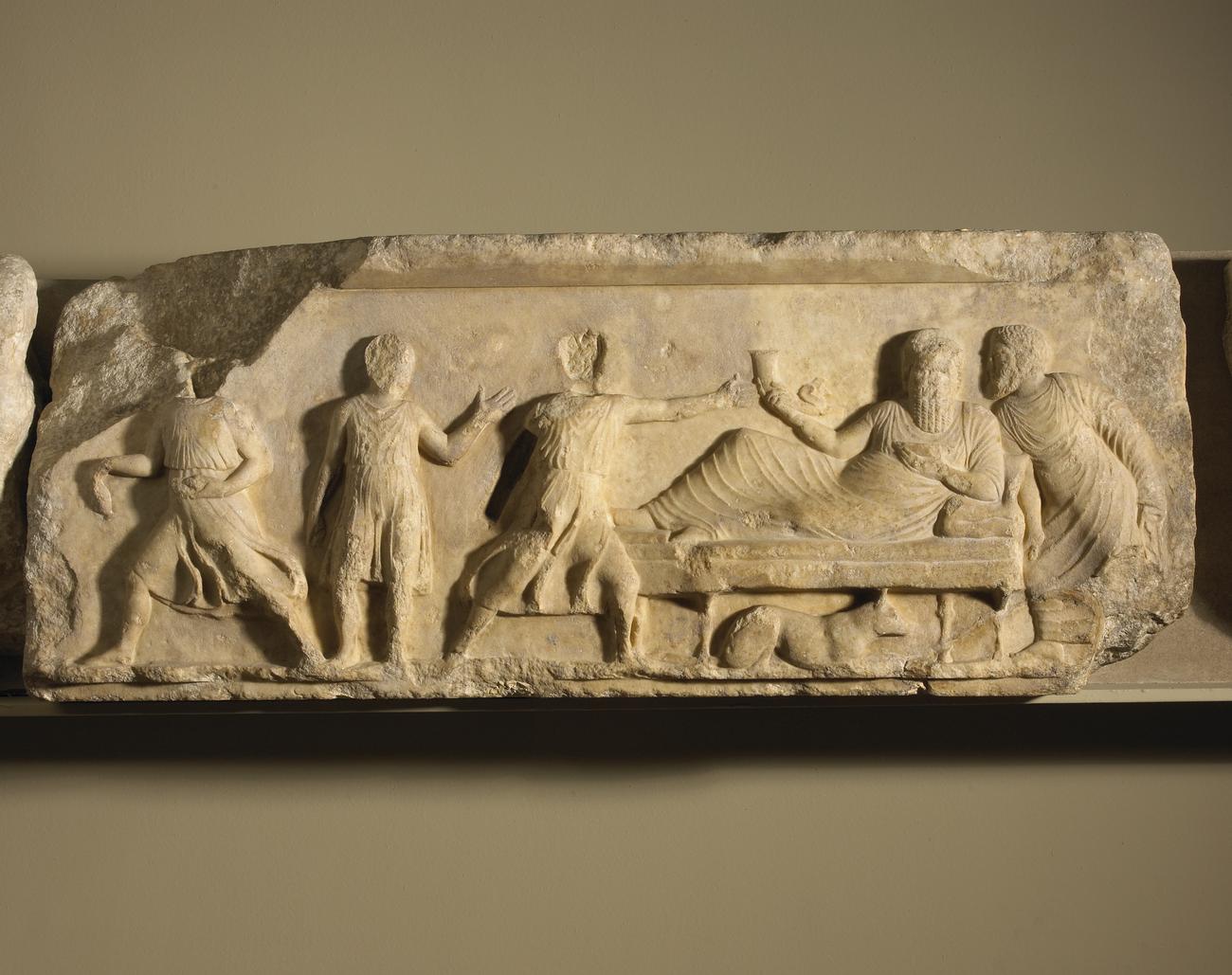
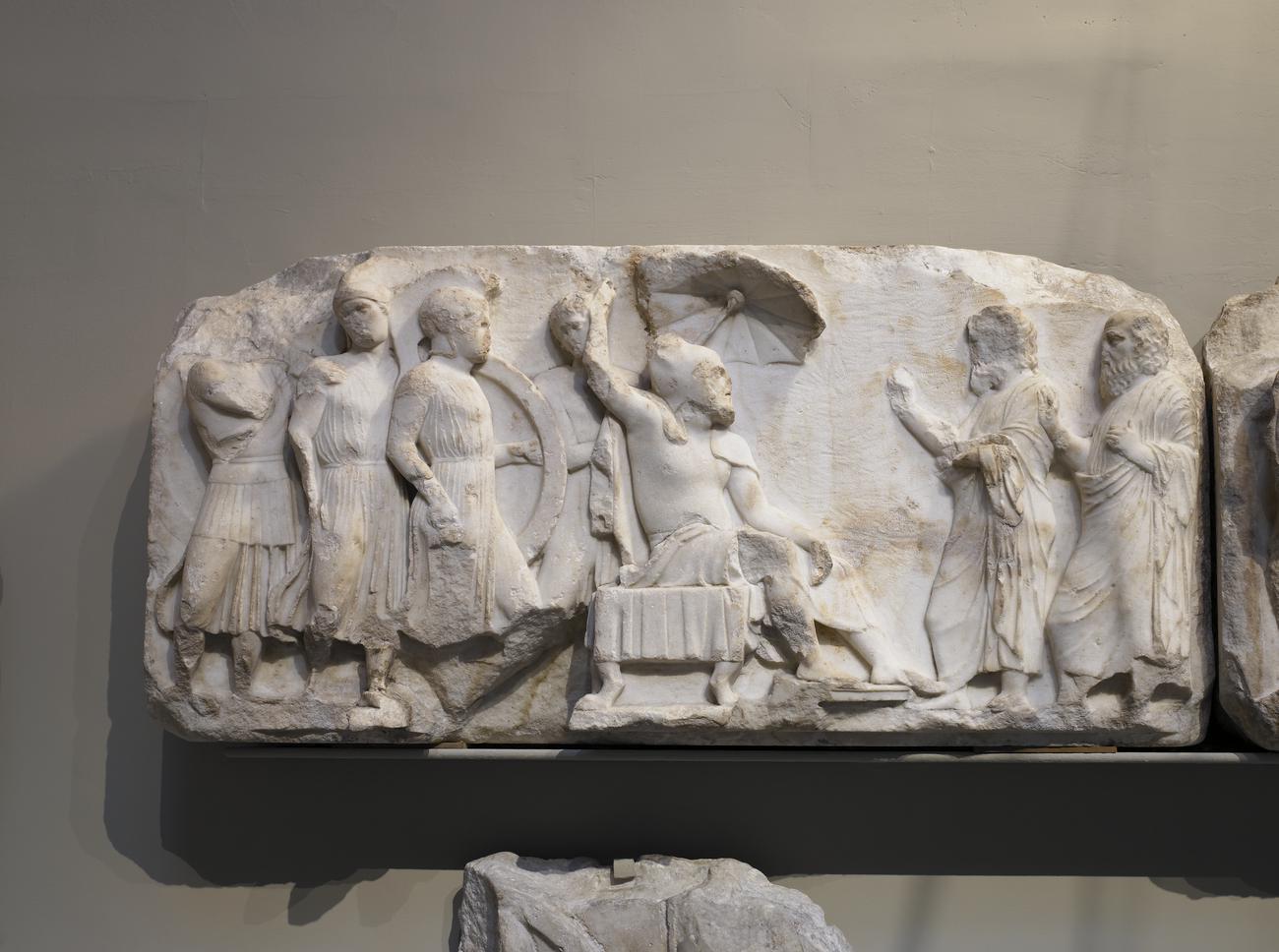
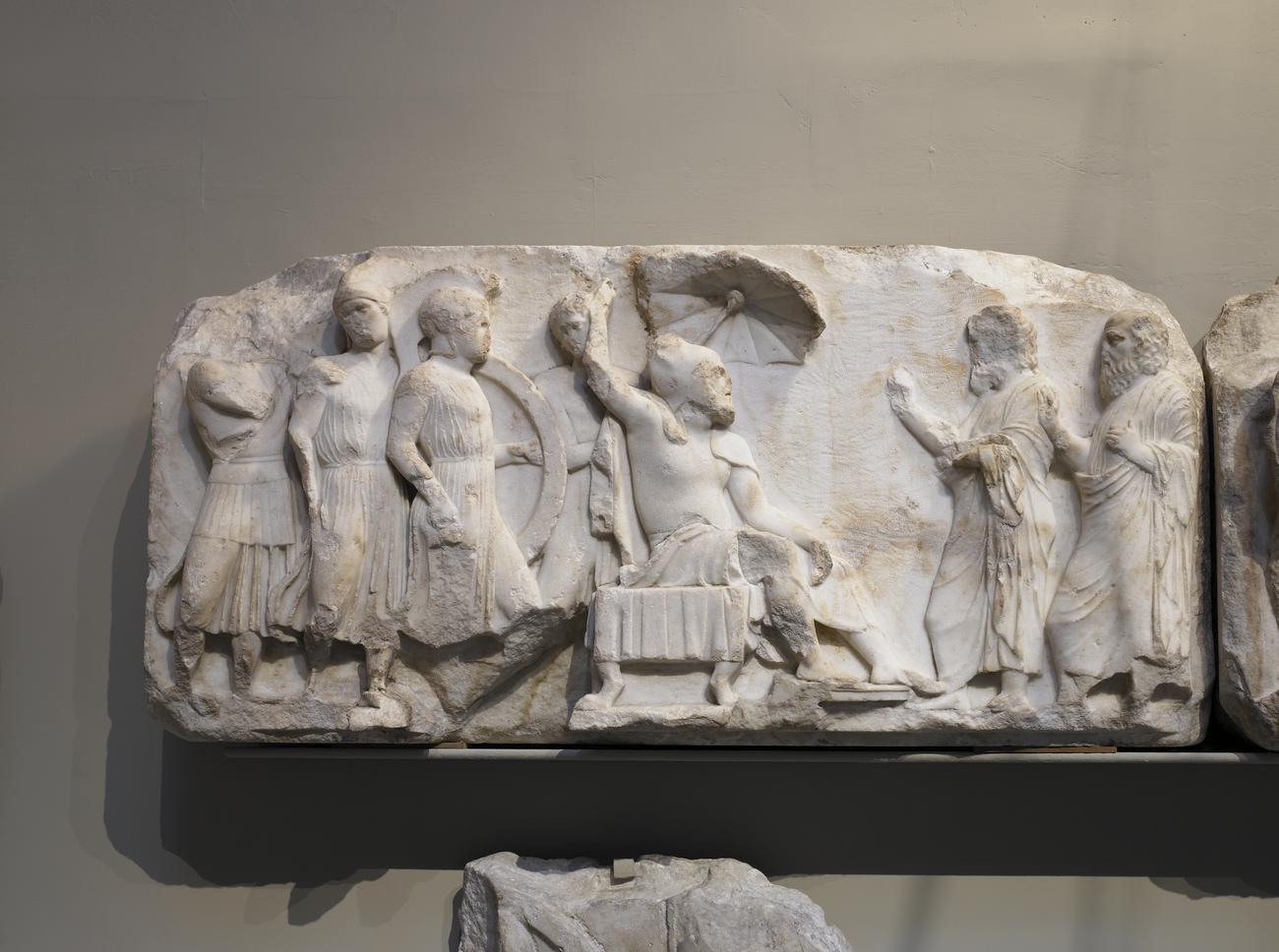
This is part of "The Nereid Monument," a Classical Greek frieze carved in ancient Lycia, now in what is Turkey. It depicts a powerful ruler seated on a throne whose legs are shaped like lion paws. His feet rest on a small footstool, and his arm rises as if he holds a spear. He wears a rich Persian-style headdress that covers his chin, showing the influence of Persian rule.
Behind him stands an attendant holding a parasol, while three guards flank one side. To the right are two elderly men in ordinary clothing, possibly making peace after a battle. These men may represent local leaders surrendering to the victorious king.
This figure is thought to be Arbinas, a known Lykian ruler. The blend of Persian and Greek styles reflects the region’s complex cultural and political ties during the late 4th century BCE. The frieze is carved in fine marble, capturing rich details of dress and posture that tell a vivid story of leadership and ceremony.
See it in person
The Nereid Monument: frieze is on display in Room 17 at the British Museum on Great Russell Street, Bloomsbury, London — free to enter. Choose British Museum on audioguide.london and take a photo of it to hear this free audio guide in six languages — no app download needed.
New, in beta. British Museum support has just launched and is still improving: over 1,000 objects so far, with more added all the time.