The Meidias Hydria
- Gallery: Room 19
- Maker: Meidias
- Culture: Attic
- Made in: Attica (Greece)
- Date: 420BC-400BC (circa)
- Object type: hydria
- Materials: pottery
- Museum number: 1772,0320.30.+
- Museum: The British Museum
- Collection record: British Museum website
- Image © The Trustees of the British Museum, shared under a CC BY-NC-SA 4.0 licence.
Listen to the free audio guide
About this object
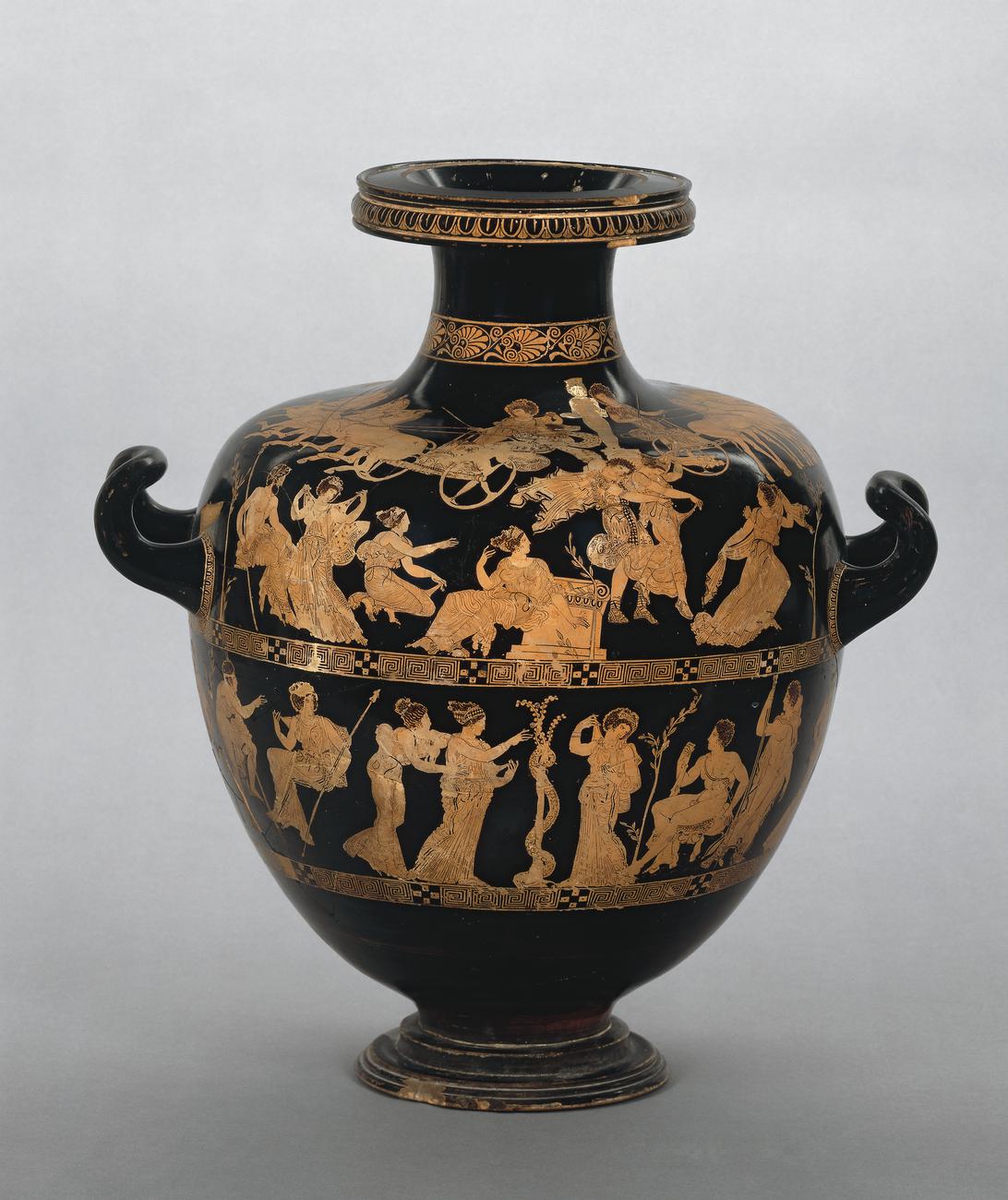
Before you is "The Meidias Hydria," an extraordinary red-figured hydria made in Attica around 420 to 400 BCE. This large, beautifully painted water jar is the work of a potter named Meidias and is often linked to the famous “Meidias Painter.”
The central scene depicts the dramatic moment when Castor and Polydeukes, the twin sons of Zeus, carry off the daughters of Leukippus. Look closely at the figures in their chariots—notice the intricate details in their clothing, the detailed patterns, and even the horses' manes, which are highlighted in yellow.
The painting features a range of mythological characters, including Zeus and Herakles. The rich decoration includes gilded jewelry, purple-dyed inscriptions, and purple-dipped fruit and flowers. It’s a stunning example of late 5th-century Athenian vase painting and a key piece for understanding the art and storytelling of ancient Greece.
This hydria was acquired by the British Museum in the late 18th century from the famous collector Sir William Hamilton.
See it in person
The Meidias Hydria is on display in Room 19 at the British Museum on Great Russell Street, Bloomsbury, London — free to enter. Choose British Museum on audioguide.london and take a photo of it to hear this free audio guide in six languages — no app download needed.
New, in beta. British Museum support has just launched and is still improving: over 1,000 objects so far, with more added all the time.