The Hoxne Hoard
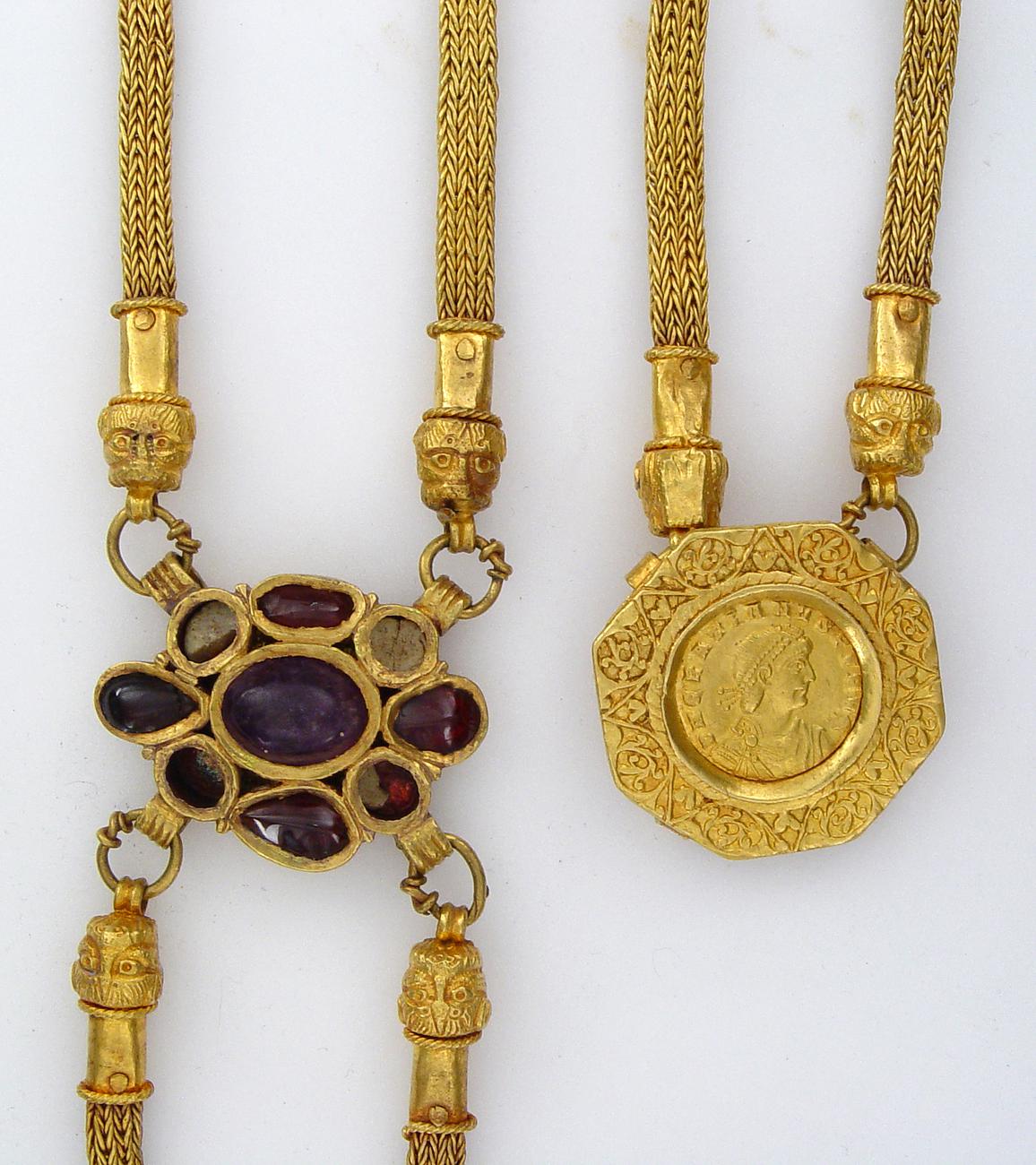
- Audio guide stop: 455
- Gallery: Room 49
- Audio guide: one commentary for a group of objects shown together
- Museum: The British Museum
- Image © The Trustees of the British Museum, shared under a CC BY-NC-SA 4.0 licence.
Listen to the free audio guide
About these objects
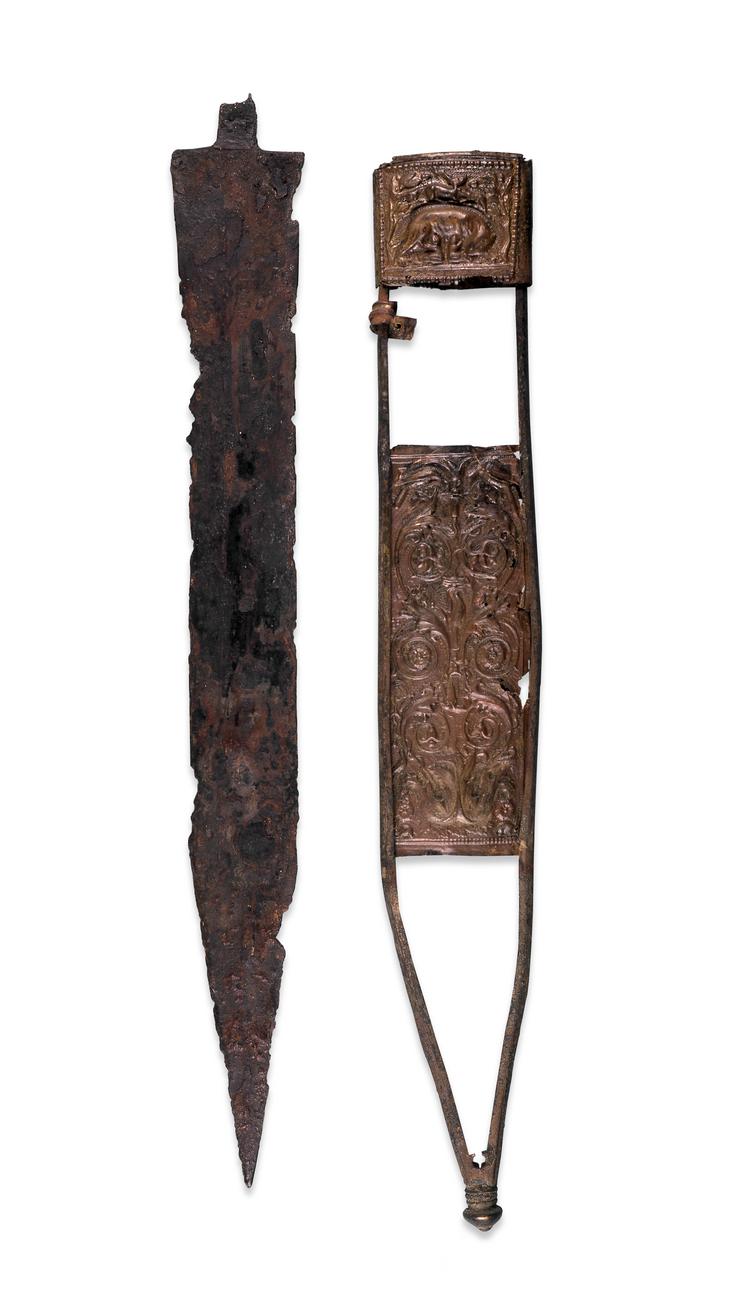
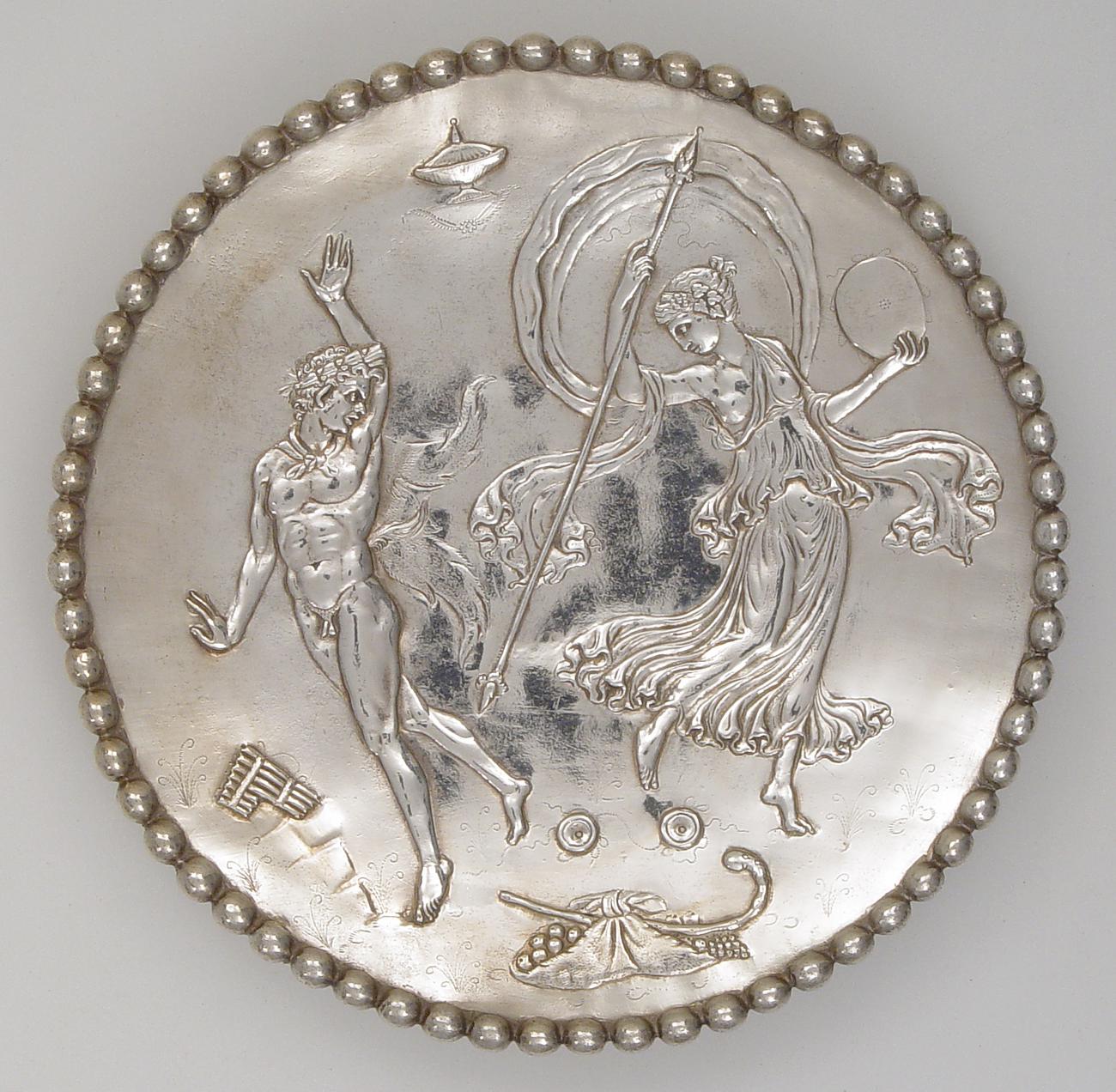
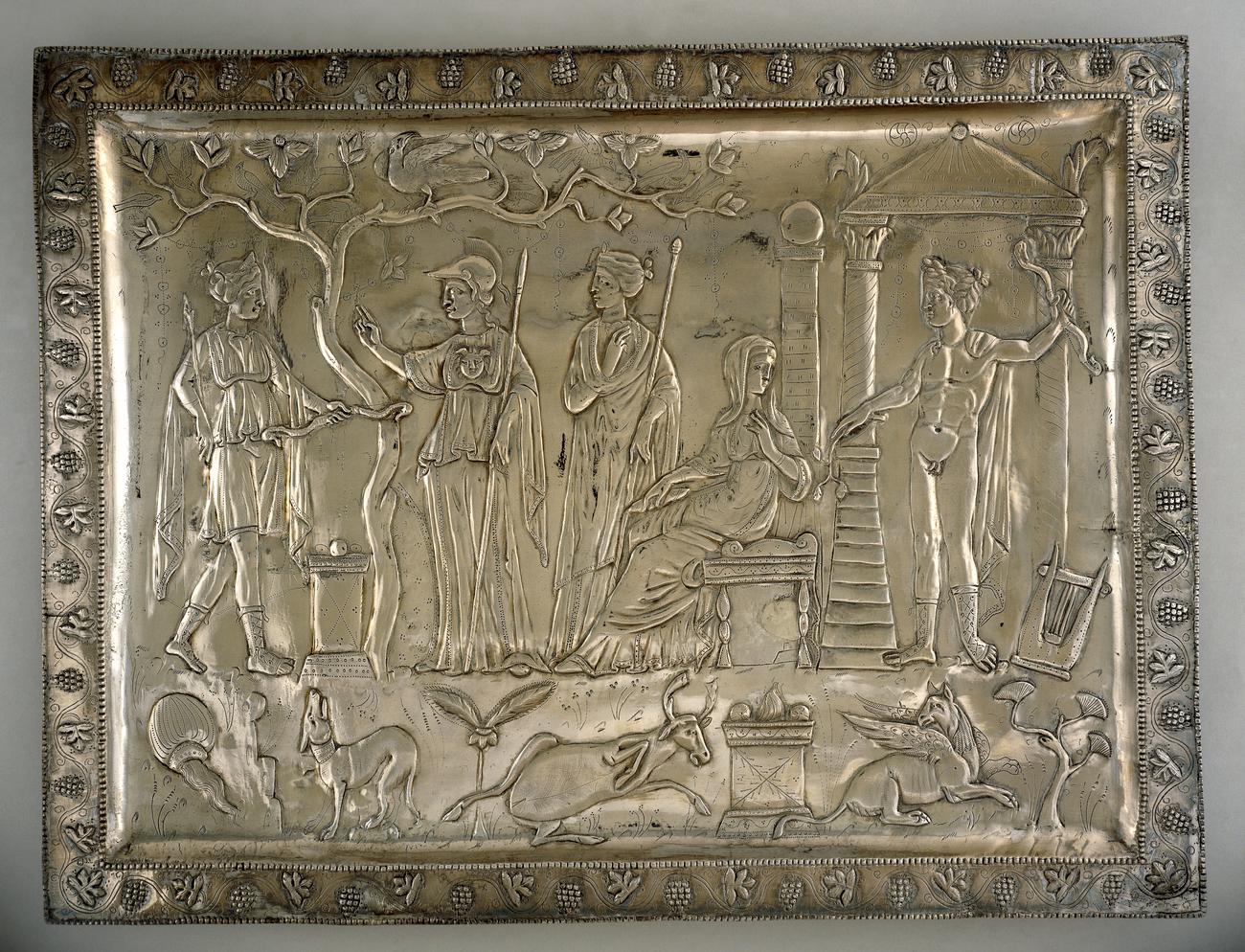
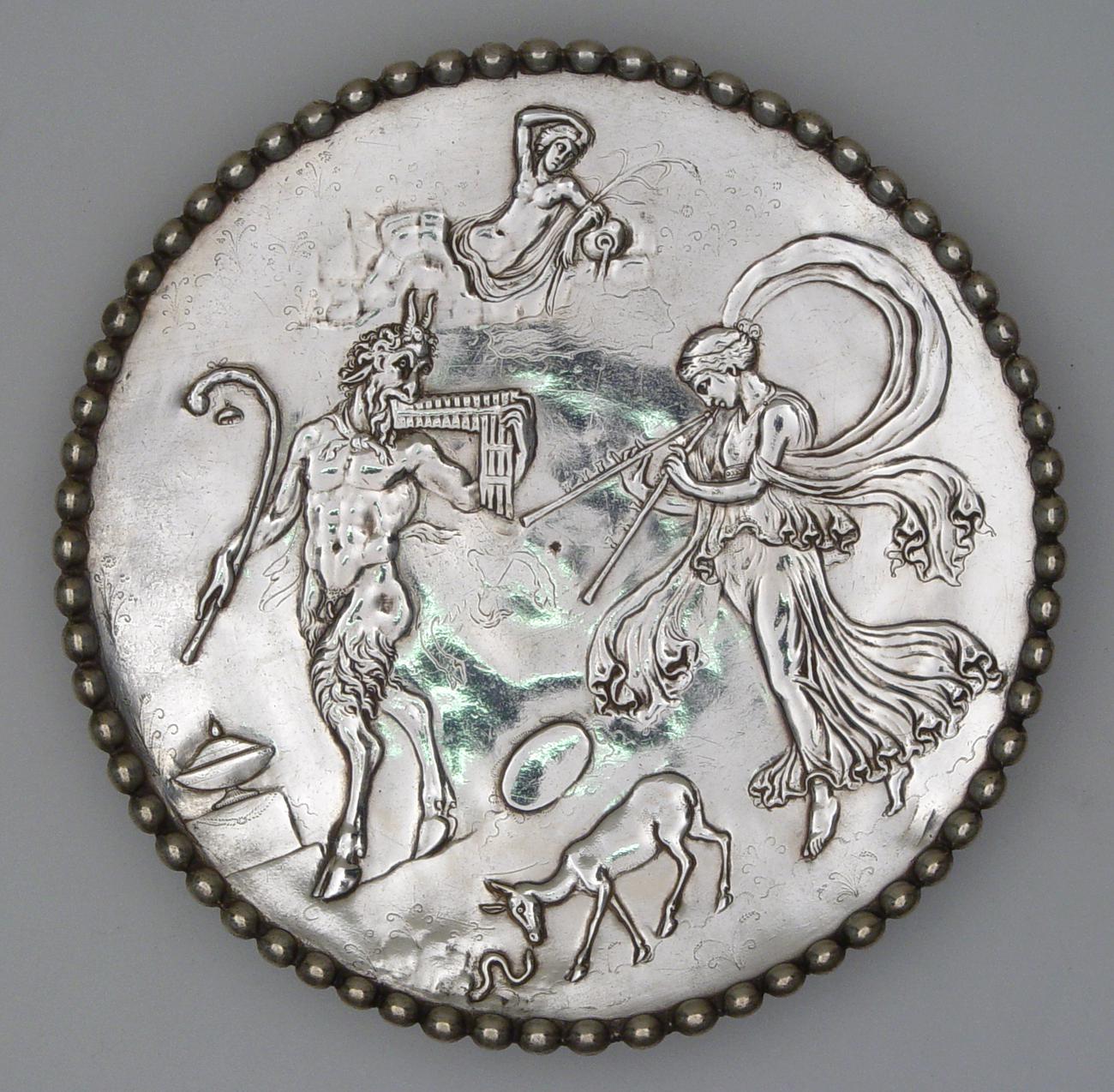
This is "The Hoxne Hoard," one of the richest collections of Roman treasure ever found in Britain. Buried around the 5th century, this hoard includes gold and silver objects alongside thousands of coins, likely hidden for safety as Roman rule in Britain faded. You’ll see a dazzling group of personal ornaments and tableware, all meticulously crafted from precious materials like gold, silver, garnet, and amethyst.
Among the most striking pieces is a gold body-chain, a rare find from a time when such ornaments were mostly known through art. With terminals shaped as lion heads and intricate looped links, it’s thought to have been worn as a high-status accessory by a slender young woman.
Also look for a series of elaborately decorated spoons and ladles. Many feature marine-themed engravings, including sea gods and dolphins, reflecting both Roman and early Christian iconography. The craftsmanship shows a sophisticated skill, with fine gilding, engraving, and even delicate glass inlays.
Another highlight is a set of beautifully detailed armlets, some studded with pierced goldwork and others with relief decoration. These items reveal a world of luxury and artisanship just before Britain’s transition into the medieval era.
See it in person
The Hoxne Hoard is on display in Room 49 at the British Museum on Great Russell Street, Bloomsbury, London — free to enter. Choose British Museum on audioguide.london and type its audio guide stop number, 455, from the gallery label, or take a photo of it, to hear this free audio guide in six languages — no app download needed.
New, in beta. British Museum support has just launched and is still improving: over 1,000 objects so far, with more added all the time.