The Entombment of Christ
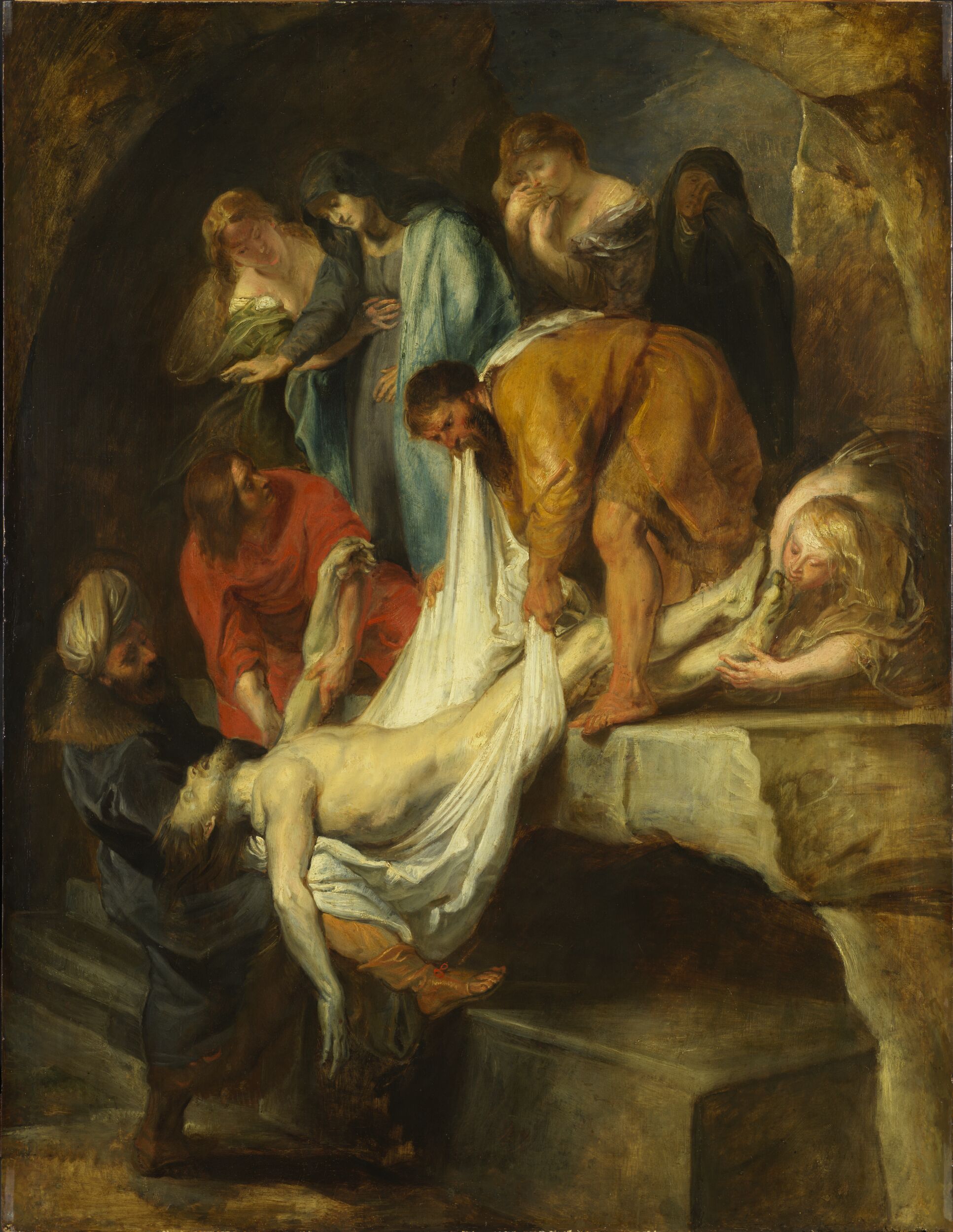
- Artist: Peter Paul Rubens
- Date: 1615-16
- Medium: oil on panel
- Museum: The Courtauld Gallery
- Collection record: The Courtauld Gallery website
Listen to the free audio guide
About this artwork
This is the "The Entombment of Christ" by Peter Paul Rubens. Created in 1615–16, this unusually large oil sketch on panel was likely a preparatory study for an altarpiece that never reached completion. The canvas bursts with dramatic lighting – a hallmark of Rubens – as a group of mourners labor to lower Christ’s limp body into the tomb. You can see the tension in their bodies and the soft glow that highlights the central figure, a direct nod to Caravaggio’s influence. Rubens had spent time in Rome, where he absorbed Caravaggio’s chiaroscuro and compositional daring. By reworking that Italian master’s altarpiece, Rubens didn’t merely copy; he infused his own dynamism and the robust movement typical of the Baroque. This practice of borrowing and reinterpreting was common in the early 17th‑century studio system. Notice how Rubens layers the figures, creating a vertical procession that guides the eye toward the grave, while the background hints at a mournful sky. The work’s scale and energy hint at the ambition behind the uncompleted altarpiece, and it stands as a testament to how artists of the period built upon the greats to push their own vision forward.
See it in person
The Entombment of Christ hangs in The Courtauld Gallery at Somerset House, London. Point your phone at any artwork there and audioguide.london plays a free audio guide in six languages — no app download needed.