The Didyma Sculptures: statue
- Gallery: Room 13
- Culture: East Greek
- Date: 570BC-560BC (circa)
- Object type: statue
- Materials: marble
- Museum number: 1859,1226.5
- Museum: The British Museum
- Collection record: British Museum website
- Image © The Trustees of the British Museum, shared under a CC BY-NC-SA 4.0 licence.
Listen to the free audio guide
About this object
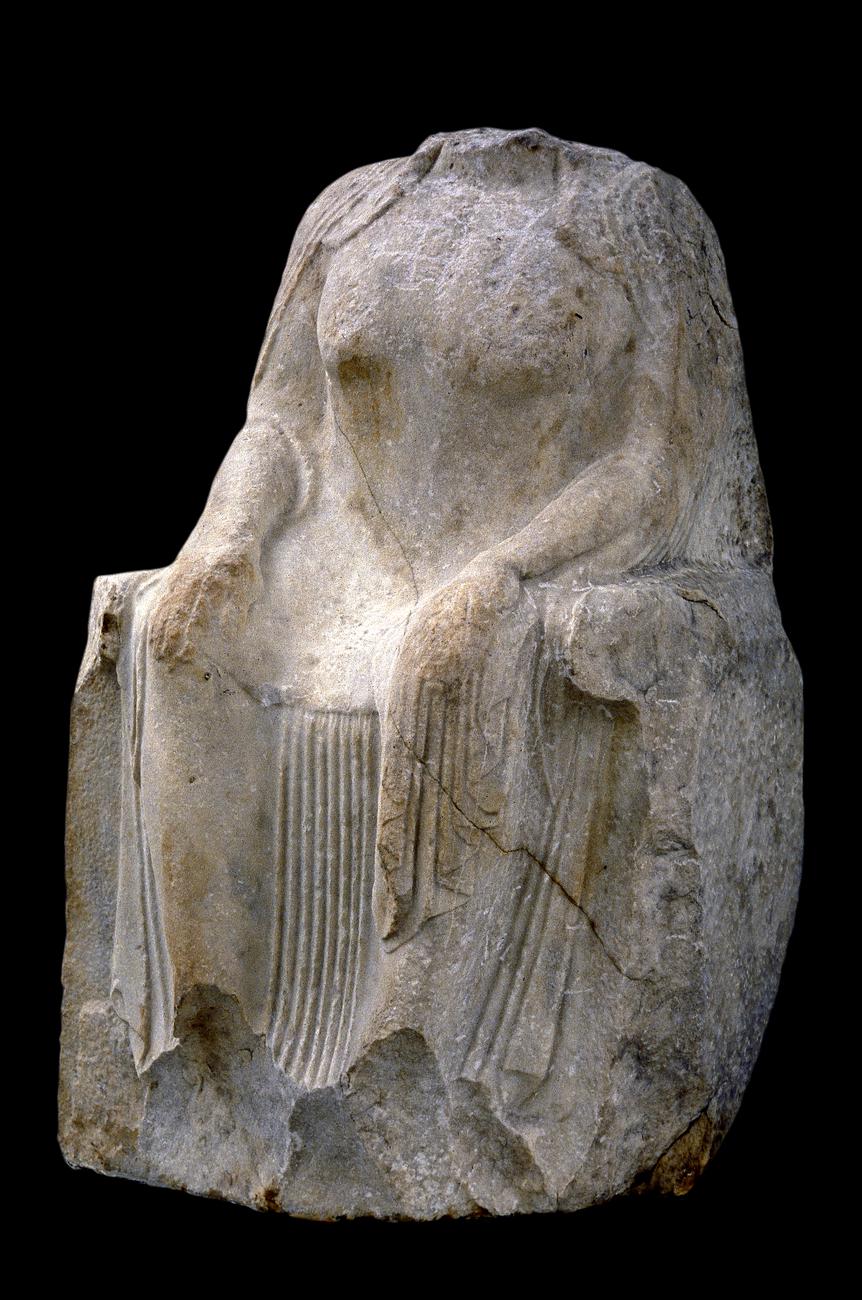
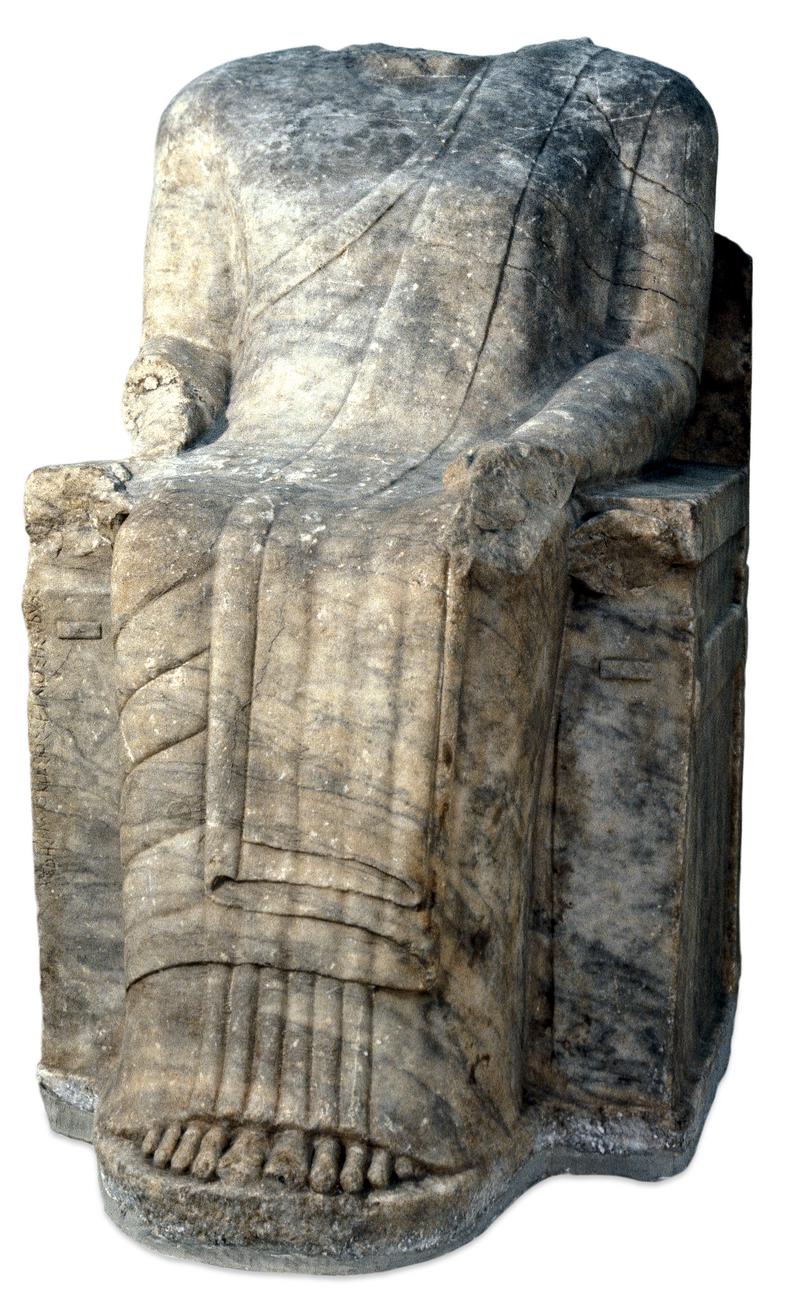
Before you stands a remarkable East Greek marble statue, depicting a life-sized figure seated with striking presence. This statue, representing Chares, a ruler from the region of Teichioussa, is rich in detail and craftsmanship. Notably, the marble surface reveals a finely detailed hair style, arranged in narrow, knobbed tresses. The folds and patterns on the draped chiton and sleeves show a blend of rigidity and artistic refinement, particularly in the naturalistic depiction of the mantle.
An intriguing feature is the inscription etched into the base of the statue’s chair, a rare personal and commemorative element. The Greek inscription identifies him as Chares, son of Kleisis, and names Apollo as the figure honored—possibly indicating a votive or commemorative purpose.
Dating to around 570–560 BC, this sculpture was excavated near Didyma on the Sacred Way. Its origins in East Greek culture place it in a broader tradition of Hellenistic art, capturing both individual identity and sacred devotion.
See it in person
The Didyma Sculptures: statue is on display in Room 13 at the British Museum on Great Russell Street, Bloomsbury, London — free to enter. Choose British Museum on audioguide.london and take a photo of it to hear this free audio guide in six languages — no app download needed.
New, in beta. British Museum support has just launched and is still improving: over 1,000 objects so far, with more added all the time.