The Deblin Cup
- Audio guide stop: 104
- Gallery: Room 2a
- Culture: Venice
- Made in: Venice (city)
- Date: 1450-1500 (circa)
- Object type: standing cup
- Materials: glass; enamel; gold
- Museum number: WB.57
- Museum: The British Museum
- Collection record: British Museum website
- Image © The Trustees of the British Museum, shared under a CC BY-NC-SA 4.0 licence.
Listen to the free audio guide
About this object
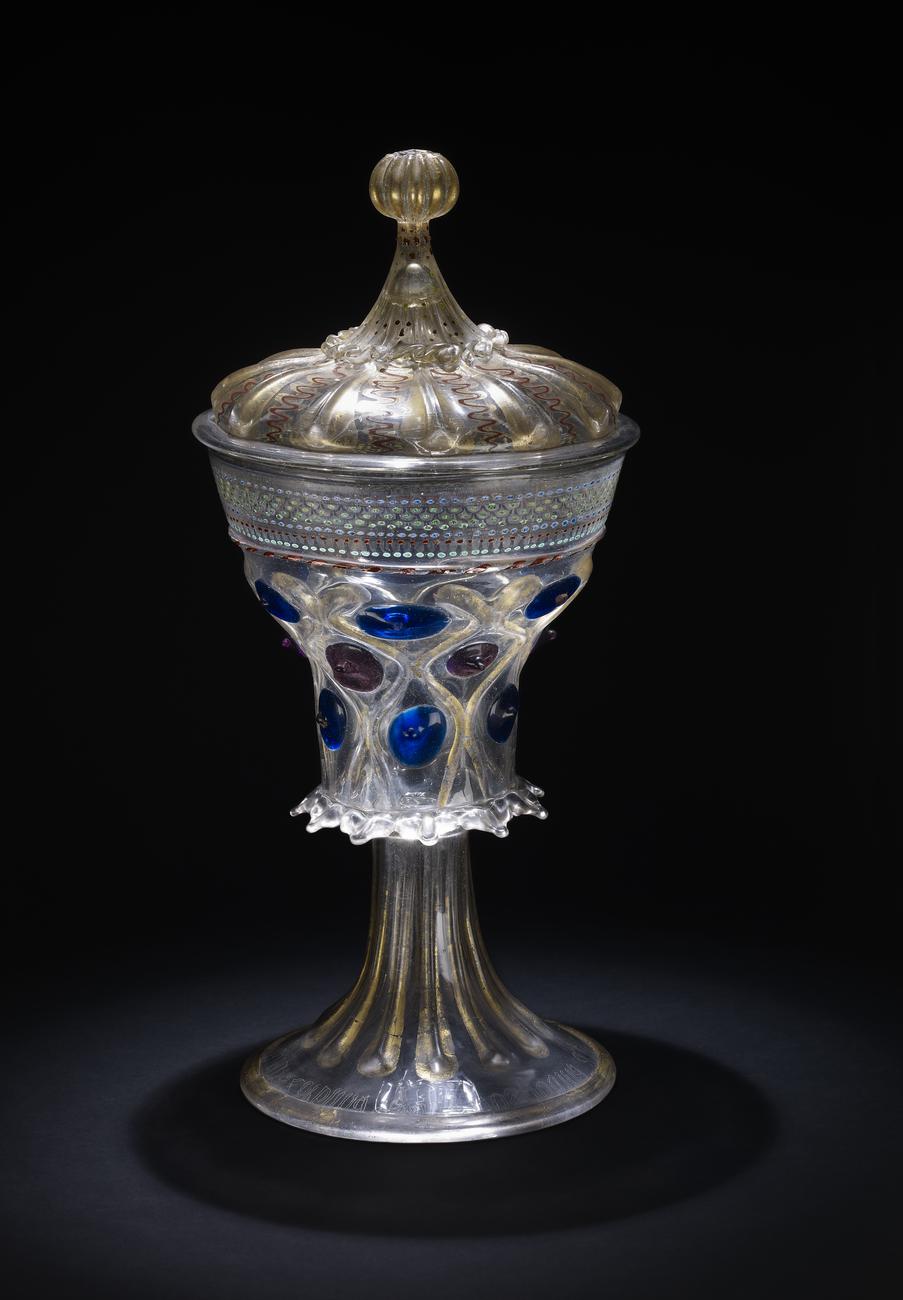
Before you is "Deblin Cup," a striking standing cup and cover made in Venice around 1450–1500. It is crafted from glass, enriched with enamel and gold, creating a "jewelled" effect that was a hallmark of Venetian glass at the time.
The cup's bowl has ribs that form a diaper pattern, with decorative prunts—or blobs—of red and blue glass placed in each lozenge. The rim is adorned with a golden scale design. The cover is similarly detailed with raised gilded ribs and a knop finial, all enhanced with enamel squiggles in red.
On the base is an inscription in Bohemian, asking, "Praise the Lord and drink cool wine to the health of the Lords of Deblin." Another inscription, "1415," adds historical interest, though likely added later than the glass itself.
Venetian glassmakers were known for their exceptional artistry, but this piece—possibly made for a noble in Bohemia—shows a unique blend of Gothic form and local custom. Its intricate decoration suggests it was made for a high-status patron or as a ceremonial gift.
See it in person
The Deblin Cup is on display in Room 2a at the British Museum on Great Russell Street, Bloomsbury, London — free to enter. Choose British Museum on audioguide.london and type its audio guide stop number, 104, from the gallery label, or take a photo of it, to hear this free audio guide in six languages — no app download needed.
New, in beta. British Museum support has just launched and is still improving: over 1,000 objects so far, with more added all the time.