The Bimaran Reliquary.
- Gallery: Room 33
- Culture: Buddhist
- Made in: Darunta
- Date: 1stC (circa)
- Object type: reliquary, casket
- Materials: gold; garnet; pitch ('cabochon shape' adheres to parts of the interior)
- Museum number: 1900,0209.1
- Museum: The British Museum
- Collection record: British Museum website
- Image © The Trustees of the British Museum, shared under a CC BY-NC-SA 4.0 licence.
Listen to the free audio guide
About this object
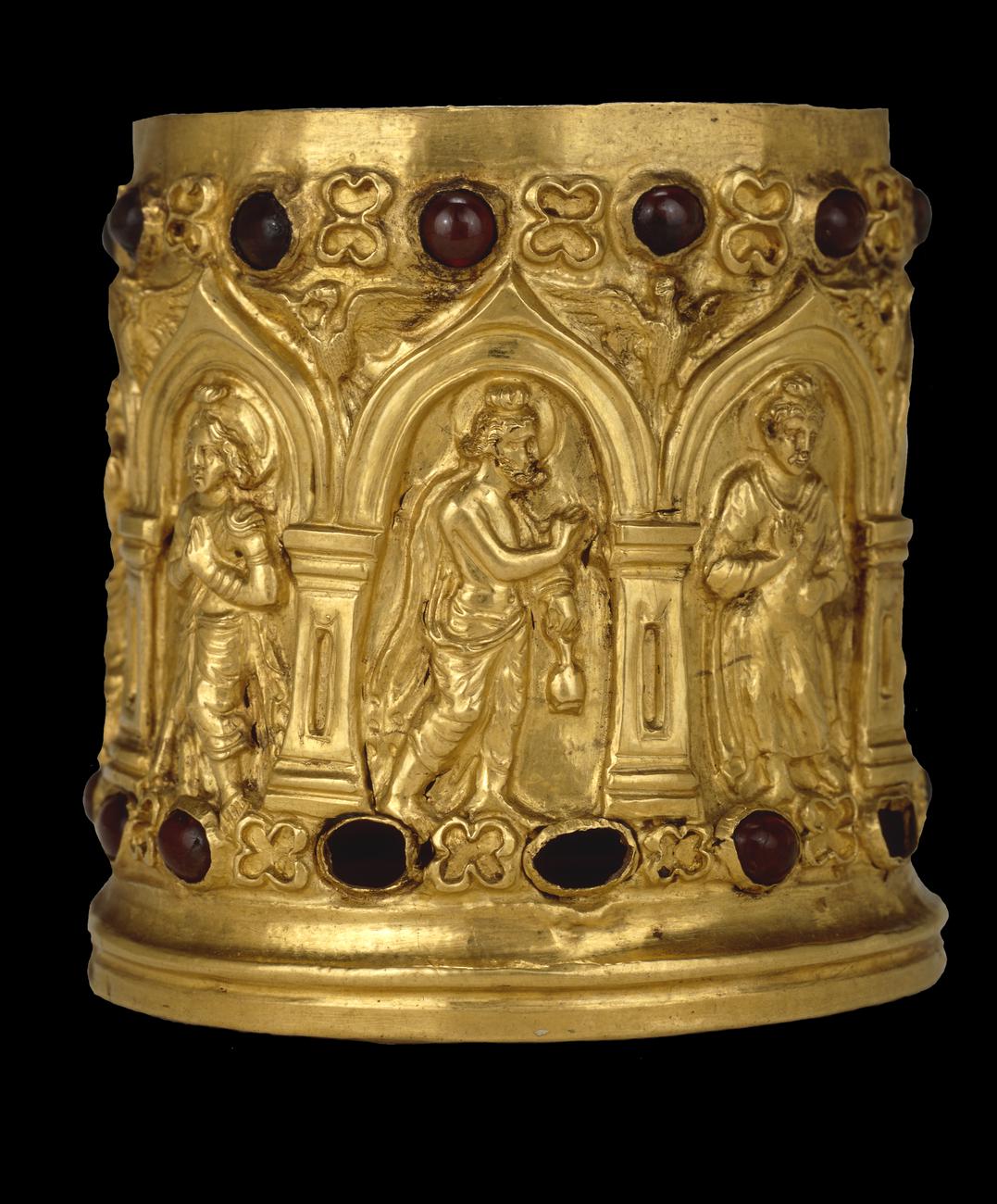
Before you is "The Bimaran Reliquary," a stunning example of Buddhist art crafted in gold and adorned with precious garnet stones. This casket, dating back to around the 1st century, comes from the region of Darunta—now part of modern-day Pakistan.
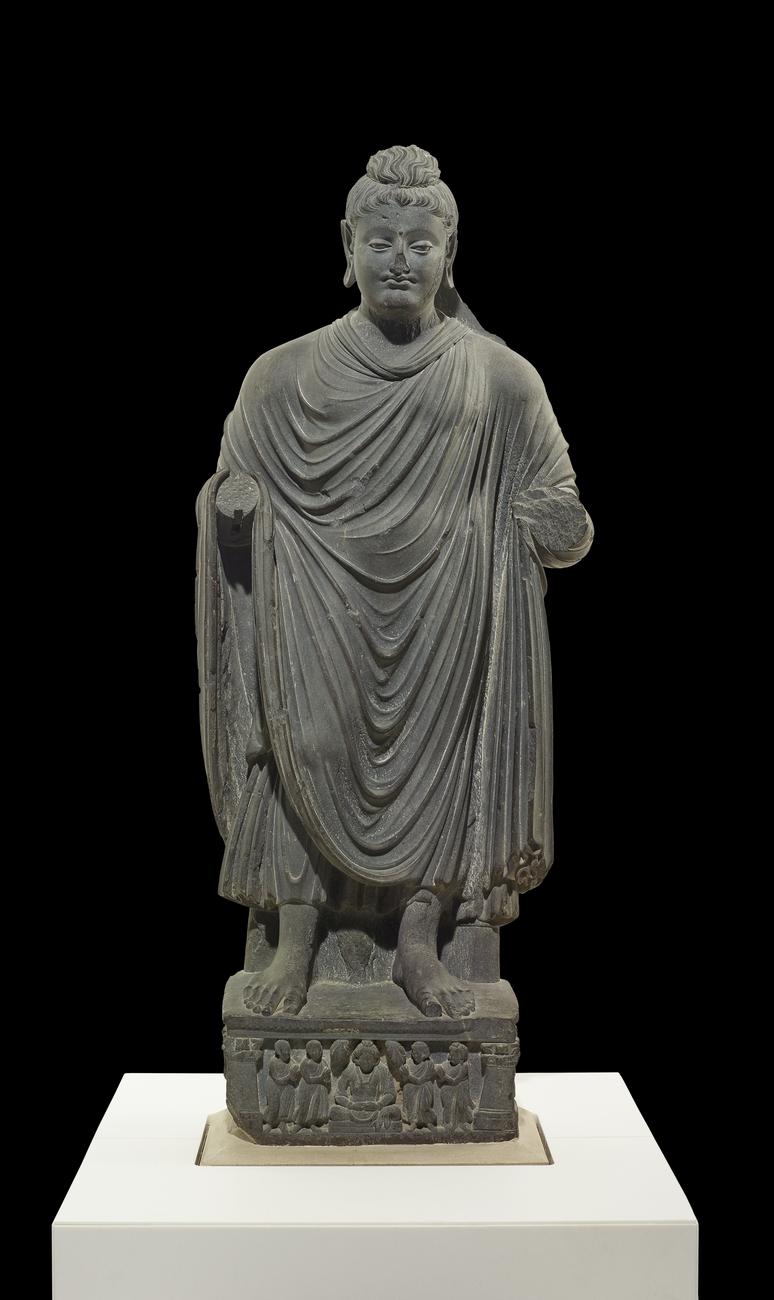
The casket’s surface is rich with detailed ornamentation. Pointed arches frame scenes of the Buddha, flanked by the deities Indra and Brahmā. These figures are rendered with fine carving, including delicate robes that drape in a realistic, almost flowing motion. At the base of the casket, a blown lotus symbolizes purity and spiritual awakening.
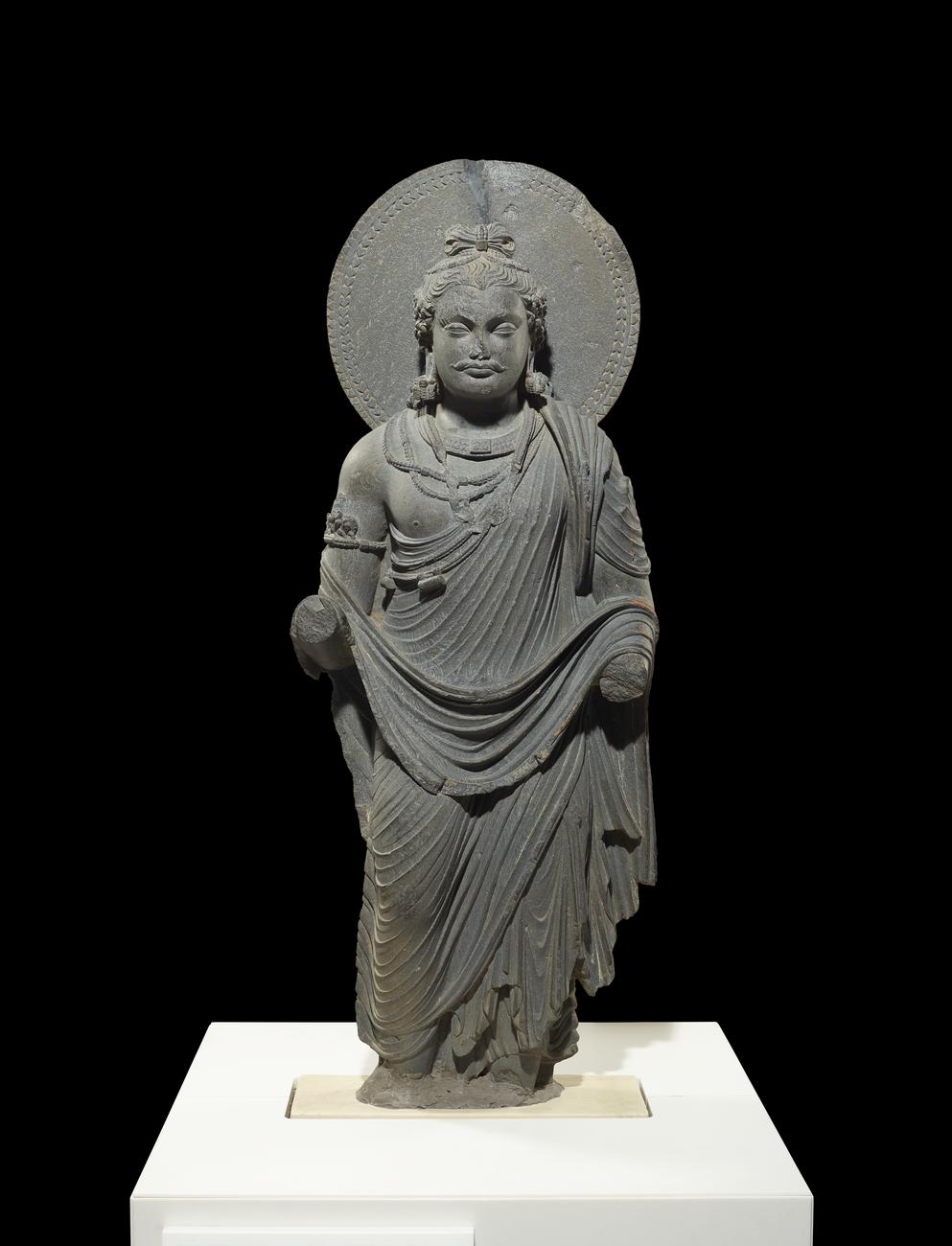
Each element of the design reflects a sophisticated grasp of both Indian and Greek artistic traditions, characteristic of the Gandhara School. The eagles in the spandrels and the intricate patterns of garnets highlight the work’s high level of craftsmanship.
What makes this reliquary truly special is that it once held sacred relics—believed to be of the Buddha—and was discovered within an inscribed stone box in the Bimaran Stupa. This casket is not only a marvel of ancient artistry but also a powerful symbol of faith and history.
See it in person
The Bimaran Reliquary. is on display in Room 33 at the British Museum on Great Russell Street, Bloomsbury, London — free to enter. Choose British Museum on audioguide.london and take a photo of it to hear this free audio guide in six languages — no app download needed.
New, in beta. British Museum support has just launched and is still improving: over 1,000 objects so far, with more added all the time.