The Basse-Yutz Flagons: oinochoe
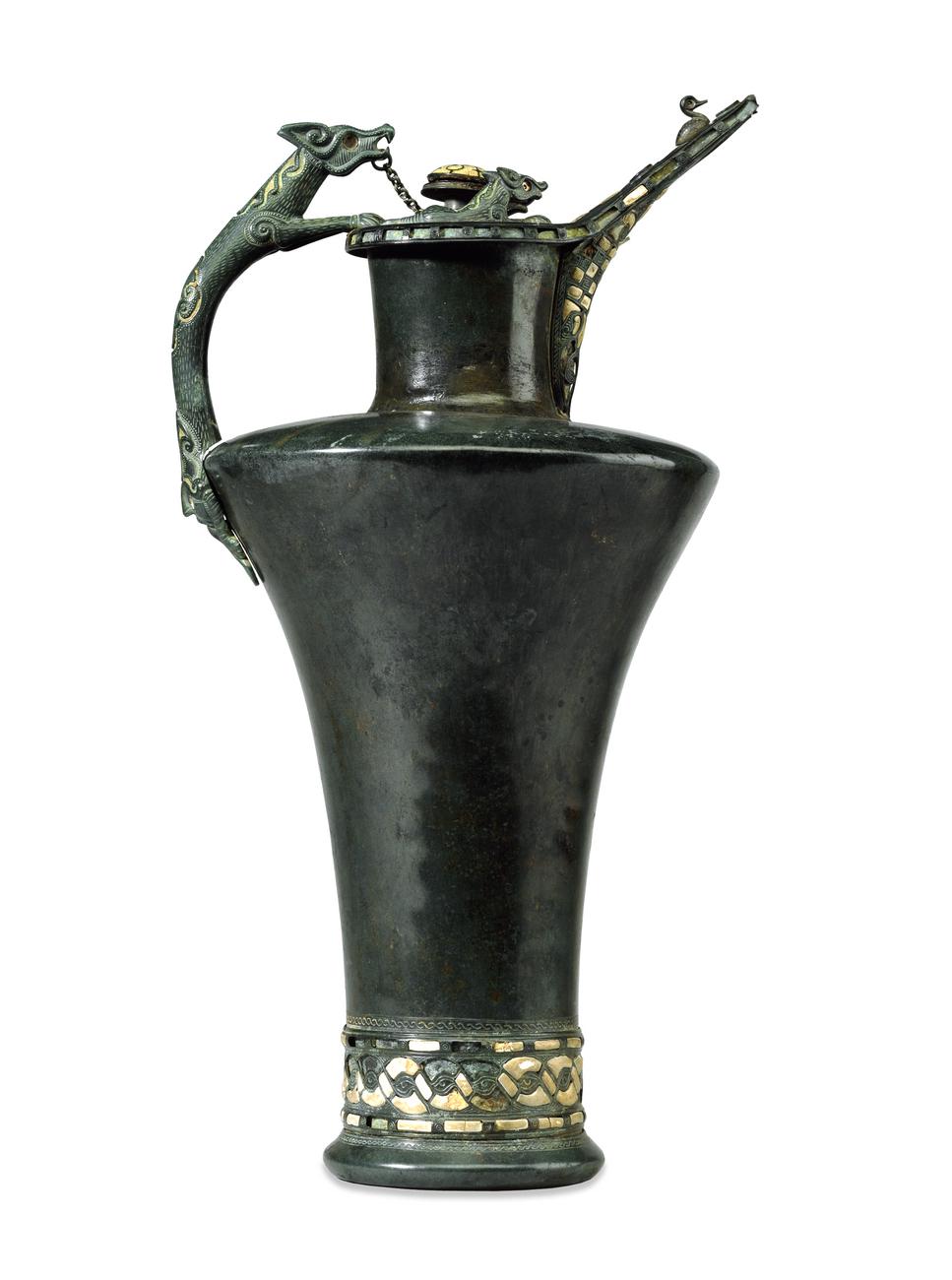
- Gallery: Room 50
- Culture: Iron Age; La Tène I
- Made in: France (Eastern)
- Date: 420 BC - 360 BC (circa)
- Object type: oinochoe, flagon
- Materials: copper alloy; coral; glass
- Museum number: 1929,0511.2
- Museum: The British Museum
- Collection record: British Museum website
- Image © The Trustees of the British Museum, shared under a CC BY-NC-SA 4.0 licence.
Listen to the free audio guide
About this object
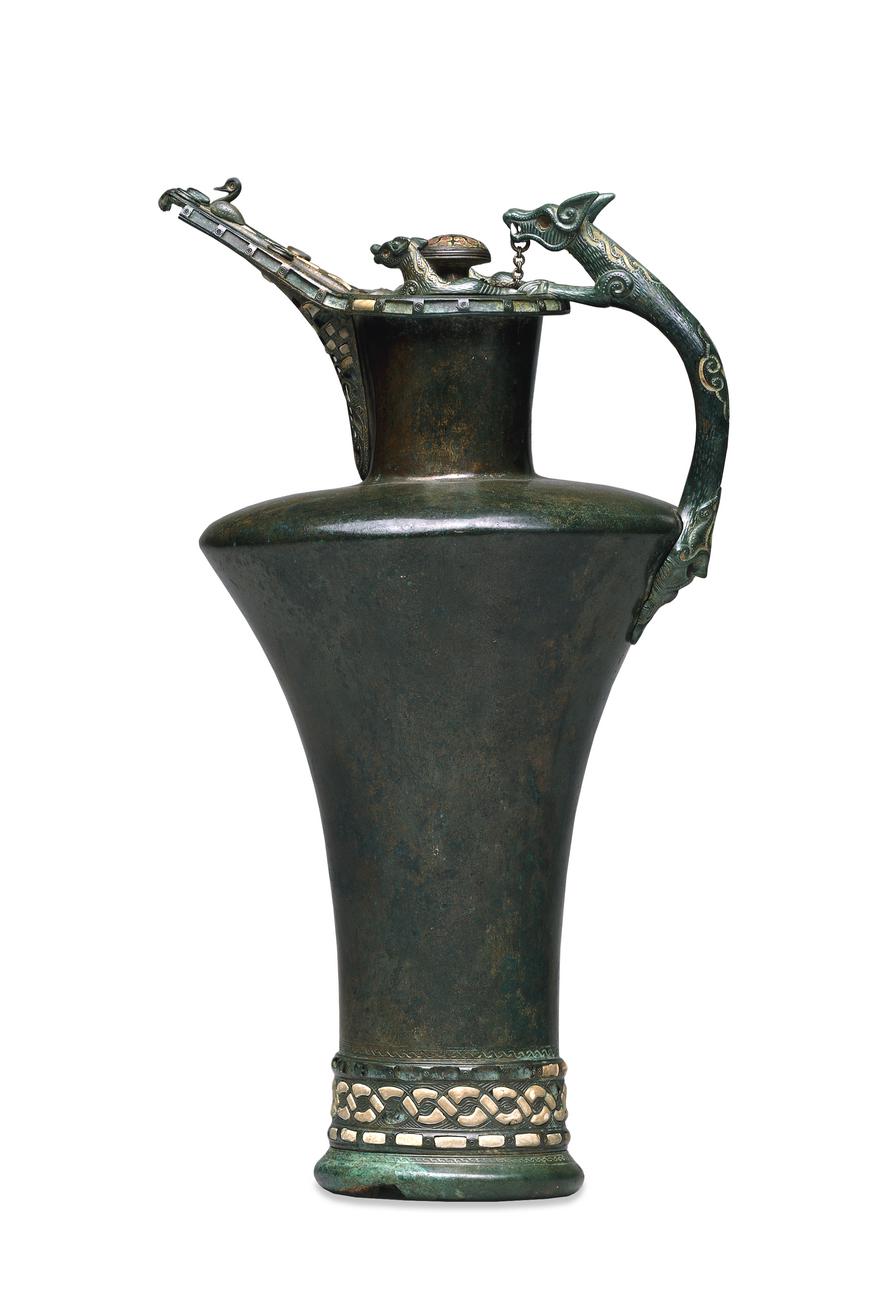
In front of you stands one of the Basse-Yutz Flagons, a remarkable copper alloy oinochoe, or wine jug, from the Iron Age. This vessel, crafted around 420 to 360 BC in eastern France, copies the shape of Etruscan flagons but features a unique mix of styles.
The beaked spout, foot, and handle are inlaid with coral and red glass enamel, adding vivid color. The body was hammered from a single sheet of metal and assembled with precision using rivets and resin.
This flagon is richly decorated with a dog or wolf-shaped handle and stylized human masks. Under the spout, early La Tène palmette motifs – influenced by Egyptian designs – appear, while a duck decorates the spout’s end, a purely local design.
These flagons were used at feasts to pour wine or mead. Discovered in 1927 alongside Etruscan stamnoi, their craftsmanship marks them as among the finest examples of Early Celtic metalwork in Europe.
See it in person
The Basse-Yutz Flagons: oinochoe is on display in Room 50 at the British Museum on Great Russell Street, Bloomsbury, London — free to enter. Choose British Museum on audioguide.london and take a photo of it to hear this free audio guide in six languages — no app download needed.
New, in beta. British Museum support has just launched and is still improving: over 1,000 objects so far, with more added all the time.