The Actium Vase
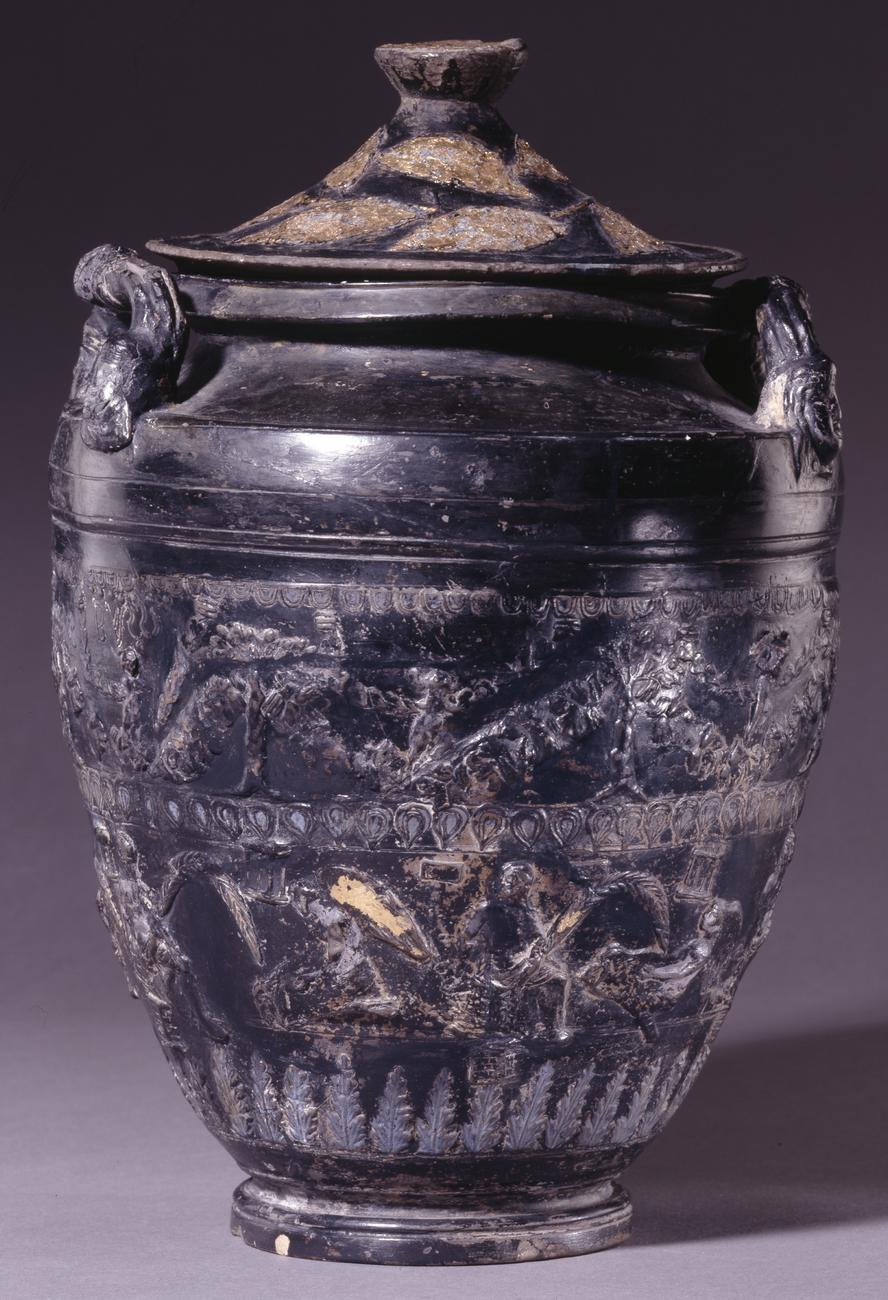
- Gallery: Room 70
- Maker: Attributed to Bassus
- Culture: Roman
- Made in: Italy
- Date: 30BC-25BC (circa)
- Object type: stamnos
- Materials: pottery; lapis lazuli; madder; gold
- Museum number: 1873,0208.3
- Museum: The British Museum
- Collection record: British Museum website
- Image © The Trustees of the British Museum, shared under a CC BY-NC-SA 4.0 licence.
Listen to the free audio guide
About this object
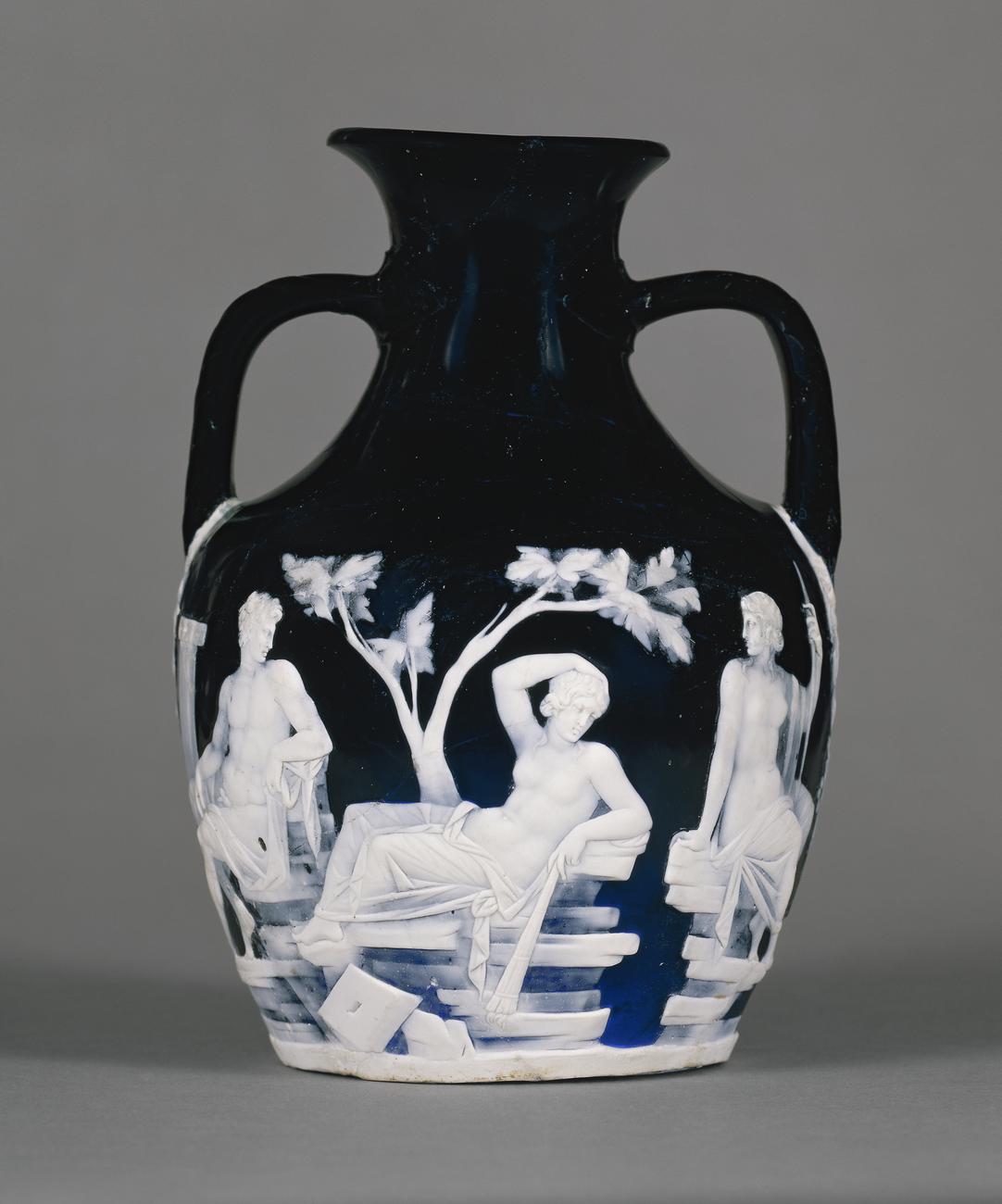
Before you is "The Actium Vase," a striking example of Roman black-glazed pottery. This large jar, called a stamnos, is lidded and decorated with intricate relief. Notice the sharply carved rim and the large, mask-decorated handles. The lid features a conical knob and a wreath of olive leaves, while the body is richly adorned with acanthus leaves, swirling festoons, and cupids playing the syrinx.
The vase’s most dramatic feature is the depiction of a bearded male figure, possibly Neptune, seated on a rock. Beside him, Victory offers a ship prow. These scenes are framed by ornate borders, including a maker’s name—Bassus—in cursive.
Though once attributed to the Battle of Actium, the vase reflects Augustan ideals of power and piety. Likely made in Campania, it shows the region’s advanced black-glaze technique. Its once-polychrome surface included gold, blue, and pink, making it a high-status funerary object.
Despite its somewhat hurried production, the vase is a masterpiece of Roman decorative art.
See it in person
The Actium Vase is on display in Room 70 at the British Museum on Great Russell Street, Bloomsbury, London — free to enter. Choose British Museum on audioguide.london and take a photo of it to hear this free audio guide in six languages — no app download needed.
New, in beta. British Museum support has just launched and is still improving: over 1,000 objects so far, with more added all the time.