Stove
- Gallery: Medieval & Renaissance, Room 62, The Foyle Foundation Gallery
- Maker: Hans Kraut (maker)
- Made in: Villingen
- Date: 1577
- Object type: Stove
- Materials: Composed of moulded, lead-glazed earthenware and painted tin-glazed earthenware stove tiles
- Dimensions: Height 239 cm; Width 166 cm; Depth 140 cm
- Museum: V&A South Kensington
- Collection record: V&A website
- Image © Victoria and Albert Museum, London.
Listen to the free audio guide
In the museum now? Point your phone at the next object and hear its guide.
About this object
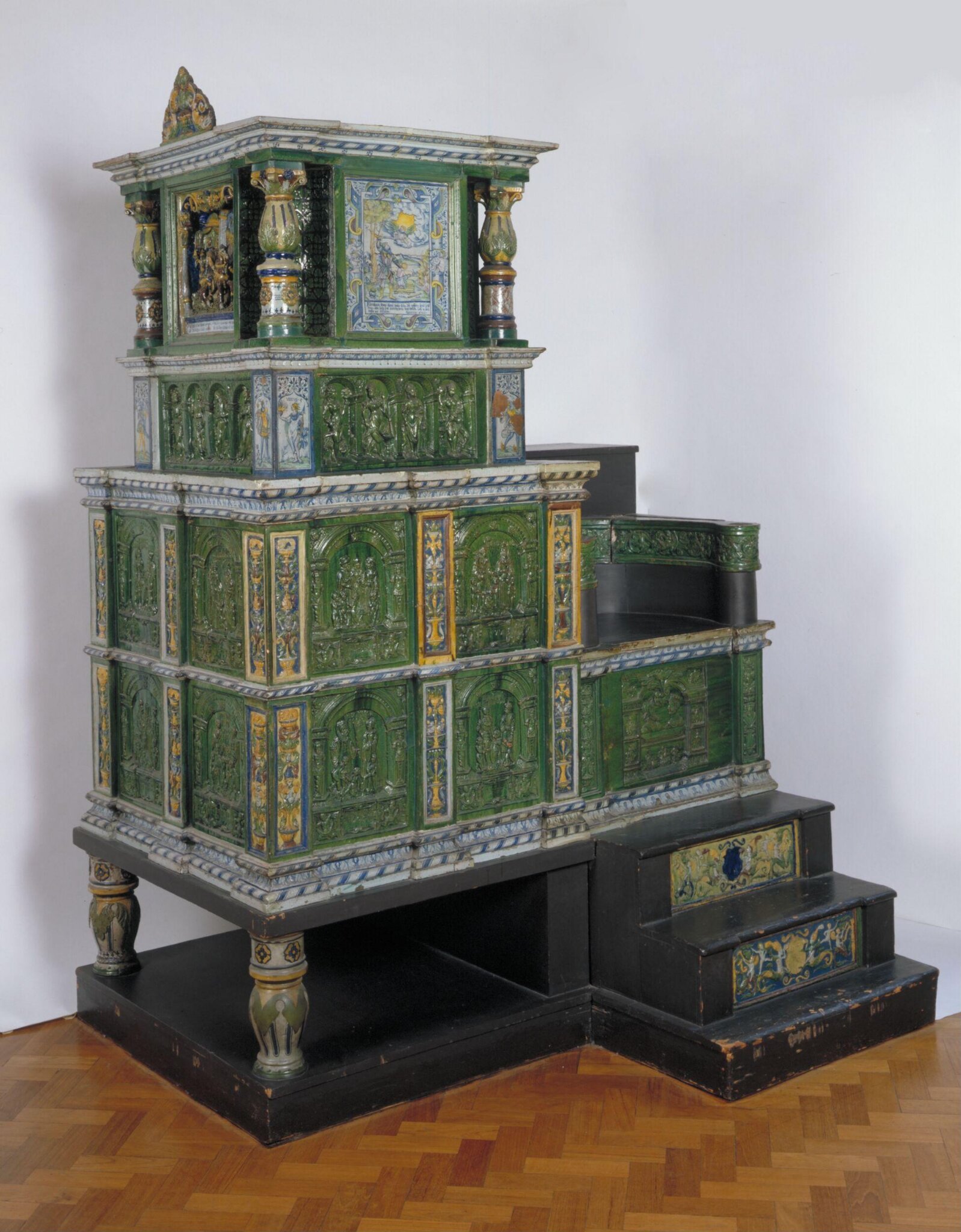
Before you is "Stove", a magnificent piece of earthenware created in 1577 by the potter Hans Kraut in Villingen. This large, impressive structure consists of a rectangular fire-box supported by legs, topped by a tall tower.
As you look closely at the tiles, you can see a beautiful mix of techniques. Many of the panels feature relief-moulded decorations with a monochrome green glaze, showing the Virtues and the Patriarchs with their families. Others use a different method, featuring painted tin-glazed surfaces. These upper tiles depict scenes such as the Crucifixion and the Sacrifice of Isaac, along with figures representing the Planets. You can even find a high-relief scene of the Triumph of Mordecai.
These types of closed, wood-fired stoves were highly efficient for heating large rooms. By placing the flue behind a wall, the room stayed completely free of smoke and fumes. While originally found in castles and churches, these decorative stoves eventually became a symbol of wealth in many homes across Europe.
See it in person
Stove is on display in Medieval & Renaissance, Room 62, The Foyle Foundation Gallery at the V&A South Kensington on Cromwell Road, London — free to enter. Choose V&A South Kensington on audioguide.london and take a photo of it to hear this free audio guide in six languages — no app download needed.
New, in beta. V&A support has just launched and is still improving: 1,000 objects with audio so far, with more added all the time.