Still Life
- Artist: Claude Monet
- Date: about 1869
- Medium: Oil on canvas
- Museum: The National Gallery
- Collection record: The National Gallery website
Listen to the free audio guide
About this artwork
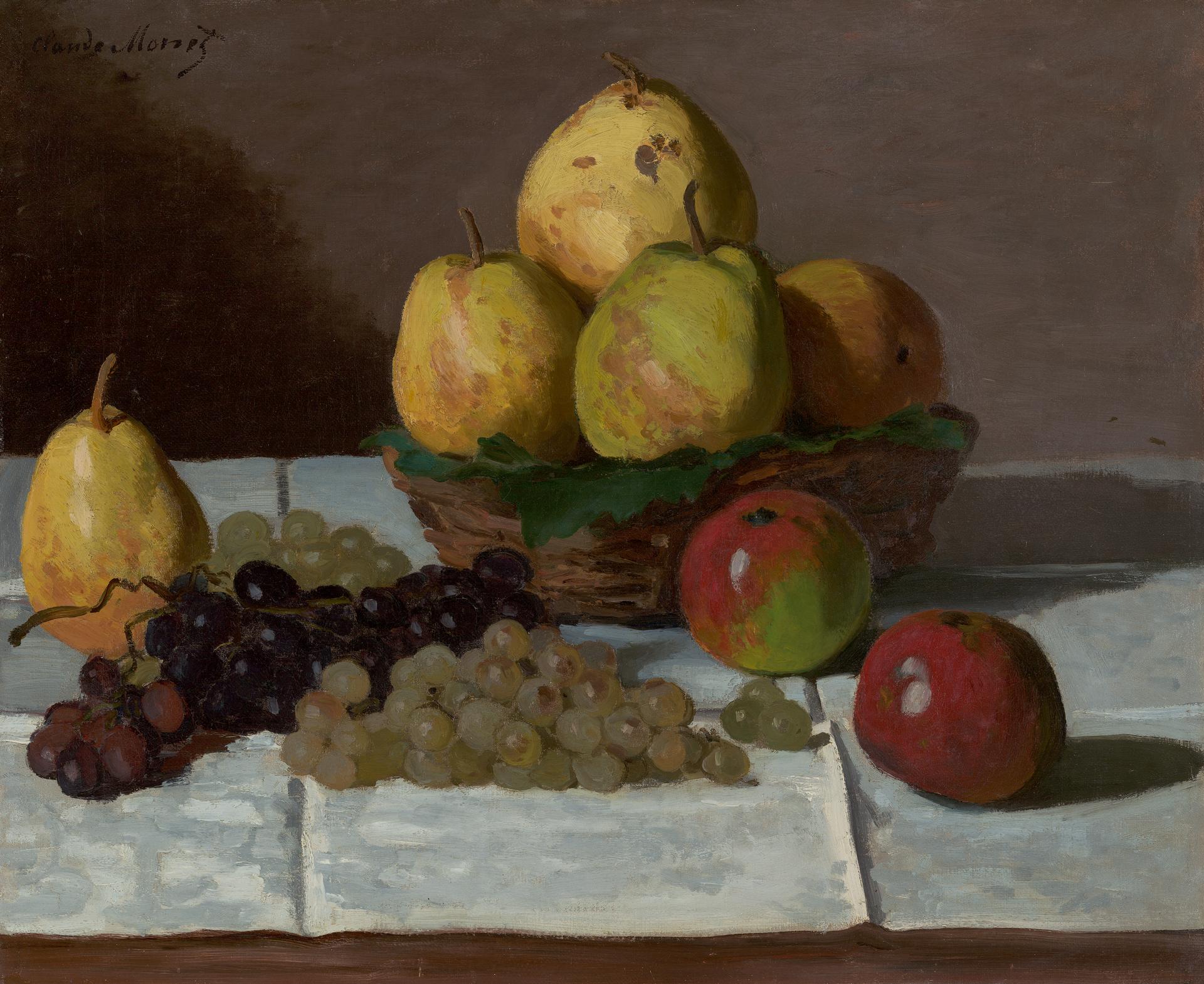
This is the "Still Life" by Claude Monet. Painted in 1867, it's a beautiful example of how still life compositions were evolving during this period. You can see two brightly coloured apples placed prominently in the foreground, one red and the other with a mix of red and green, shimmering with touches of white paint. In the wicker basket to the right, four pears are carefully stacked, while a fifth stands partly behind three bunches of plump grapes. Monet's use of light is striking - a source of illumination is placed to the left of the composition, casting sharp shadows on both apples and pears to the right.
Monet was inspired by 18th-century artist Jean-Siméon Chardin, whose modest still lifes were gaining popularity again in the early 1860s. But what's notable about Monet's work is how he took these humble domestic objects and turned them into dynamic compositions. The white tablecloth adds a touch of elegance to the scene, contrasting with the vibrant colours of the fruit.
It's interesting to note that still lifes were popular among Parisian dealers and collectors at this time, so it's possible that Monet chose this subject as a way to appeal to their tastes. Alternatively, maybe he simply enjoyed painting on rainy days like this one!
See it in person
Still Life hangs in The National Gallery on Trafalgar Square, London — free to enter. Point your phone at any artwork there and audioguide.london plays a free audio guide in six languages — no app download needed.