Flood Waters
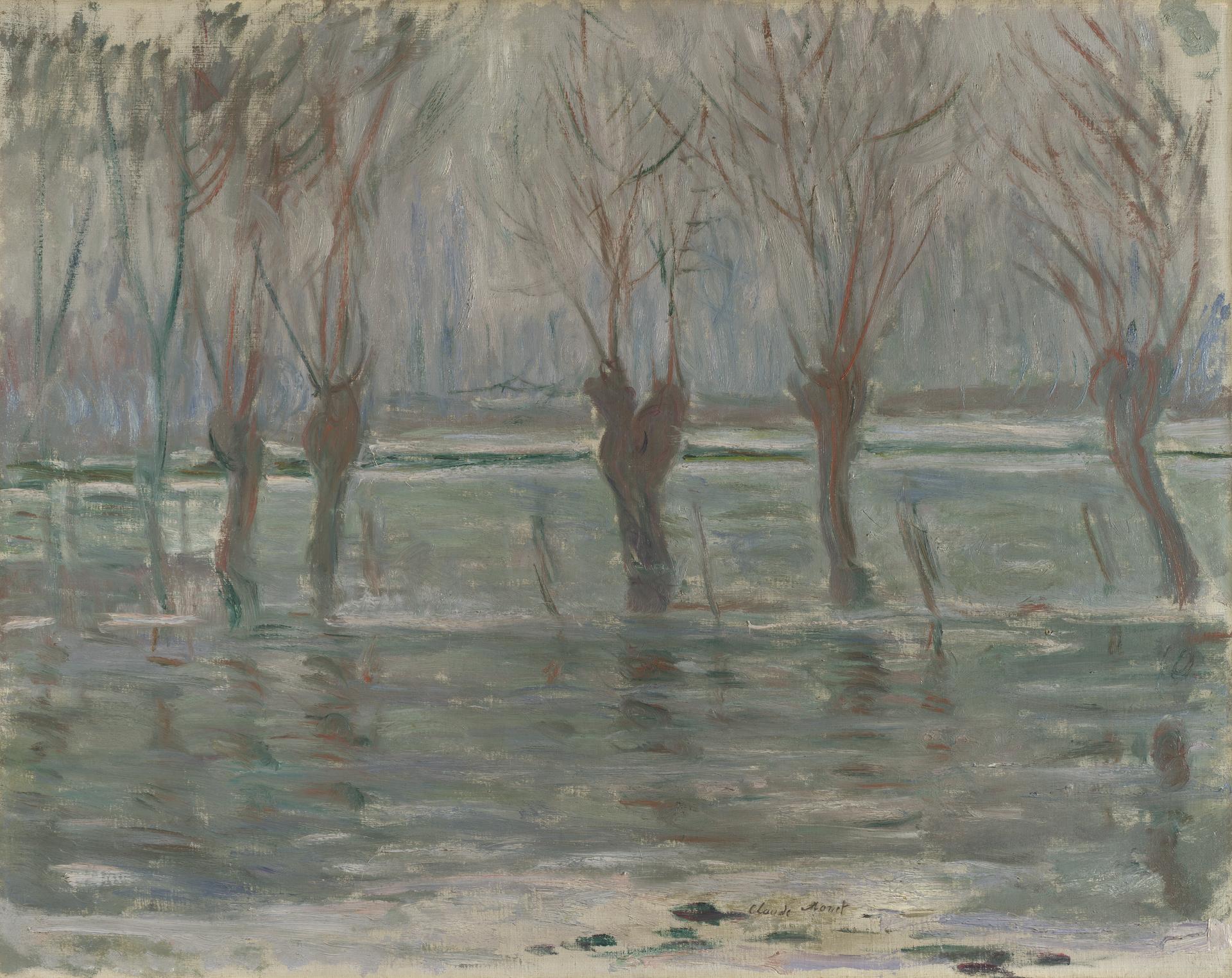
- Artist: Claude Monet
- Date: 1896
- Medium: oil on canvas
- Museum: The National Gallery
- Collection record: The National Gallery website
Listen to the free audio guide
About this artwork
This is "Flood Waters" by Claude Monet. Painted in 1896, it's an oil on canvas piece that captures the aftermath of a severe flood in Monet's home region of Giverny.
Monet was forced to stay close to his home due to the flooding and painted this view of the waterlogged landscape, including the row of pollarded willows on the edge of the meadow. The tree branches are brushed in with fine, rapid strokes, while the sky and water are conveyed in fluid sweeps and washes.
You can see that Monet's palette is quite restricted, sticking to pale greys, greens, and mauves. This suggests he was more interested in capturing the atmospheric harmony of the scene than creating a highly detailed representation. The painting also gives off an impression of being unfinished, possibly even painted on the spot.
Monet was known for his series paintings, where he would depict the same subject under different light and weather conditions. However, "Flood Waters" doesn't fit neatly into one of these series. It's more of a record of the flood itself, and it's likely that Monet was experimenting with capturing the watery subject matter in a unique way.
The fact that this painting may have been used as a study for another piece adds an extra layer of interest. One wonders what other works might have been inspired by this moment in time, when the usually tranquil Giverny landscape was transformed by the floodwaters.
See it in person
Flood Waters hangs in The National Gallery on Trafalgar Square, London — free to enter. Point your phone at any artwork there and audioguide.london plays a free audio guide in six languages — no app download needed.