Solomon Receiving the Queen of Sheba
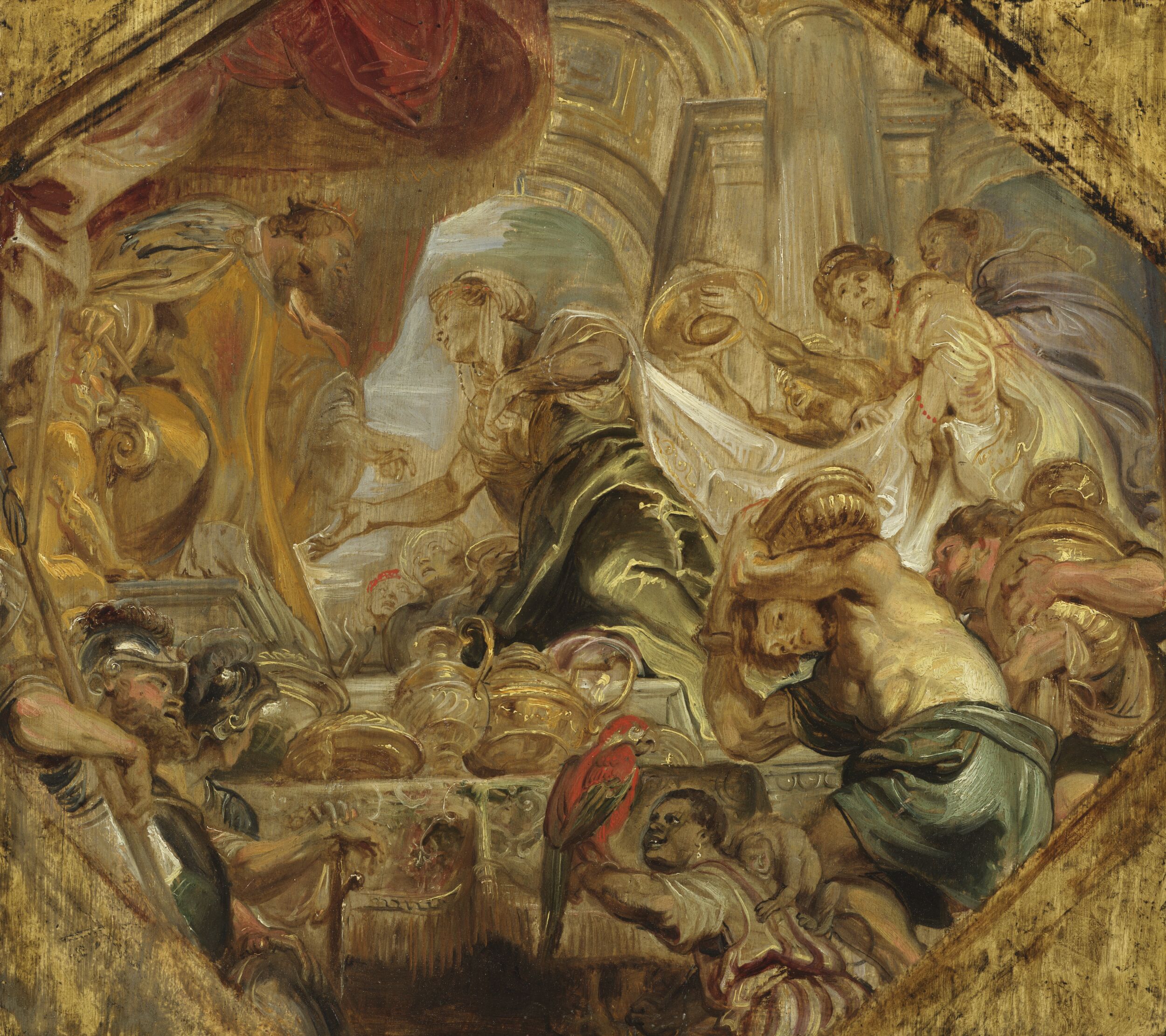
- Artist: Peter Paul Rubens
- Date: 1620
- Medium: oil on panel
- Museum: The Courtauld Gallery
- Collection record: The Courtauld Gallery website
Listen to the free audio guide
About this artwork
This is the “Solomon Receiving the Queen of Sheba” by Peter Paul Rubens. These sketches were painted in 1620 as preparatory studies for two grand ceiling canvases. Because they’re meant to be seen from below, Rubens gives us a low‑angle view of a powerful seated ruler speaking to an elegant female visitor. The scene is drawn from the Old Testament, and the composition mirrors a famous panel by Paolo Veronese that Rubens saw in Venice.
Rubens’s assistants turned these studies into the finished works, which became part of a series of 39 large oil‑on‑panel canvases for the Church of Saint Ignatius of Loyola in Antwerp. The final paintings were completed in 1621, but a lightning‑induced fire a century later destroyed them all. Today, we’re looking at the original sketches that give us a window into Rubens’s creative process and his reverence for Renaissance models.
See it in person
Solomon Receiving the Queen of Sheba hangs in The Courtauld Gallery at Somerset House, London. Point your phone at any artwork there and audioguide.london plays a free audio guide in six languages — no app download needed.