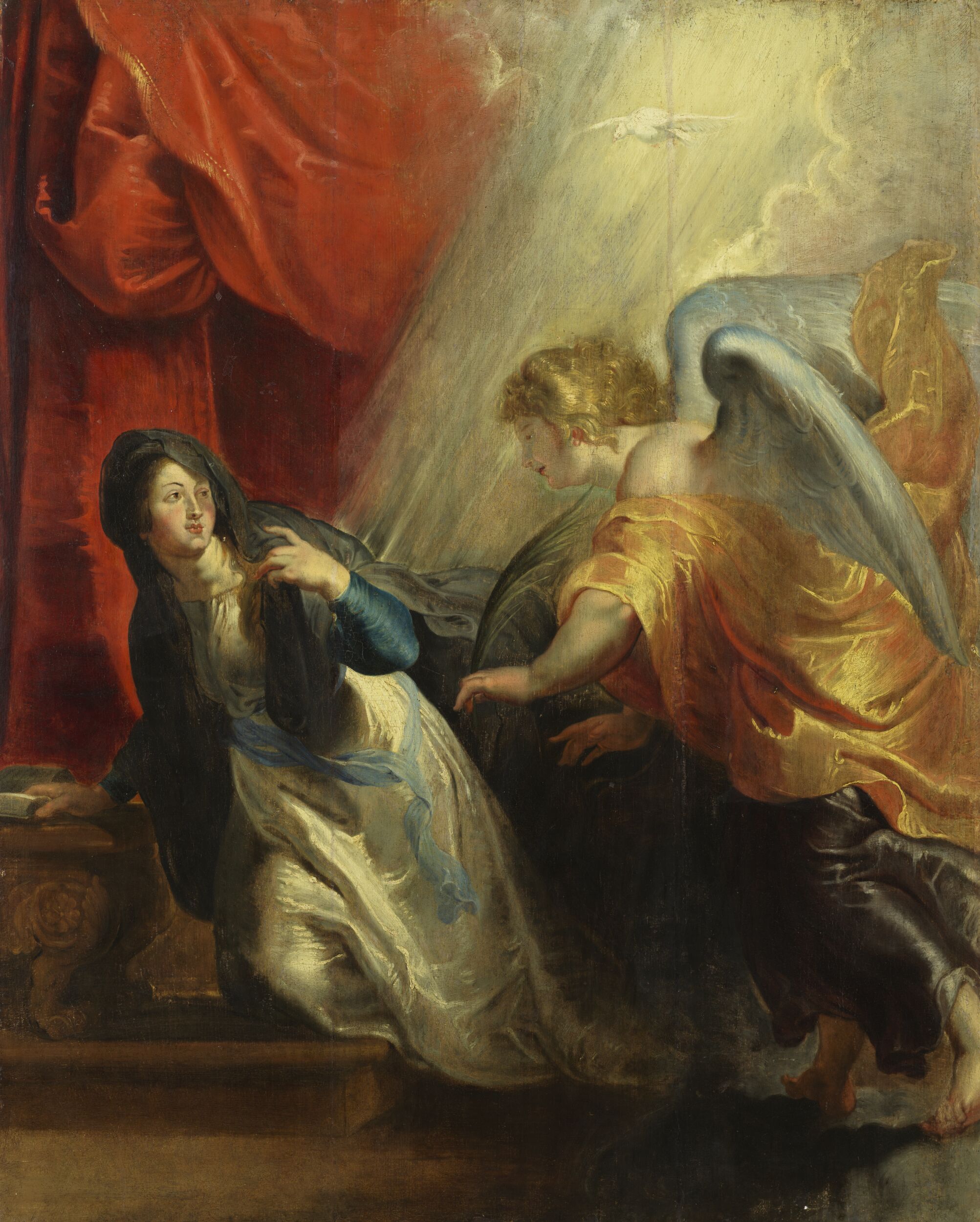
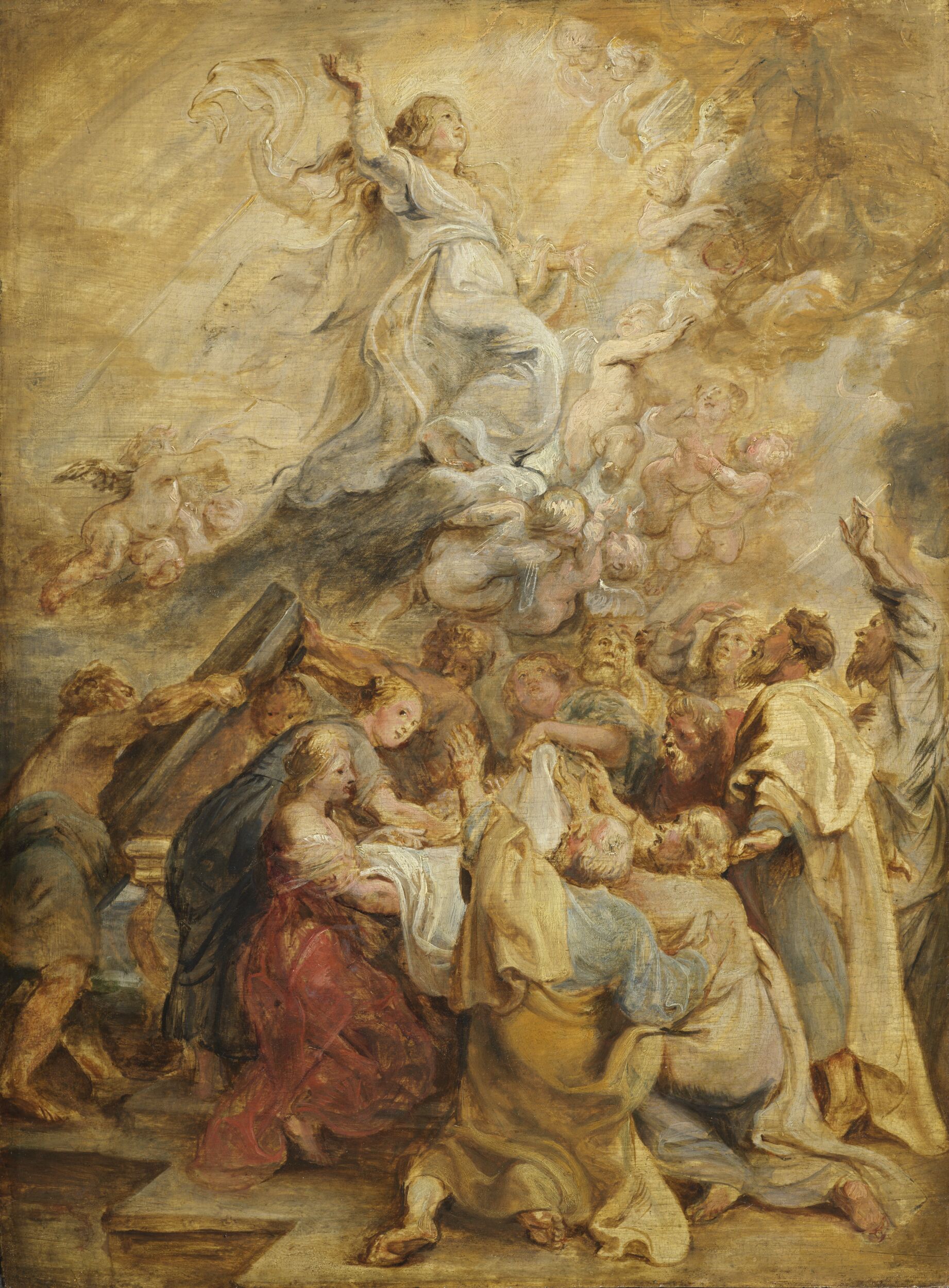
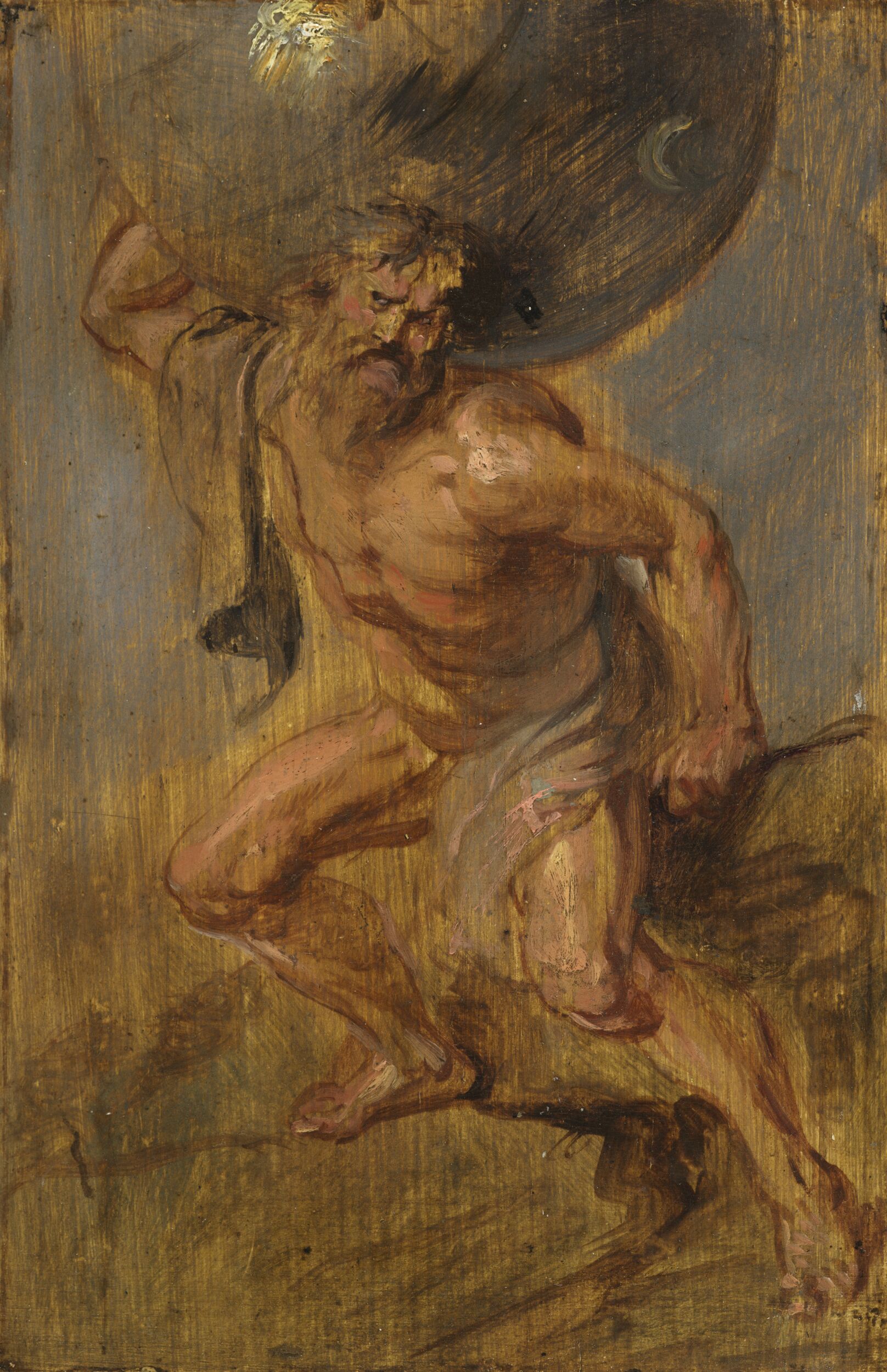
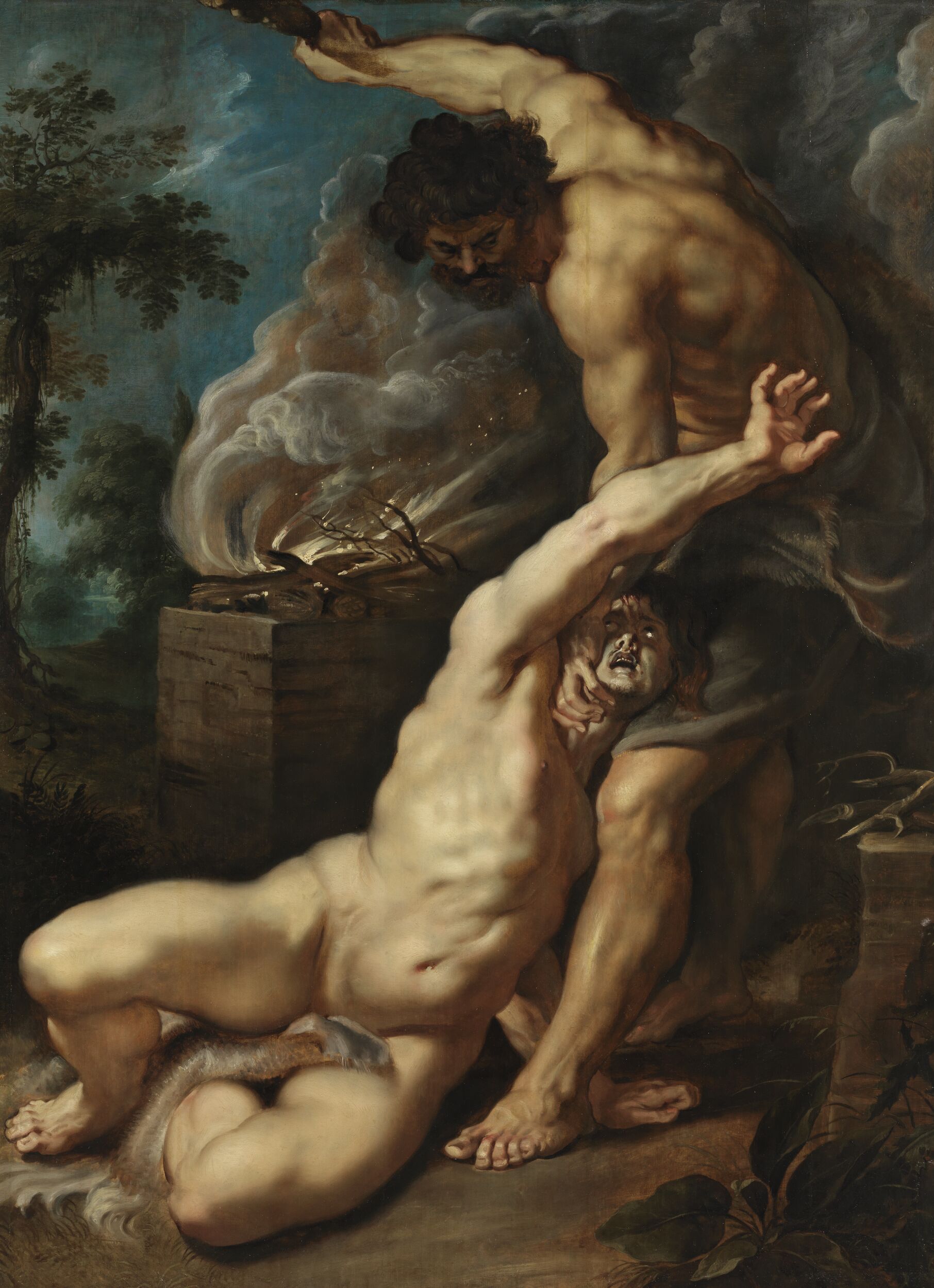
Sketch for 'The Conversion of Saint Paul'
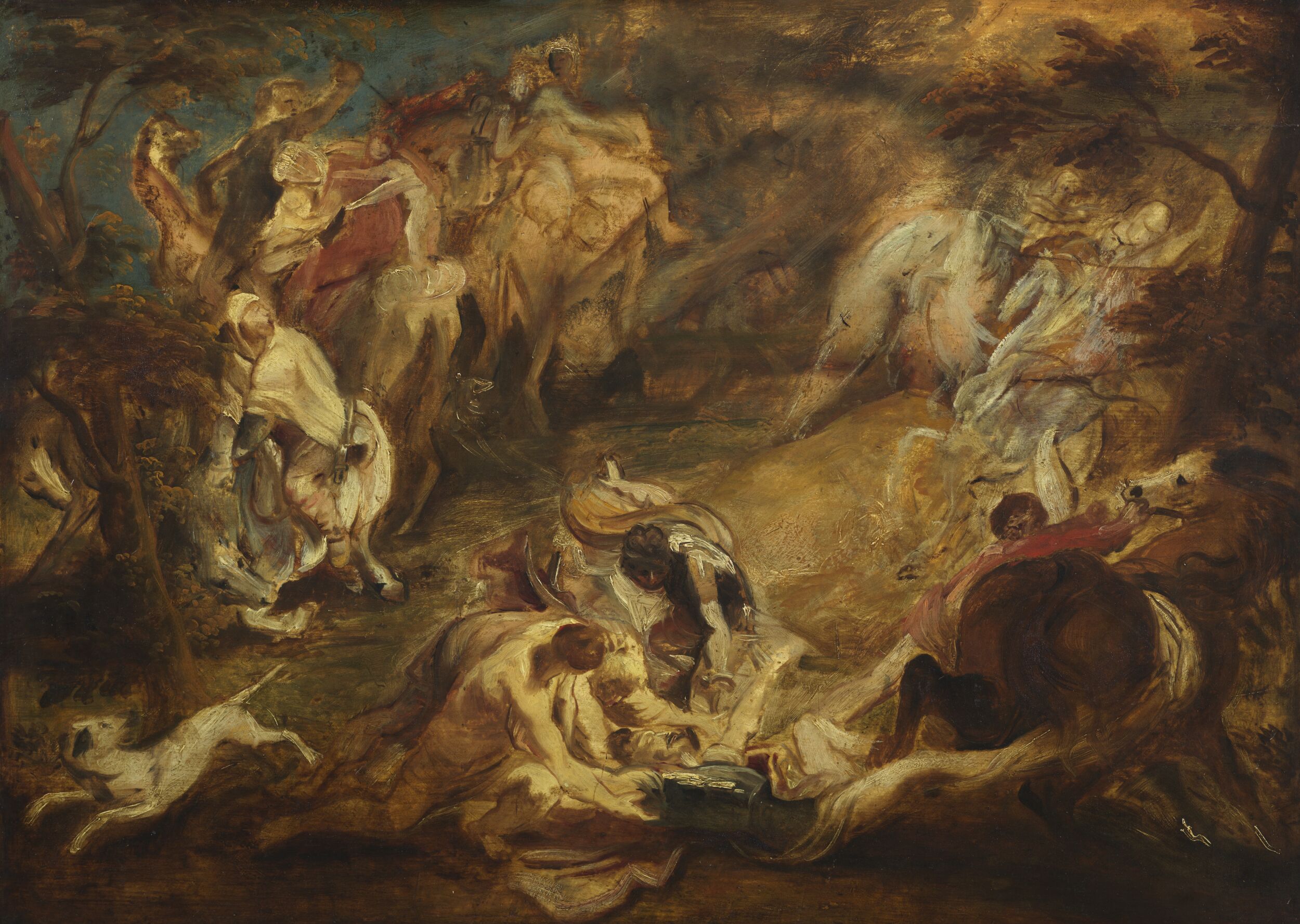
- Artist: Peter Paul Rubens
- Date: c. 1608
- Medium: oil on panel
- Museum: The Courtauld Gallery
- Collection record: The Courtauld Gallery website
Listen to the free audio guide
About this artwork
This is the Sketch for “The Conversion of Saint Paul” by Peter Paul Rubens. Created around 1608, the oil‑on‑panel piece is a large preparatory study that captures the raw energy Rubens was experimenting with before committing to the finished canvas. Right from the start you can see the dramatic scene he envisioned: a group of men gathered around the stricken Paul in the foreground, one of them pulling back the reins of the horse that threatens to lurch forward. The startled dog, a small but striking detail, adds a sense of urgency and motion to the composition.
Rubens worked quickly, almost like a draft, allowing him to jot down essential gestures and spatial relationships. Those initial ideas evolved into a more refined, larger drawing that now resides in The Courtauld. After completing the final version of “The Conversion of Saint Paul,” he kept both the sketch and the subsequent drawing in his studio as reference models for future projects—showing how even a study could serve as a living blueprint for an artist’s evolving vision.
The sketch reveals Rubens’ masterful handling of light and shadow even in a preliminary stage, hinting at the dramatic chiaroscuro he would later employ. It also demonstrates his knack for capturing motion—whether the trembling horse, the hurried steps of the assistants, or the bolt of the dog’s tail. In a single canvas, he managed to convey narrative, composition, and emotion, laying the groundwork for one of his most celebrated works.
See it in person
Sketch for 'The Conversion of Saint Paul' hangs in The Courtauld Gallery at Somerset House, London. Point your phone at any artwork there and audioguide.london plays a free audio guide in six languages — no app download needed.