Sculpture of Iris
- Audio guide stop: 254
- Gallery: Room 18
- Maker: Pheidias
- Culture: Classical Greek
- Made in: Athens
- Date: 438BC-432BC
- Object type: statue, pediment
- Materials: marble
- Museum number: 1816,0610.96
- Museum: The British Museum
- Collection record: British Museum website
- Image © The Trustees of the British Museum, shared under a CC BY-NC-SA 4.0 licence.
Listen to the free audio guide
About this object
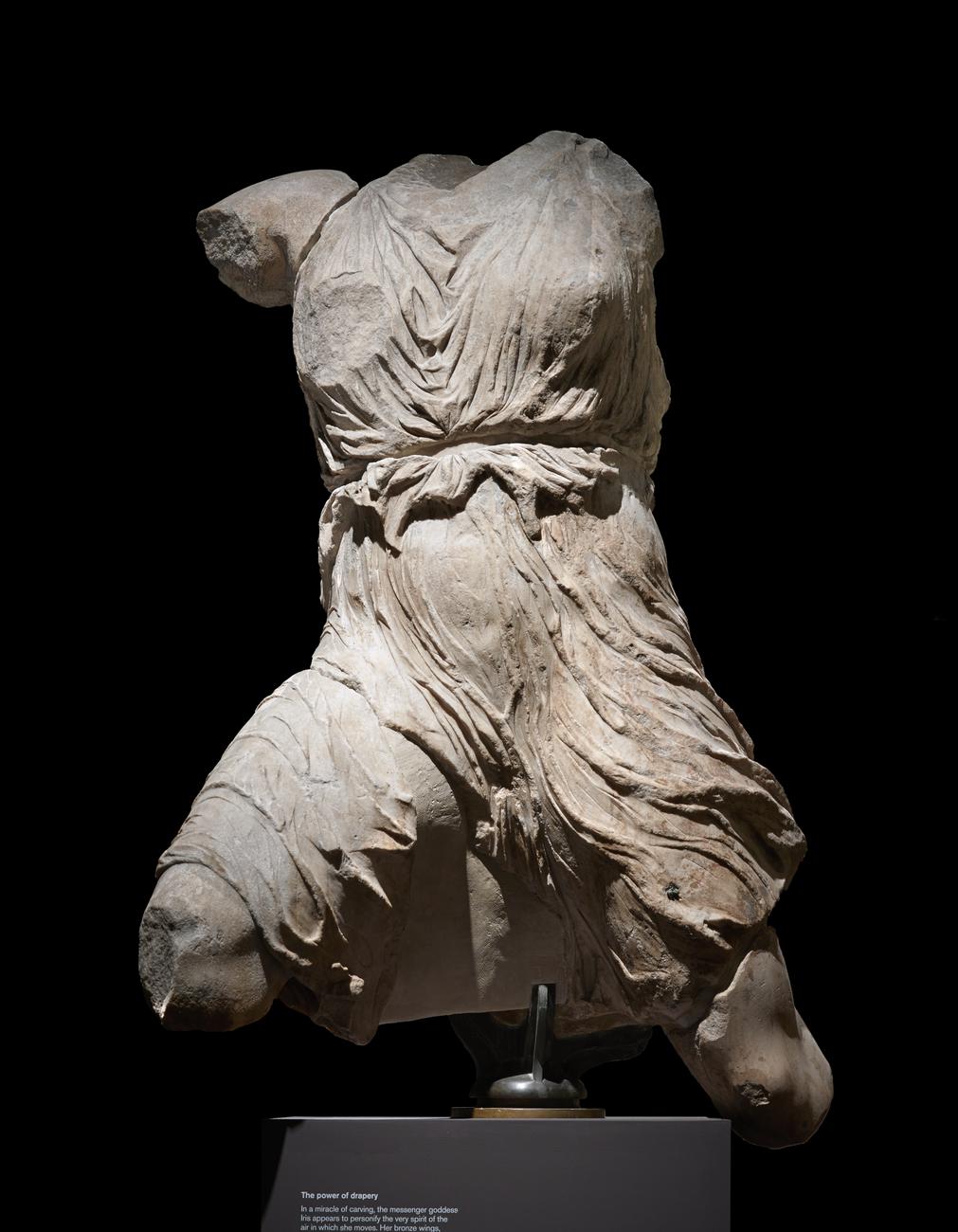
This is a fragment from "The Parthenon Sculptures," a statue created in Classical Greece between 438 and 432 BC. The piece comes from the West pediment of the Parthenon in Athens, which once depicted the famous mythic contest between Athena and Poseidon for control of Attica.
Before you stands a female torso preserved to the knees, likely representing the winged goddess Iris, messenger of the gods. The statue was sculpted from marble and shows a short, sleeveless chiton girdled at the waist. Some drapery clings to the figure, while other folds seem caught in motion as if caught by wind.
The statue’s head and wings are missing, and its arms were once attached at the shoulders. Despite its broken state, the figure conveys a vivid sense of movement and wind, possibly capturing the moment Iris is in flight. This sculpture reflects the artistic mastery of Classical Greece and the vision of Pheidias, whose work helped define the Parthenon’s legendary beauty.
See it in person
Sculpture of Iris is on display in Room 18 at the British Museum on Great Russell Street, Bloomsbury, London — free to enter. Choose British Museum on audioguide.london and type its audio guide stop number, 254, from the gallery label, or take a photo of it, to hear this free audio guide in six languages — no app download needed.
New, in beta. British Museum support has just launched and is still improving: over 1,000 objects so far, with more added all the time.