Sculpture of Hebe
- Audio guide stop: 265
- Gallery: Room 18
- Maker: Pheidias
- Culture: Classical Greek
- Made in: Athens
- Date: 438BC-432BC
- Object type: statue, pediment
- Materials: marble
- Museum number: 1816,0610.95
- Museum: The British Museum
- Collection record: British Museum website
- Image © The Trustees of the British Museum, shared under a CC BY-NC-SA 4.0 licence.
Listen to the free audio guide
About this object
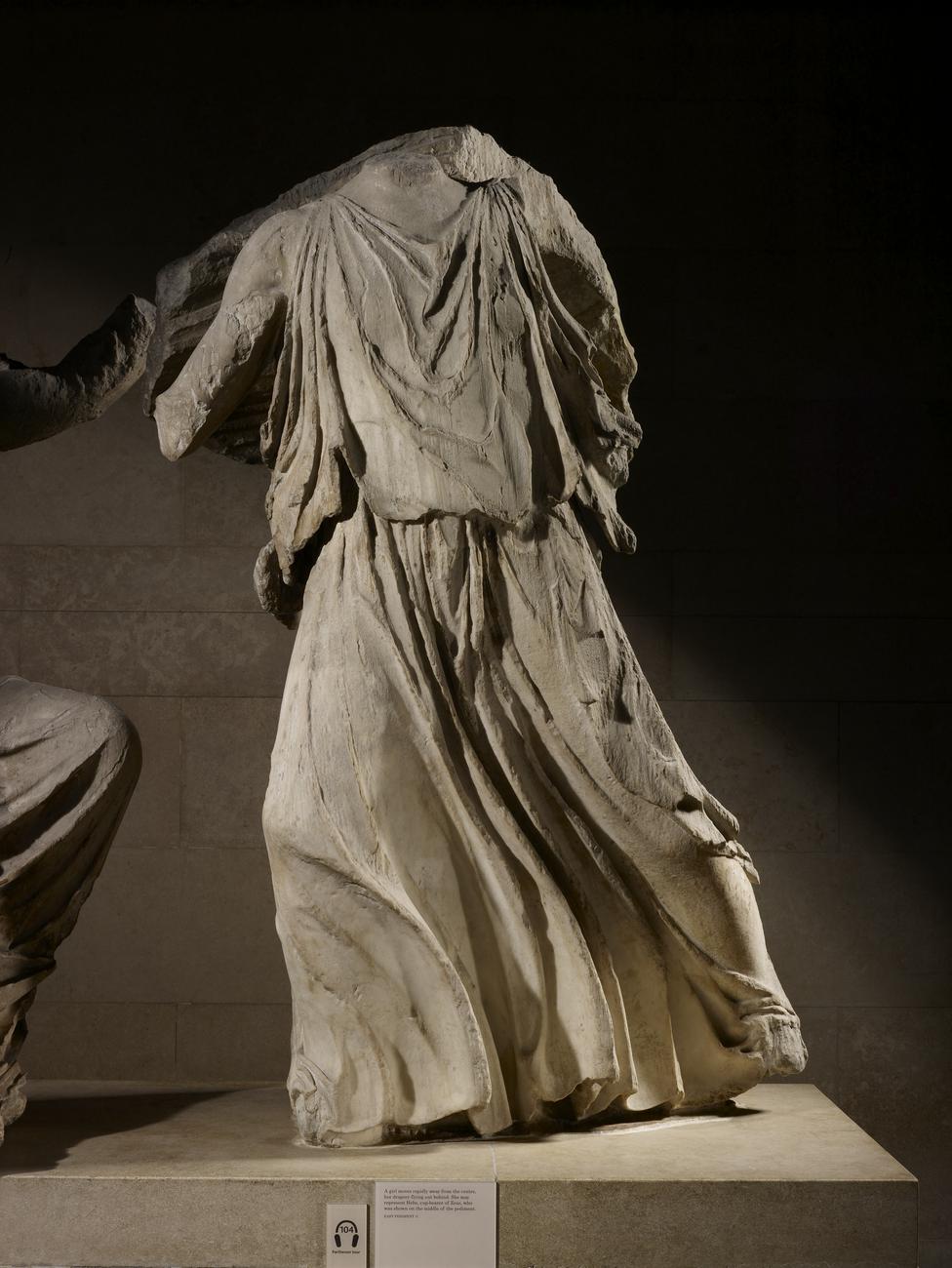
This is a marble statue from the East pediment of the Parthenon, carved between 438 and 432 BC in Athens. The figure, thought to possibly represent Hebe, appears to be in motion, moving from the center toward the corner of the pediment. Her right knee is bent, and her draped peplos—with an over fold—flows behind her, suggesting speed.
Much of the figure is now missing: her head, right forearm and hand, left arm, and both feet. Still, the sculpture remains a striking example of Classical Greek artistry. The East pediment originally depicted the birth of the goddess Athena from the head of Zeus, though many central figures are now fragmentary or lost.
This statue was designed as part of the grand project by Pheidias, one of the most renowned sculptors of Classical Greece. It was later purchased from Thomas Bruce, 7th Earl of Elgin, and brought to the British Museum collection.
See it in person
Sculpture of Hebe is on display in Room 18 at the British Museum on Great Russell Street, Bloomsbury, London — free to enter. Choose British Museum on audioguide.london and type its audio guide stop number, 265, from the gallery label, or take a photo of it, to hear this free audio guide in six languages — no app download needed.
New, in beta. British Museum support has just launched and is still improving: over 1,000 objects so far, with more added all the time.