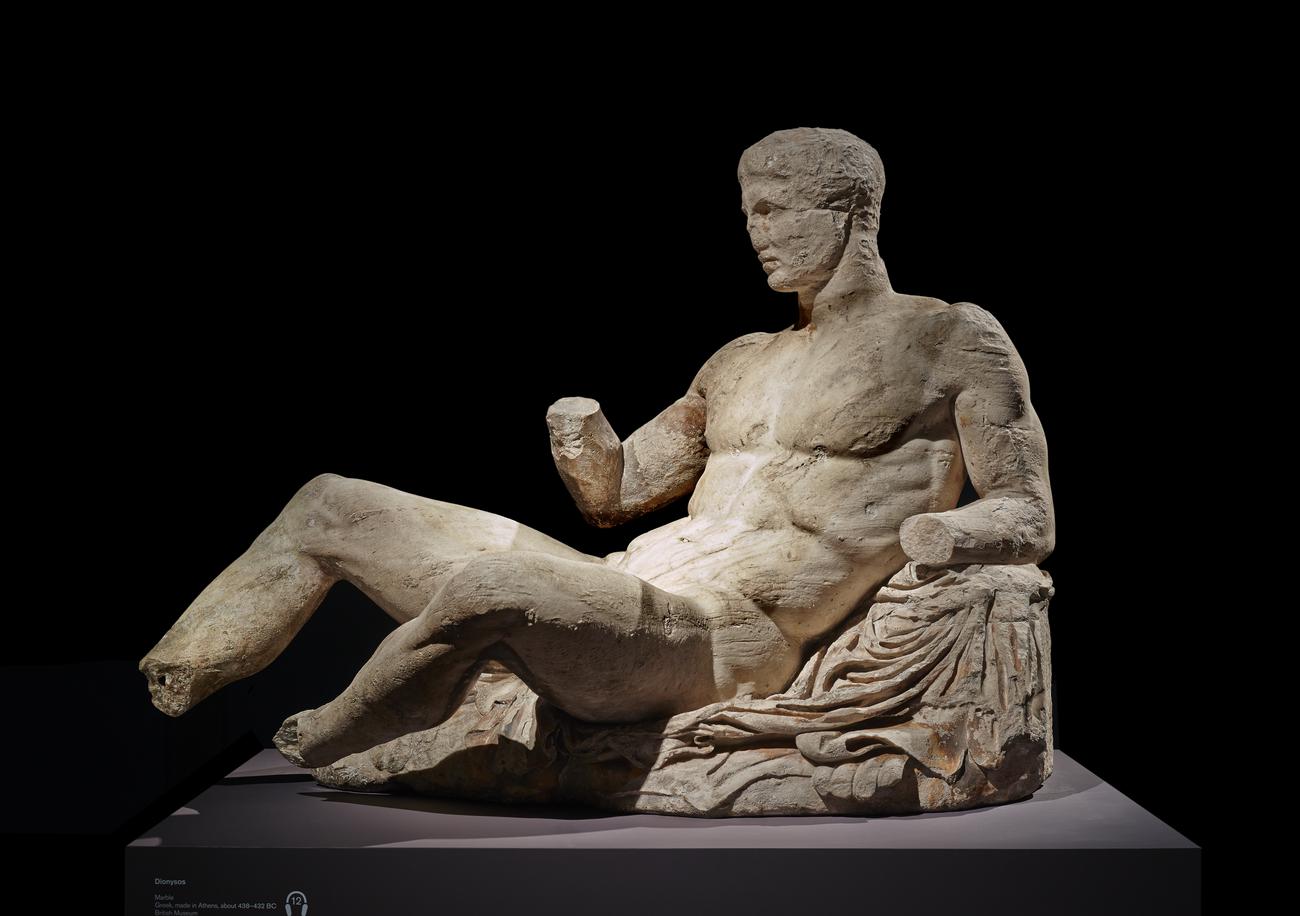
Sculpture of Dionysos
- Audio guide stop: 264
- Gallery: Room 18
- Maker: Pheidias
- Culture: Classical Greek
- Made in: Athens
- Date: 438BC-432BC
- Object type: statue, pediment
- Materials: marble
- Museum number: 1816,0610.93
- Museum: The British Museum
- Collection record: British Museum website
- Image © The Trustees of the British Museum, shared under a CC BY-NC-SA 4.0 licence.
Listen to the free audio guide
About this object
This statue comes from the East pediment of the Parthenon in Athens. A reclining figure of a naked man rests on a rock, leaning on his left arm in a relaxed pose. His legs are bent, with the left one drawn back behind the right. Over the rock, a mantle is draped, hiding part of an animal skin—likely a feline, judging by the claws.
What remains of the sculpture gives us a strong sense of form and movement. Traces of two braids are visible at the back of the head, and while both hands and feet are now missing, the statue was once complete enough to be sketched by visitors in the 17th century. Experts believe it represents Dionysos, though other interpretations, like Herakles or Theseus, have also been proposed.
Carved in Classical Greece around 438 to 432 BC, this marble masterpiece is part of what we now call "The Parthenon Sculptures," designed by the famed artist Pheidias.
See it in person
Sculpture of Dionysos is on display in Room 18 at the British Museum on Great Russell Street, Bloomsbury, London — free to enter. Choose British Museum on audioguide.london and type its audio guide stop number, 264, from the gallery label, or take a photo of it, to hear this free audio guide in six languages — no app download needed.
New, in beta. British Museum support has just launched and is still improving: over 1,000 objects so far, with more added all the time.