Sceptre
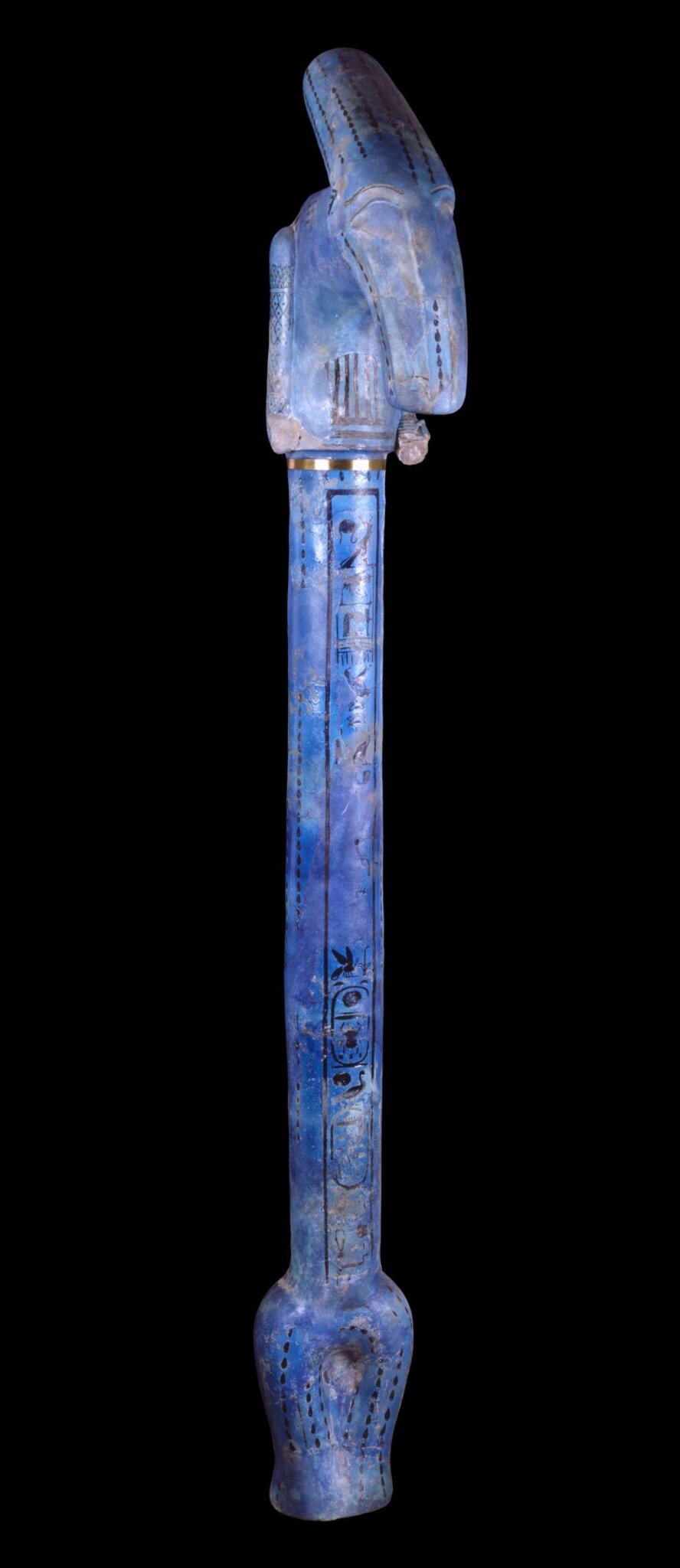
- Gallery: Ceramics, Room 145
- Made in: Egypt; Naqada
- Date: c. 1427 BC - c. 1401 BC
- Object type: Sceptre
- Materials: Glazed composition with painted decoration
- Style: Egyptian, New Kingdom, Eighteenth Dynasty
- Dimensions: Weight 65.0 kg; Height 215.9 cm; Width 25.0 cm
- Museum: V&A South Kensington
- Collection record: V&A website
- Image © Victoria and Albert Museum, London.
Listen to the free audio guide
In the museum now? Point your phone at the next object and hear its guide.
About this object
Before you is a monumental ritual sceptre, known as a Uas, dating back to the Eighteenth Dynasty of Egypt. This impressive object was created during the reign of Amenhotep the Second.
Notice the striking blue-green color of the surface. This is made from faience, a material composed of powdered quartz that was molded by hand and colored with copper to create a turquoise glaze. This particular piece is the largest known example of ancient Egyptian faience ever found.
The sceptre features the head of an animal, likely representing the god Seth, and originally had two arms that may have been raised in adoration. Along the body, you can see black painted decorations, including vertical bands and dots. There is also a central inscription that provides the full royal title of Amenhotep the Second.
In ancient Egypt, the Uas was a symbol of divine power and was often held by gods. This massive staff was discovered in fragments within a temple in the Naqada region.
See it in person
Sceptre is on display in Ceramics, Room 145 at the V&A South Kensington on Cromwell Road, London — free to enter. Choose V&A South Kensington on audioguide.london and take a photo of it to hear this free audio guide in six languages — no app download needed.
New, in beta. V&A support has just launched and is still improving: 1,000 objects with audio so far, with more added all the time.