Salver
- Gallery: Room 2a
- Culture: Antwerp
- Made in: Antwerp (city)
- Date: 1546-1547
- Object type: salver
- Materials: silver
- Museum number: WB.90
- Museum: The British Museum
- Collection record: British Museum website
- Image © The Trustees of the British Museum, shared under a CC BY-NC-SA 4.0 licence.
Listen to the free audio guide
About this object
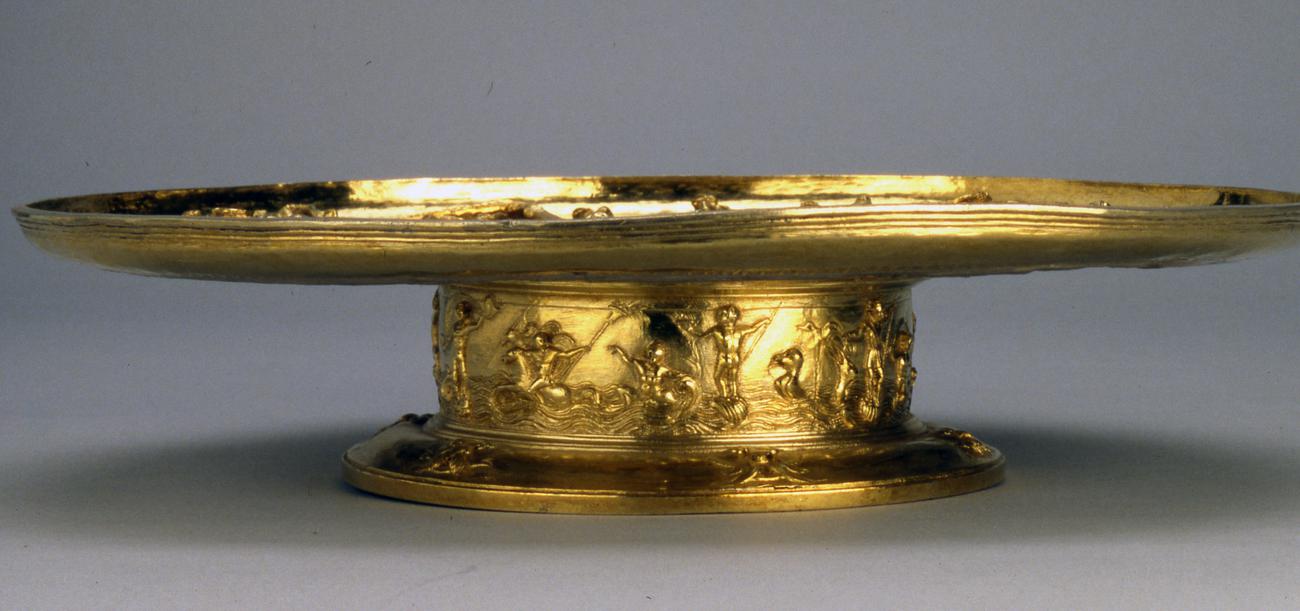
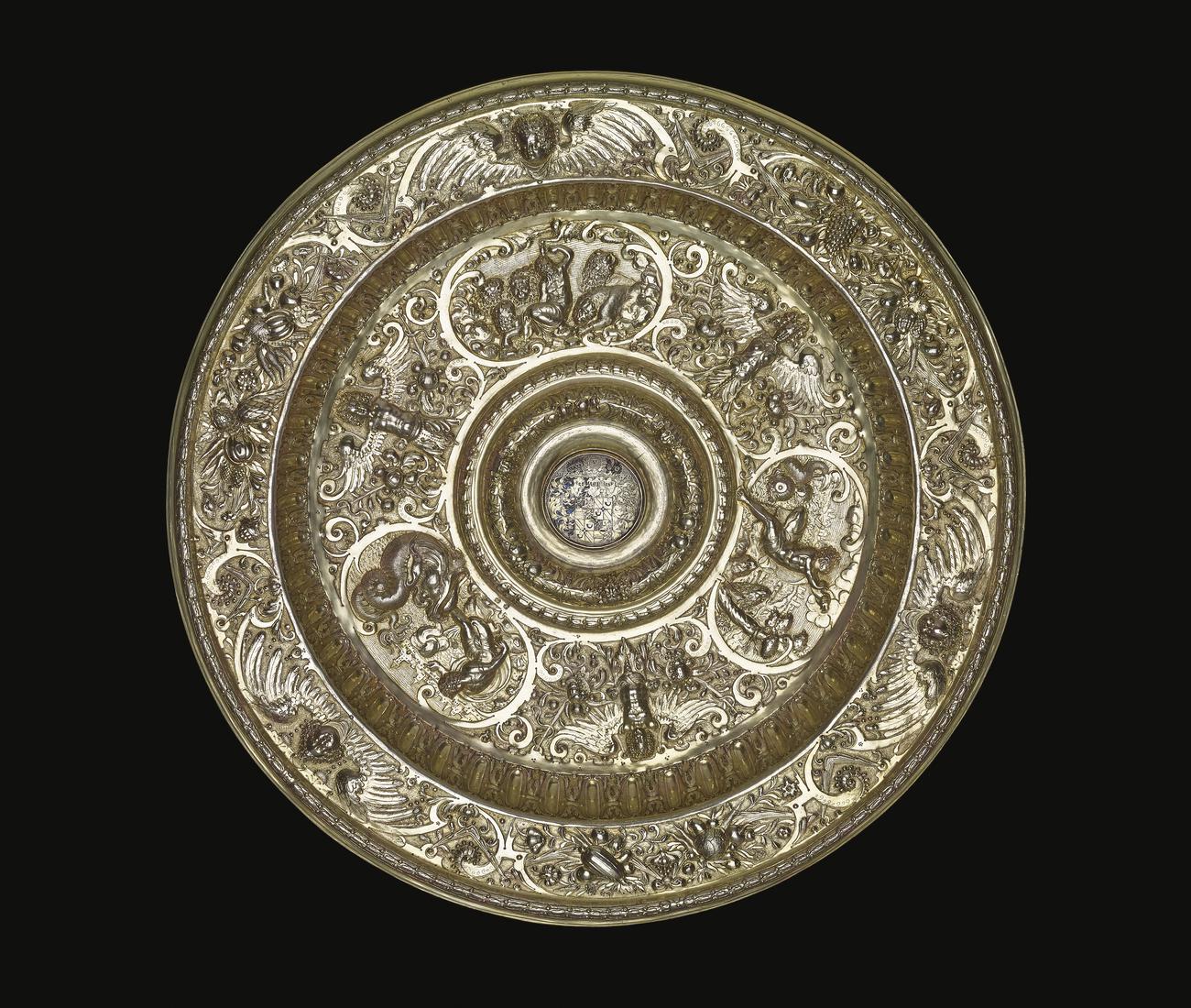
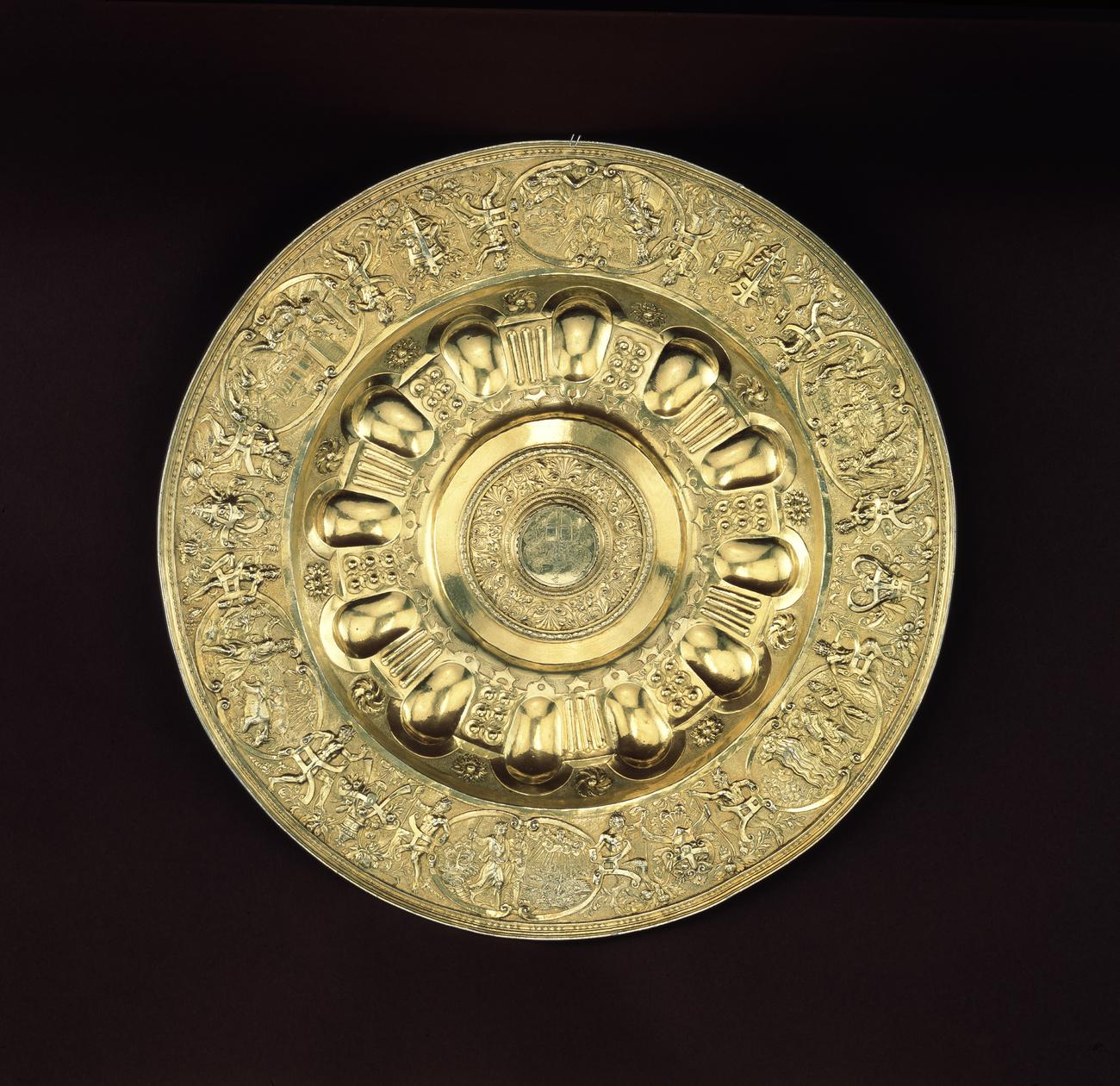
This circular salver is a fine example of Antwerp silversmithing from the mid-16th century. You're looking at a silver-gilt piece, richly decorated with embossed and chased patterns. At the center, a raised boss features a medallion engraved with the arms of Count Aspremont de Lynden and Reckheim. This is encircled by a border of flowers and palm-like ornaments.
The main body of the salver has a striking broad band with twelve oval depressions and a guilloché-patterned panel. Its wide edge features six dramatic scenes: the Plagues of Egypt and the Destruction of Pharaoh’s army—clearly a powerful visual statement.
Look closely at the fluted sides as well, where female figures and satyrs are shown with baskets and fruit. These panels reflect the Renaissance love for combining myth with ornate design.
The piece is marked with a crowned hand within a shield—the Antwerp assay mark—with the Gothic letter N indicating it was made around 1546–47. Though once thought to be the work of a known craftsman, its exact maker remains unidentified.
This elegant and meaningful object was later passed through noble European families before joining the Waddesdon Bequest collection.
See it in person
Salver is on display in Room 2a at the British Museum on Great Russell Street, Bloomsbury, London — free to enter. Choose British Museum on audioguide.london and take a photo of it to hear this free audio guide in six languages — no app download needed.
New, in beta. British Museum support has just launched and is still improving: over 1,000 objects so far, with more added all the time.