Romano-British sword
- Gallery: Room 49
- Culture: Romano-British; La Tène
- Date: 1stC
- Object type: sword
- Materials: iron; copper alloy
- Museum number: 1892,0901.452
- Museum: The British Museum
- Collection record: British Museum website
- Image © The Trustees of the British Museum, shared under a CC BY-NC-SA 4.0 licence.
Listen to the free audio guide
About this object
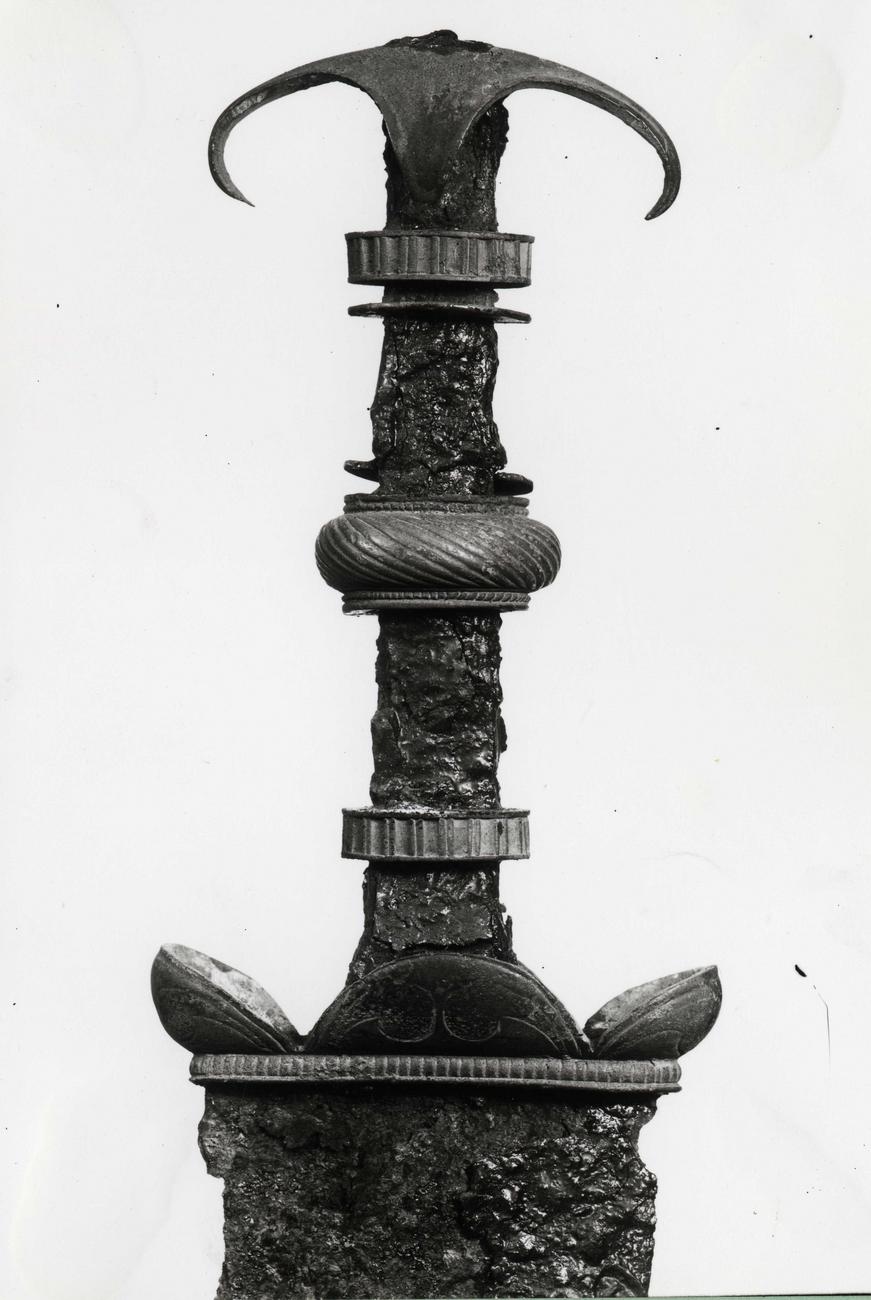
This is the upper part of a Romano-British iron sword, crafted in the first century AD. You are looking at a 557-millimeter-long fragment of a once-whole weapon, including the corroded blade and its metal handle fittings.
The blade is notably wide—about 5.2 centimeters at its broadest point—and straight, but it has a broken end. About 14 centimeters from the tip, the steel has been straightened after a bend. The hilt includes a crown-shaped copper-alloy end and a series of decorative washers, richly detailed with grooves and notched bands.
The hilt guard’s design reflects a blend of Roman and Celtic styles—flat, stylized forms, with Celtic-style comma motifs and ribbed designs across the metal surfaces. This fusion reveals how Romano-British soldiers sometimes adopted decorative traditions from their native roots.
Found at Hod Hill, this sword represents a transition period in Roman military design, where Roman function met local artistry.
See it in person
Romano-British sword is on display in Room 49 at the British Museum on Great Russell Street, Bloomsbury, London — free to enter. Choose British Museum on audioguide.london and take a photo of it to hear this free audio guide in six languages — no app download needed.
New, in beta. British Museum support has just launched and is still improving: over 1,000 objects so far, with more added all the time.