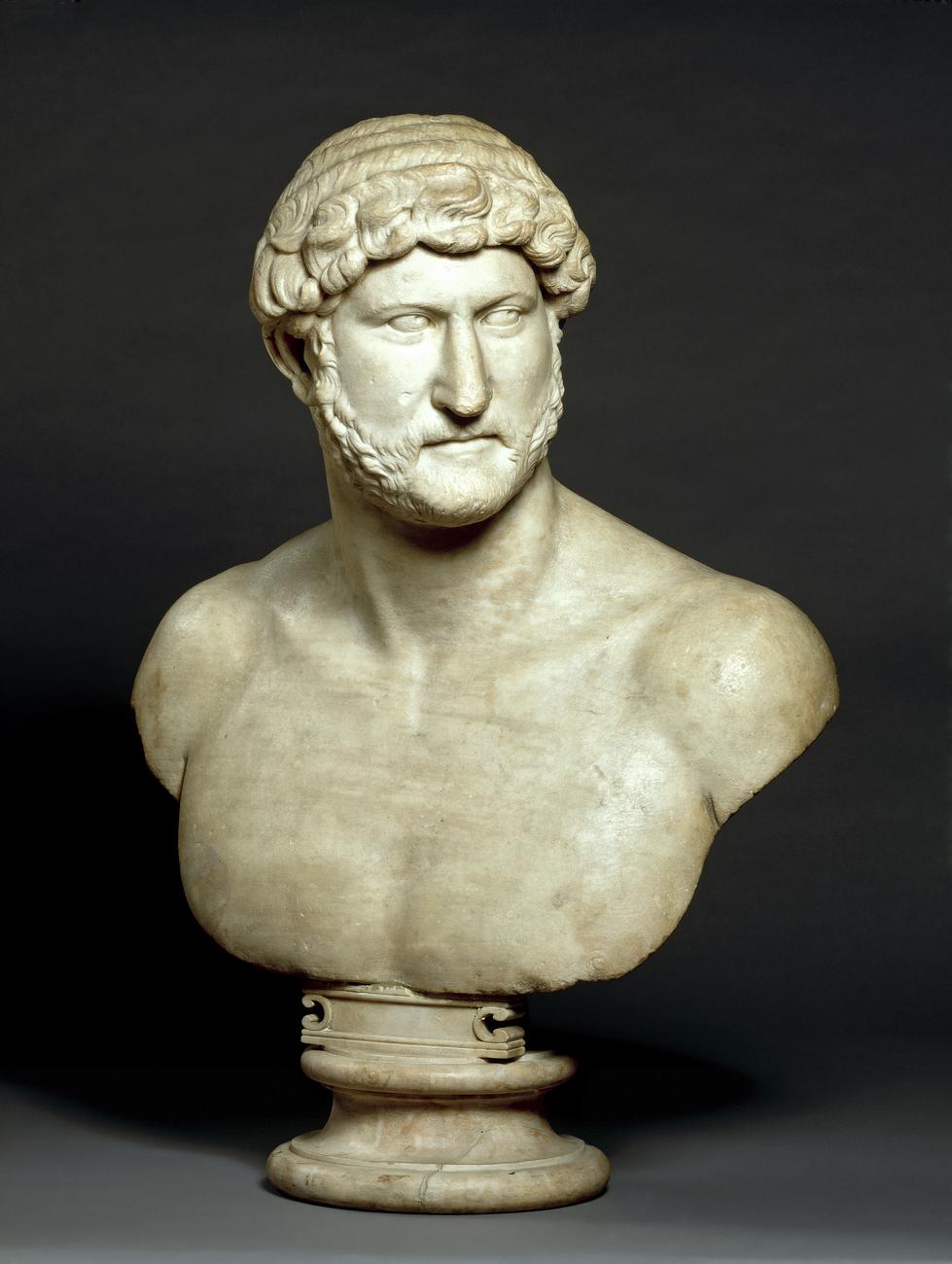
Roman portrait bust
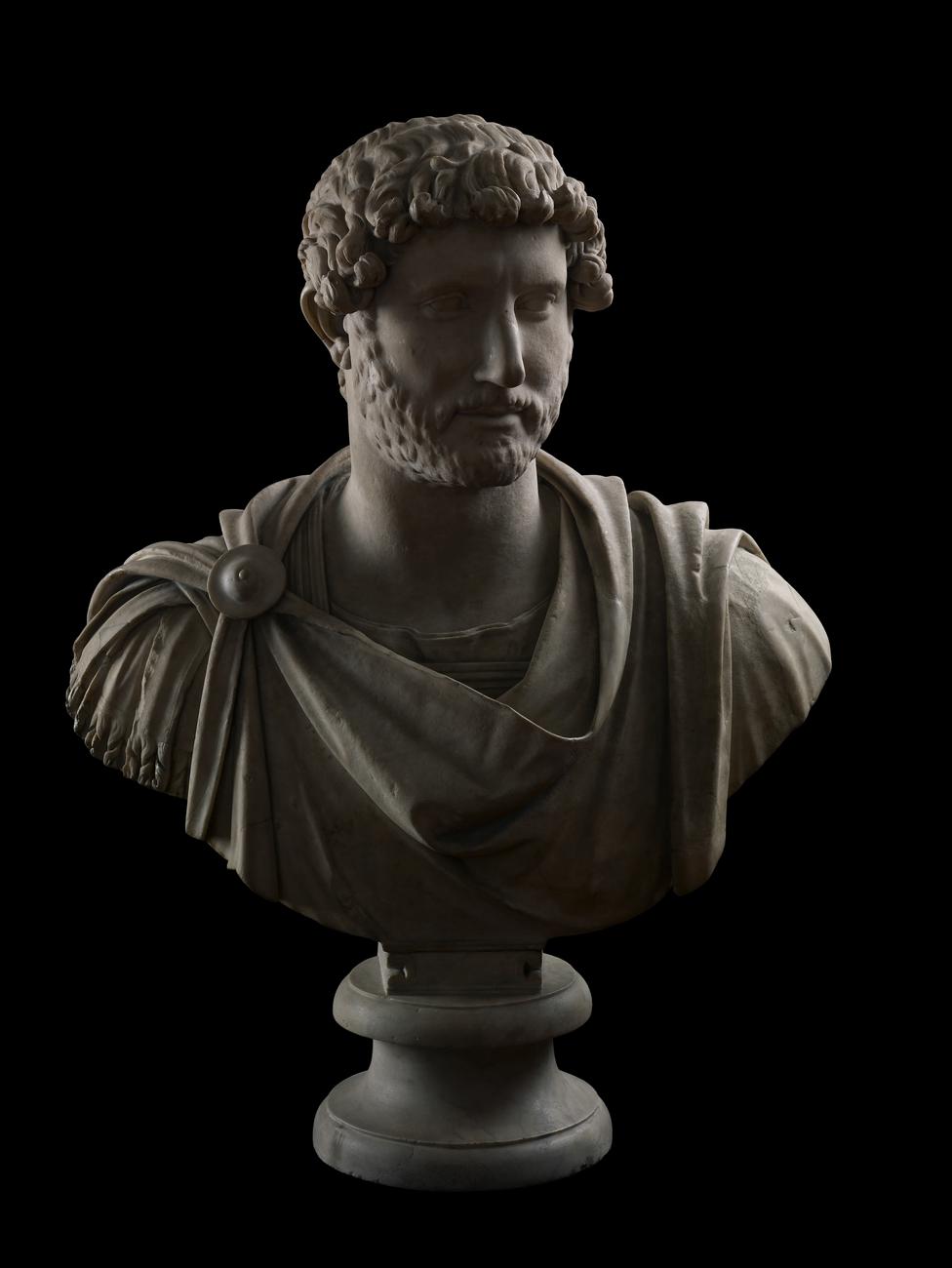
- Culture: Roman
- Date: 125-130 (circa)
- Object type: portrait bust
- Materials: marble
- Museum number: 1805,0703.95
- Museum: The British Museum
- Collection record: British Museum website
- Image © The Trustees of the British Museum, shared under a CC BY-NC-SA 4.0 licence.
Listen to the free audio guide
About this object
Before you is a Roman portrait bust carved in marble. The figure depicted is Emperor Hadrian, wearing a detailed military costume known as a paludamentum draped over his cuirass. His expression is calm and dignified, reflecting both power and authority.
This bust was carved around 125 to 130 AD and originally came from Hadrian's Villa in Tivoli. It was discovered around 1740 and passed through several private collections before being purchased by the British Museum in 1805 from Peregrine Edward Towneley.
Hadrian, who ruled from 117 to 138 AD, was known for his extensive building projects, including the famous Wall in Britain. His portraits often blend military strength with refined elegance. This example is thought to be from a well-known sculptor's workshop associated with Hadrian's image.
Look closely at the folds of fabric and the finely carved details in the armor. These suggest a highly skilled hand, typical of Roman sculptural techniques.
See it in person
Roman portrait bust is on display at the British Museum on Great Russell Street, Bloomsbury, London — free to enter. Choose British Museum on audioguide.london and take a photo of it to hear this free audio guide in six languages — no app download needed.
New, in beta. British Museum support has just launched and is still improving: over 1,000 objects so far, with more added all the time.