Proserpine
- Artist: Dante Gabriel Rossetti
- Date: 1874
- Medium: Oil paint on canvas
- Dimensions: support: 1251 x 610 mm
- Museum: Tate Britain
- Collection record: Tate Britain website
Listen to the free audio guide
About this artwork
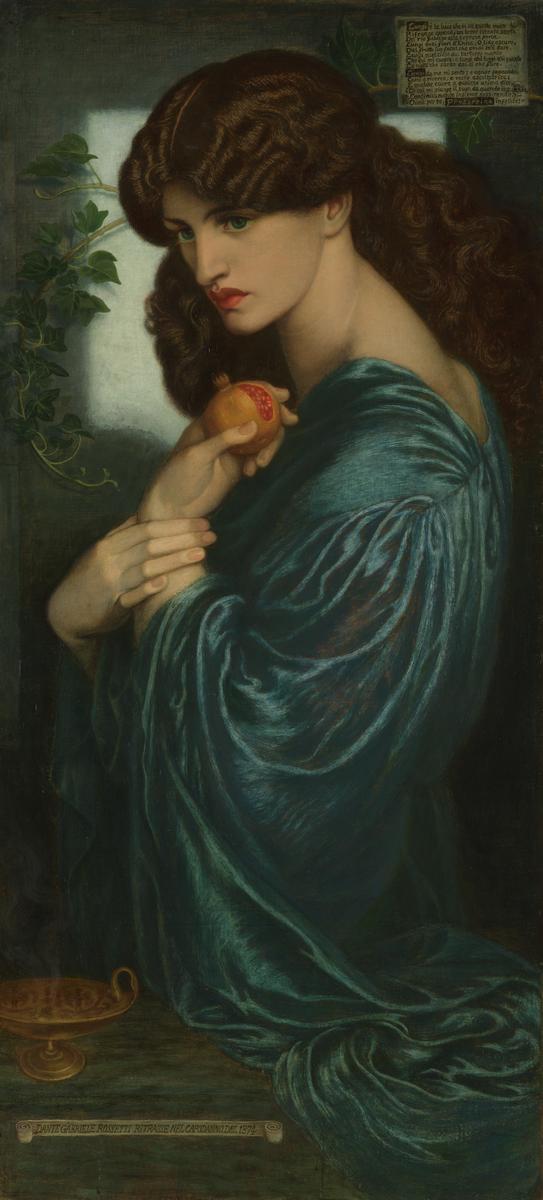
This is the “Proserpine” by Dante Gabriel Rossetti, finished in 1874. The canvas captures that dramatic instant when the goddess Proserpine bites a pomegranate in the gloom of Hades’ palace. A narrow shaft of light cuts across the scene, reminding us of the fleeting moments when the underworld remembers the world above.
Rossetti chose Jane Morris, his long‑time friend and muse, as the model. Her delicate hands hold the fruit, and her expression hints at a longing that mirrors Proserpine’s own imprisonment. The artist was so invested that he was still working on an eighth version of the painting when he passed away the following year.
Notice the symbolic details: the pomegranate, a classic marker of captivity and marriage; the censer, the goddess’s attribute; and the ivy sprigs curling through the background, echoing memory and clinging longing. The frame itself, designed by Rossetti, is adorned with roundels that echo a cross‑section of a pomegranate, tying the composition together.
Overall, “Proserpine” blends mythic narrative, symbolic richness, and the Pre‑Raphaelite attention to detail, creating a striking portrait of a captive goddess caught between worlds.
See it in person
Proserpine is in the collection of Tate Britain on Millbank, London — free to enter. Point your phone at any artwork there and audioguide.london plays a free audio guide in six languages — no app download needed.