Portrait of William Style of Langley
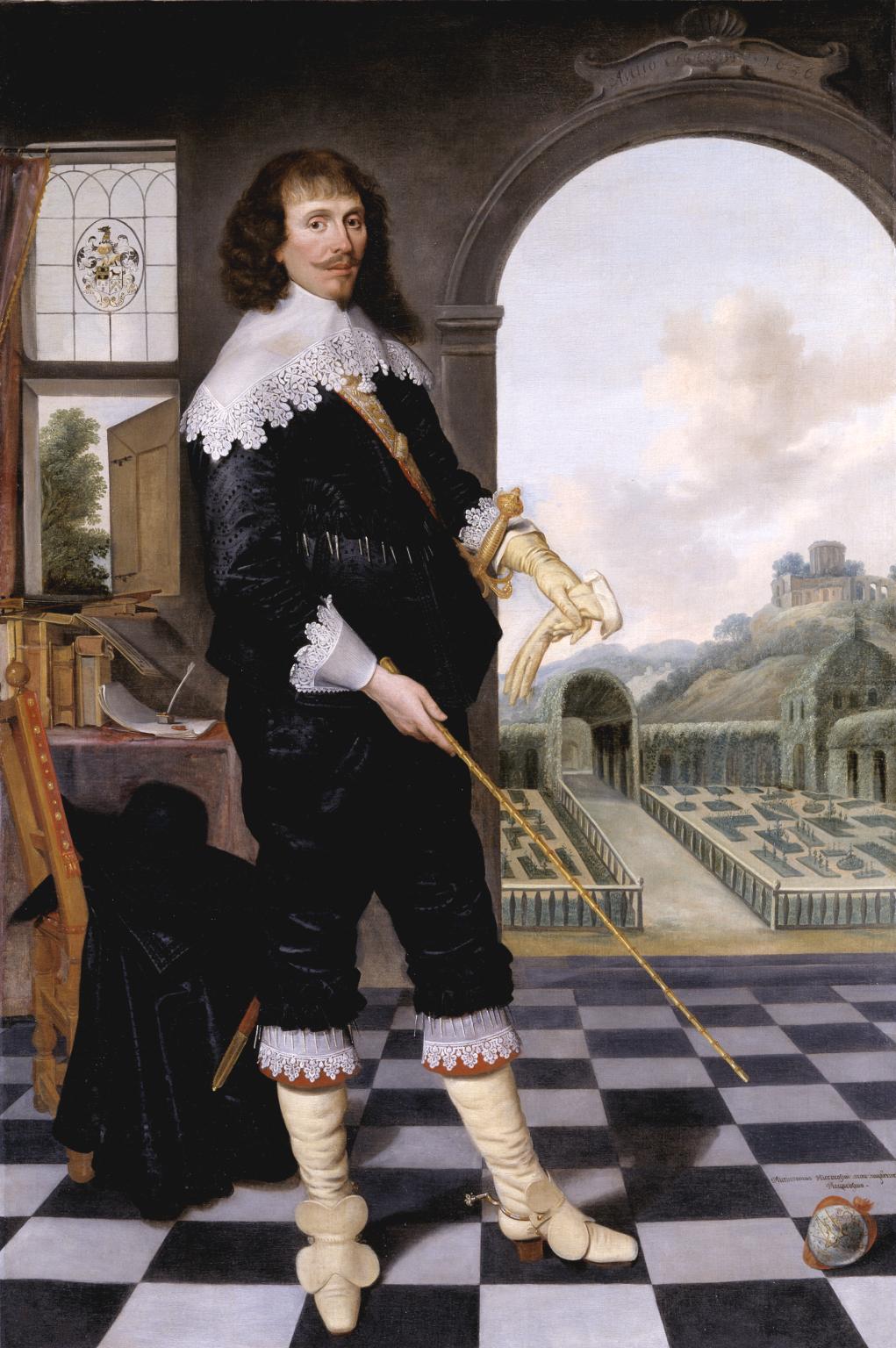
- Artist: Unknown artist, Britain
- Date: 1636
- Medium: Oil paint on canvas
- Dimensions: support: 2051 x 1359 mm
- Museum: Tate Britain
- Collection record: Tate Britain website
Listen to the free audio guide
About this artwork
This is the “Portrait of William Style of Langley” by an unknown artist, painted in 1636 as an oil on canvas measuring about 80 × 53 inches. William Style, a Kentish lawyer active in the Counter‑Reformation, is shown in a dramatic pose that tells a story of spiritual choice. He stands with a cane, pointing to an emblem on the black‑and‑white floor that bears the Latin motto “Microcosmus Microcosmi non impletur Megacosmo” – a reminder that the human heart cannot be filled by worldly wealth.
His face is turned away from the family coat‑of‑arms in the window and the books, violin, and chair that symbolize his earthly pursuits. Instead, his gaze is directed through a mysterious archway toward a closed garden, a classic Christian motif for the Church. Beyond that, a classical ruin marks the pagan wilderness, underscoring his rejection of secular trappings. The small violin, the book, and the chair are all neatly placed in the foreground, hinting at the temptations he has left behind.
The composition blends Flemish influences with a distinctly English portrait tradition. Though the artist remains unidentified, the work shares traits with the early 17th‑century painter Edward Bower, who worked in London near the Inner Temple where Style studied. This portrait is a striking visual sermon on faith over fortune, captured in a single, richly symbolic frame.
See it in person
Portrait of William Style of Langley is in the collection of Tate Britain on Millbank, London — free to enter. Point your phone at any artwork there and audioguide.london plays a free audio guide in six languages — no app download needed.