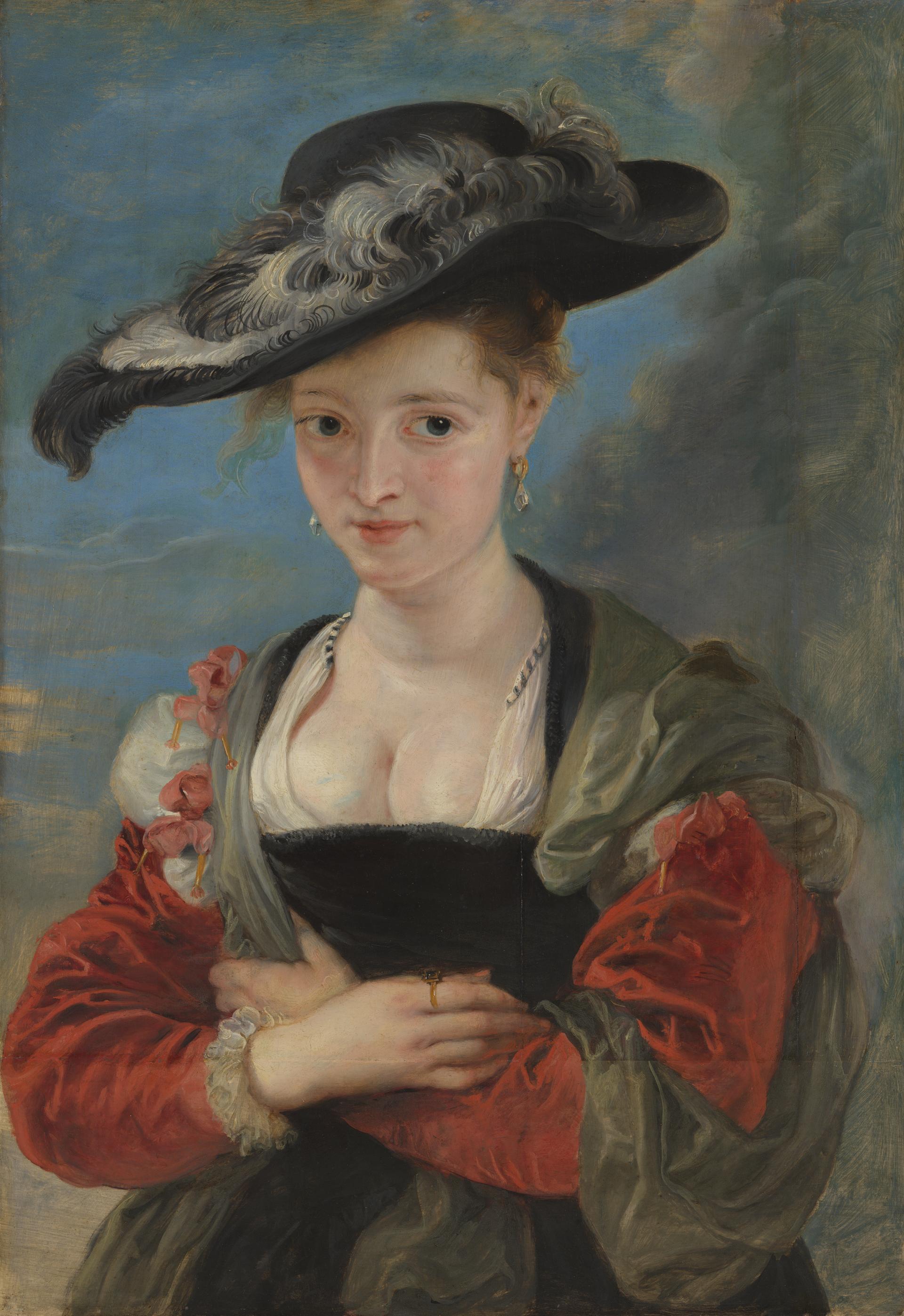
Portrait of Susanna Lunden(?) ('Le Chapeau de Paille')
- Artist: Peter Paul Rubens
- Date: probably 1622-5
- Medium: oil on wood
- Museum: The National Gallery
- Collection record: The National Gallery website
Listen to the free audio guide
About this artwork
This is the Portrait of Susanna Lunden(?) ('Le Chapeau de Paille') by Peter Paul Rubens. Painted in the early 17th century, it's a highly distinctive portrait that captures the sitter's enigmatic presence.
Susanna Lunden was the daughter of Daniel Fourment, an Antwerp merchant and friend of Rubens', and she's thought to be wearing her wedding finery here. The painting is believed to have been made soon after her second marriage in 1622.
The portrait is characterized by the sitter's dark, oversized eyes and elongated neck, set against a background of billowing clouds and a simple colour palette. Her eyes are drawn to ours, but she doesn't quite meet our gaze - it's almost as if she's plucking up courage to glance upwards. The way Rubens has positioned her arms and crossed them over her waist creates a sense of ambiguity.
The hat, which led to the painting acquiring its nickname 'Le Chapeau de Paille', is made of felt rather than straw. It was a status symbol, indicating wealth and fashionability in 1620s Netherlands. The ostrich feathers on top are a typical decorative flourish of the time.
Rubens' fascination with Susanna Lunden shines through in this portrait - he even married her youngest sister Hélène a few years later. This painting has had a lasting influence on other artists, including Thomas Lawrence and Elisabeth Vigée Le Brun, who drew inspiration from its enigmatic subject and innovative use of light and colour.
See it in person
Portrait of Susanna Lunden(?) ('Le Chapeau de Paille') hangs in The National Gallery on Trafalgar Square, London — free to enter. Point your phone at any artwork there and audioguide.london plays a free audio guide in six languages — no app download needed.