A Roman Triumph
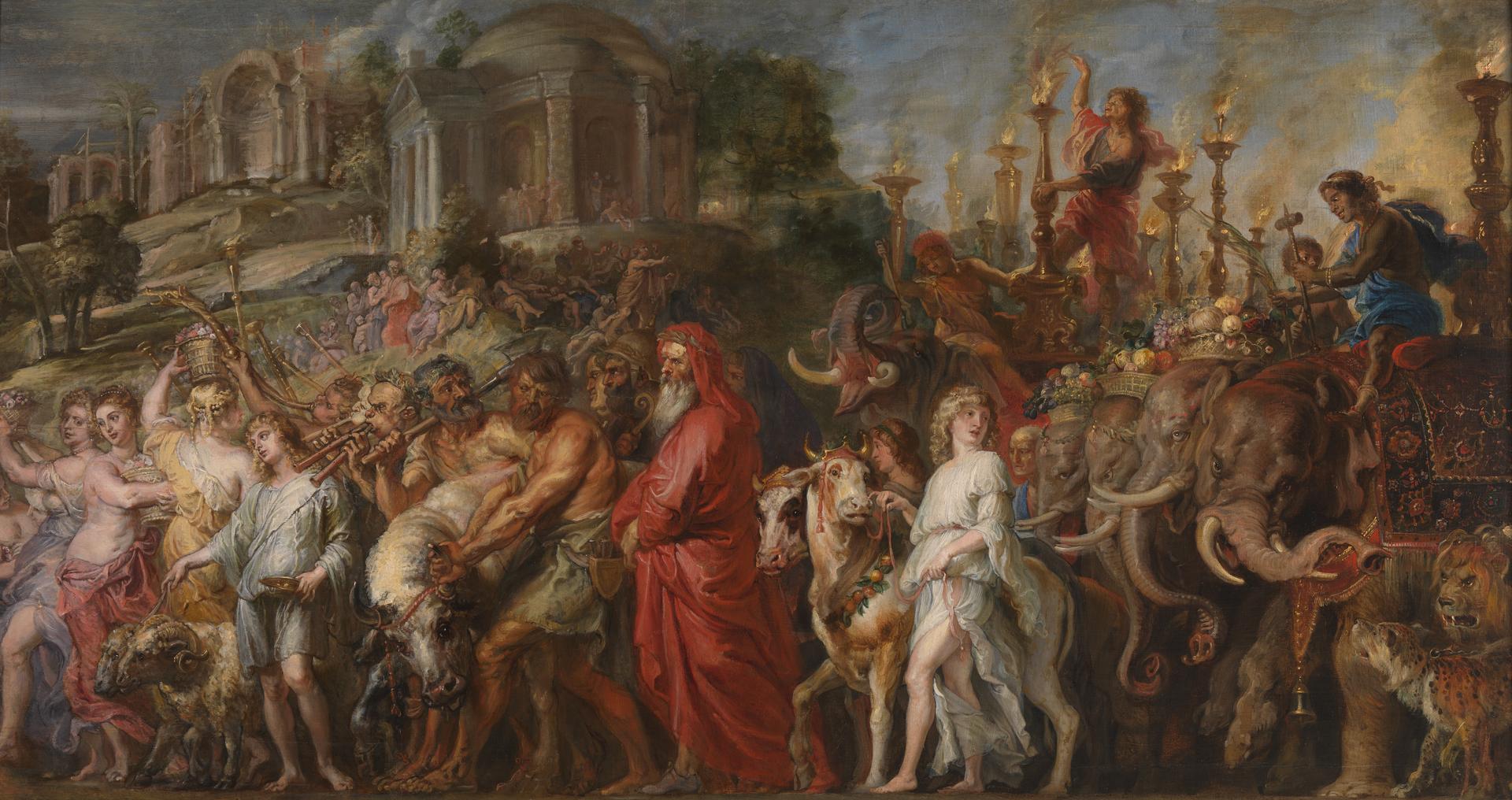
- Artist: Peter Paul Rubens
- Date: about 1630
- Medium: oil on canvas, mounted on wood
- Museum: The National Gallery
- Collection record: The National Gallery website
Listen to the free audio guide
About this artwork
This is the "A Roman Triumph" by Peter Paul Rubens. Painted around 1630, this work showcases Rubens' mastery of composition and his ability to convey energy and movement. The scene depicts a grand procession, inspired by Andrea Mantegna's series of nine monumental paintings, "The Triumphs of Caesar".
At the center of the painting is a priest in brilliant red robes, leading the procession. Behind him, almost hidden in shadows, is a soothsayer in a black veil. A variety of animals are present, including a restless bull, a sacrificial cow with gold-covered horns, and four African elephants. The atmosphere is lively, with trumpeters and pipers blowing their instruments with enthusiasm.
Rubens worked on this painting over several years, experimenting and making amendments for his own interest and pleasure. His style in "A Roman Triumph" accords with the later date of around 1630, which means it was likely painted after his return to Antwerp from London, where he had been inspired by Mantegna's works.
See it in person
A Roman Triumph hangs in The National Gallery on Trafalgar Square, London — free to enter. Point your phone at any artwork there and audioguide.london plays a free audio guide in six languages — no app download needed.