A View of Het Steen in the Early Morning
- Artist: Peter Paul Rubens
- Date: probably 1636
- Medium: oil on wood
- Museum: The National Gallery
- Collection record: The National Gallery website
Listen to the free audio guide
About this artwork
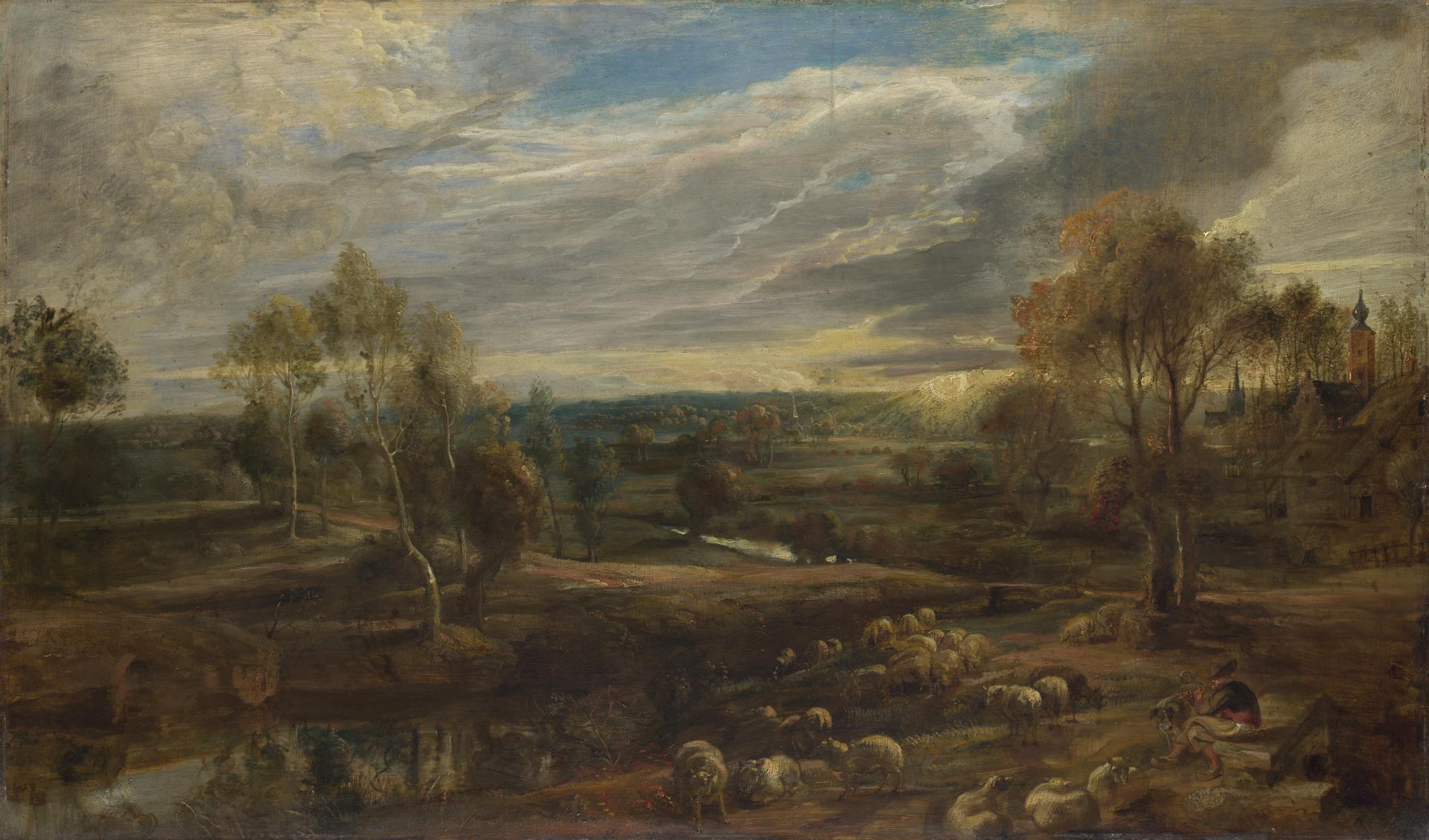
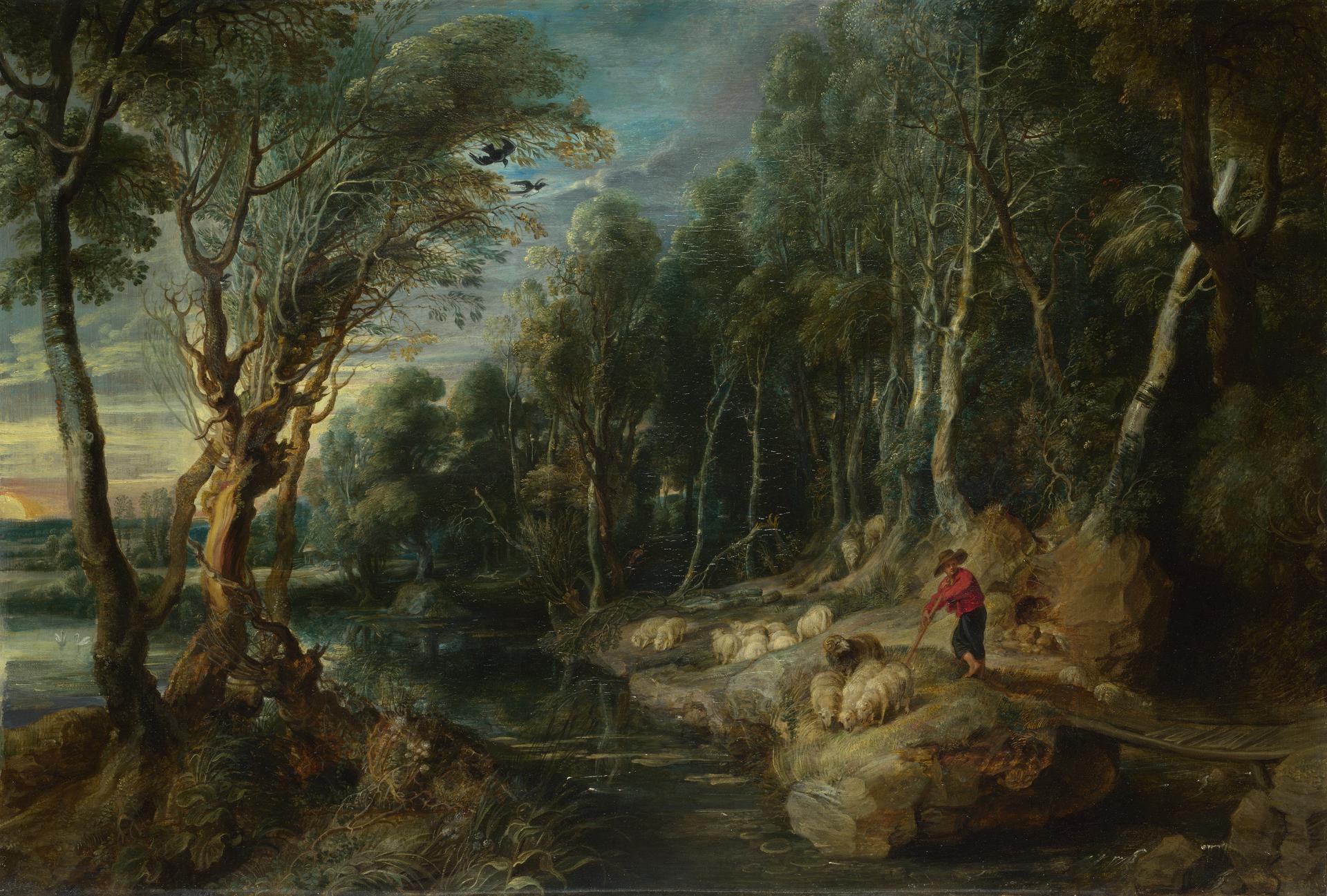
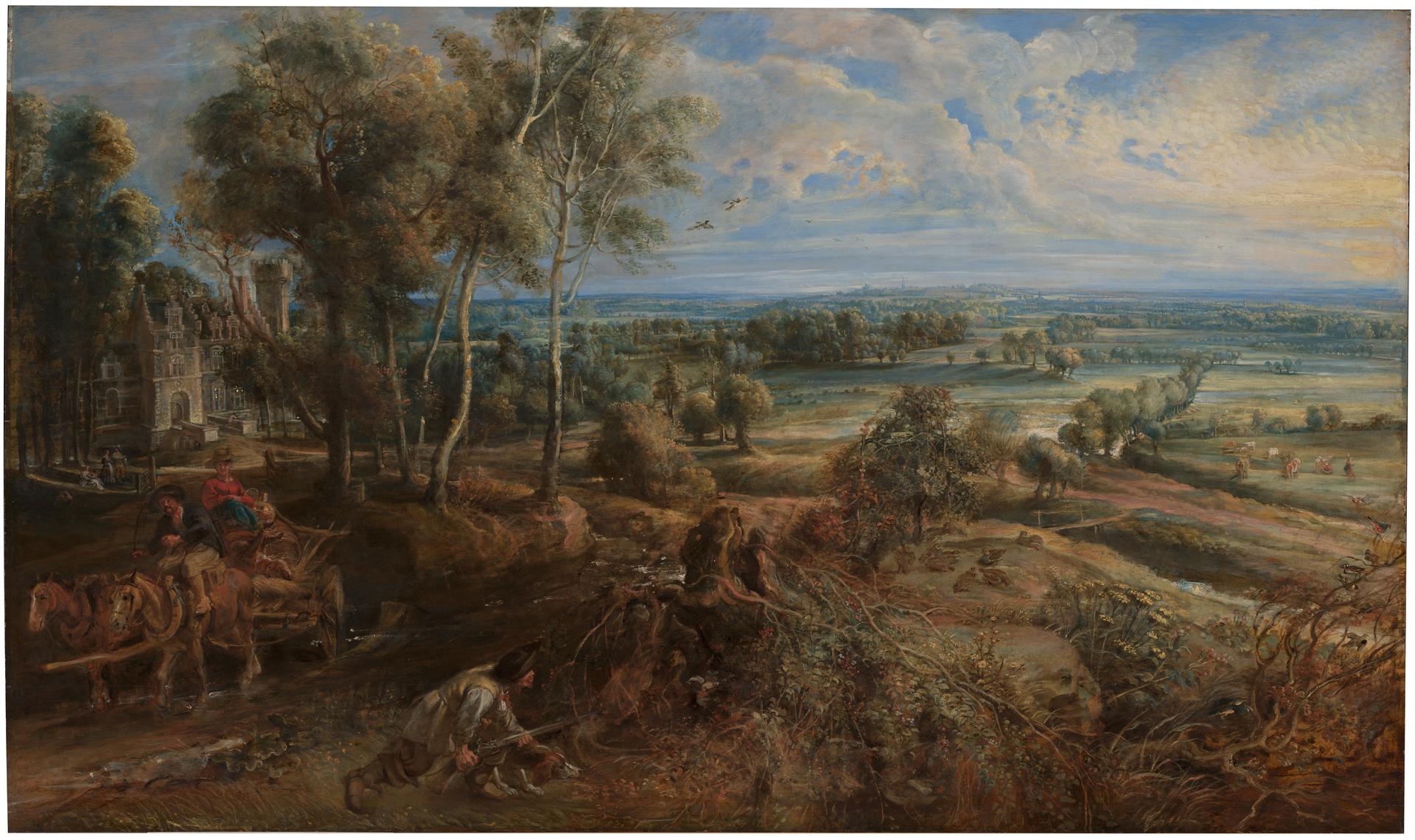
This is the "A View of Het Steen in the Early Morning" by Peter Paul Rubens. Painted in the early 17th century, this landscape showcases the artist's ability to capture a sense of peace and prosperity. We're looking at the manor house of Het Steen, near Malines, where Rubens had purchased the estate with his own wealth in 1635.
Note how the windows of the manor house twinkle, and the stream meandering past it is depicted in a way that suggests dew on the grass. The view is expansive, allowing us to pick out each incident within the whole - from the tiny towers of the city in the distance to the turrets of the manor house close by.
Rubens was known for his grand state portraits and opulent allegories, but in this landscape he celebrates what he treasured most: the prosperity and peace of Flanders. The painting is a representation of his own success and happiness, achieved after a period of exhaustion and poor health.
The use of bands of colour across the picture - browns enlivened with deep red for the foreground, greens and golds for the middle ground, and blue for the misty distance - was characteristic of traditional Flemish landscapes. This is one of the last in this style that Rubens painted, and it's a testament to his skill as an artist.
The picture itself is remarkable not just for its beauty but also for its construction. It's thought to have been painted on several small and unevenly shaped panels, cobbled together with short planks as Rubens went along - a method unacceptable to collectors of the time.
See it in person
A View of Het Steen in the Early Morning hangs in The National Gallery on Trafalgar Square, London — free to enter. Point your phone at any artwork there and audioguide.london plays a free audio guide in six languages — no app download needed.