Portrait of Jacob Trip
- Artist: Rembrandt
- Date: about 1661
- Medium: oil on canvas
- Museum: The National Gallery
- Collection record: The National Gallery website
Listen to the free audio guide
About this artwork
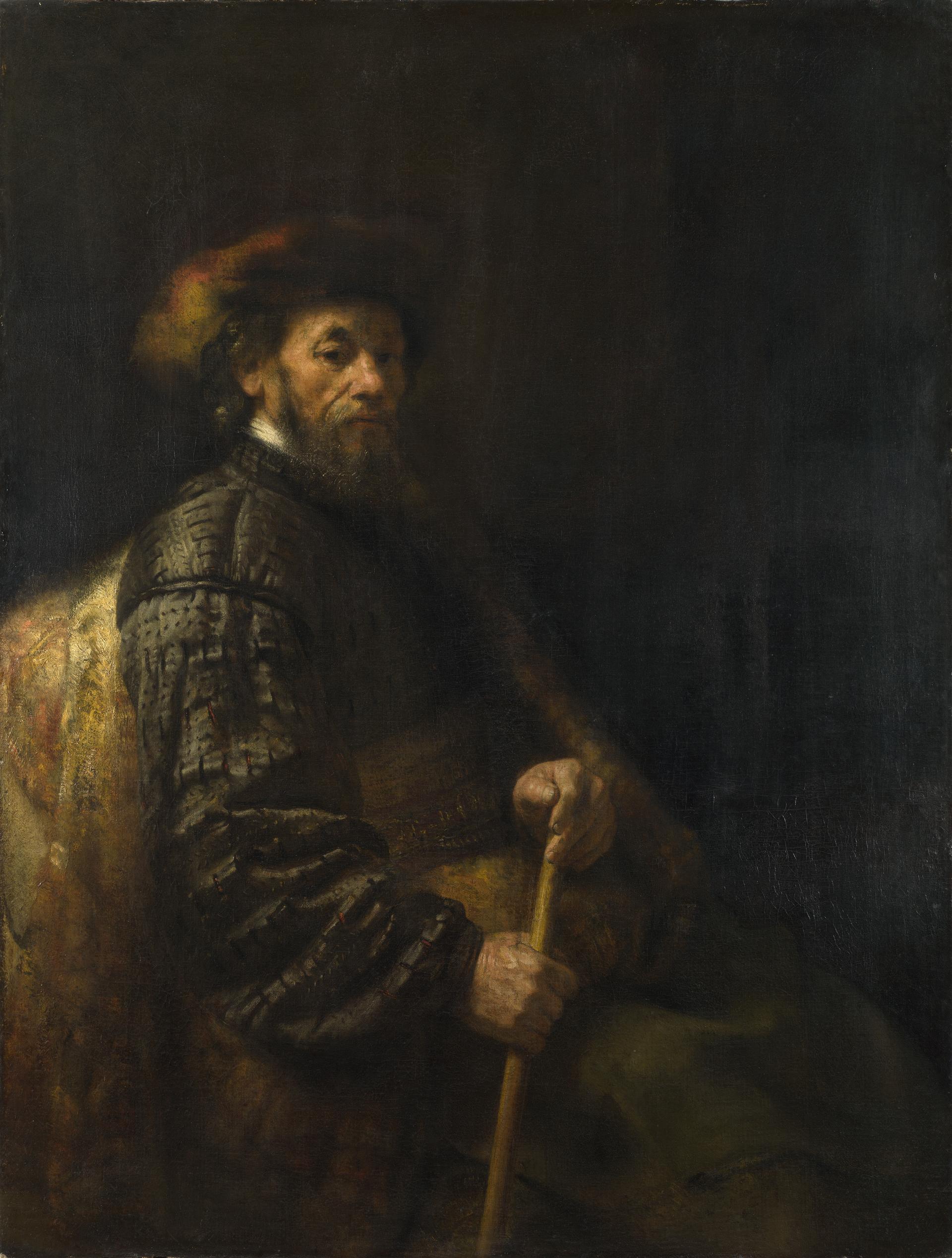
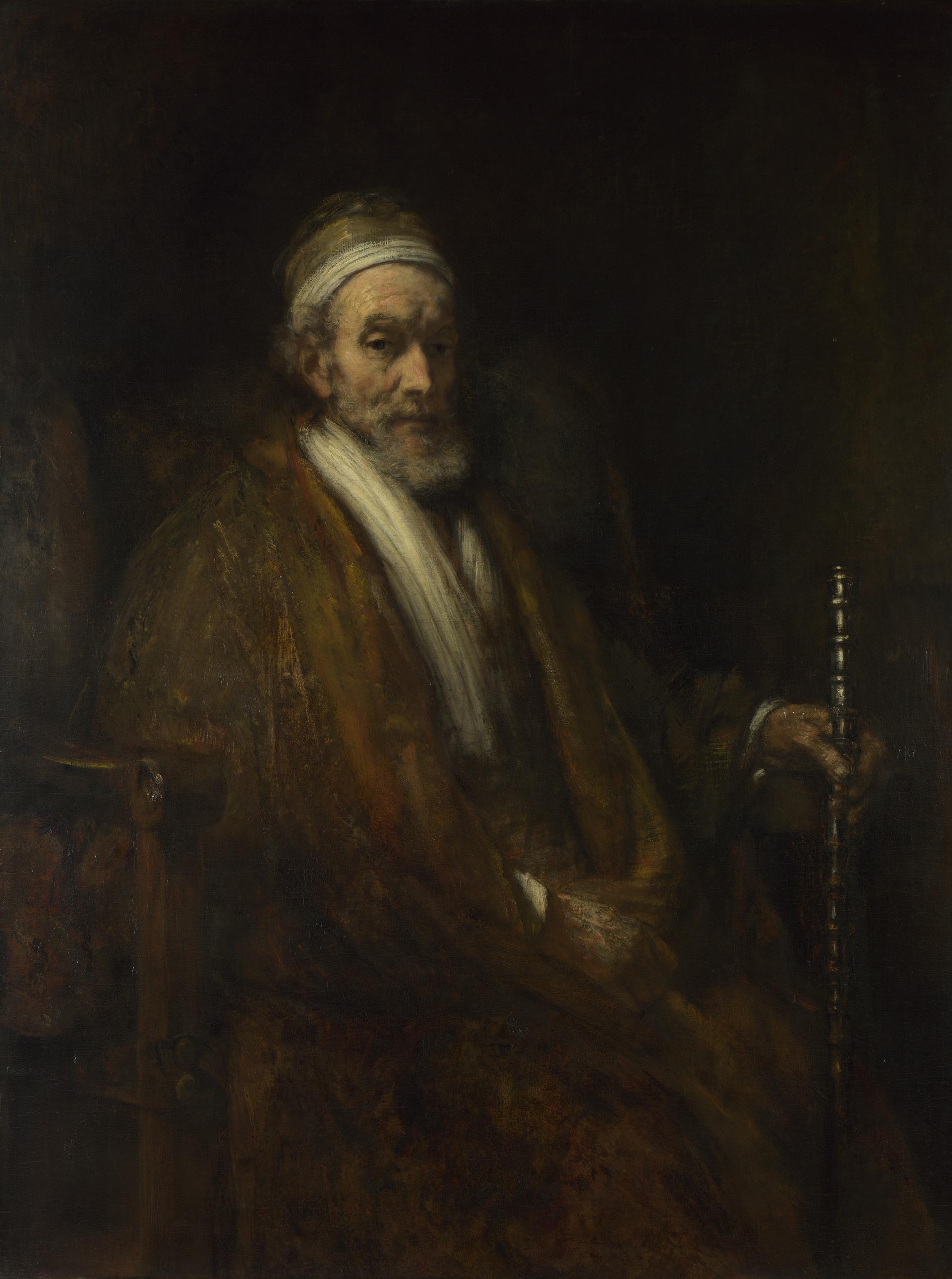
This is the Portrait of Jacob Trip by Rembrandt. Painted in the Netherlands around 1661, it's one of a pair of portraits that were made to hang together in the grand reception rooms of the Trippenhuis, a palatial new residence being built for Jacob Trip's sons in Amsterdam.
Rembrandt creates a fascinating contrast between Jacob and his wife Margaretha. Their poses are asymmetrical – Margaretha meets our gaze head on, while Jacob sits askew, his mind apparently elsewhere – and he uses different painting techniques to bring them to life. Jacob is rendered using swift, confident brushstrokes, while Margaretha's skin and ruff are worked with great intensity and attention to detail.
Jacob Trip was a wealthy arms dealer who made much of his money during a turbulent period in European history. Rembrandt gives him the air not of a warmonger but of a priest or religious figure – a bringer of peace and prosperity. The portrait shows Jacob dressed informally, with a shawl and robe that hint at his wealth and also remind us of traditional scholar's robes.
The painting was probably commissioned by the Trip family to hang in their new residence. Rembrandt has been careful to emphasize Jacob's staff – a sceptre rather than a prop – which gives him an air of power and wisdom. The question is why Rembrandt painted husband and wife in two distinct styles, with Jacob's portrait executed at speed and Margaretha's skin worked with great intensity.
See it in person
Portrait of Jacob Trip hangs in The National Gallery on Trafalgar Square, London — free to enter. Point your phone at any artwork there and audioguide.london plays a free audio guide in six languages — no app download needed.