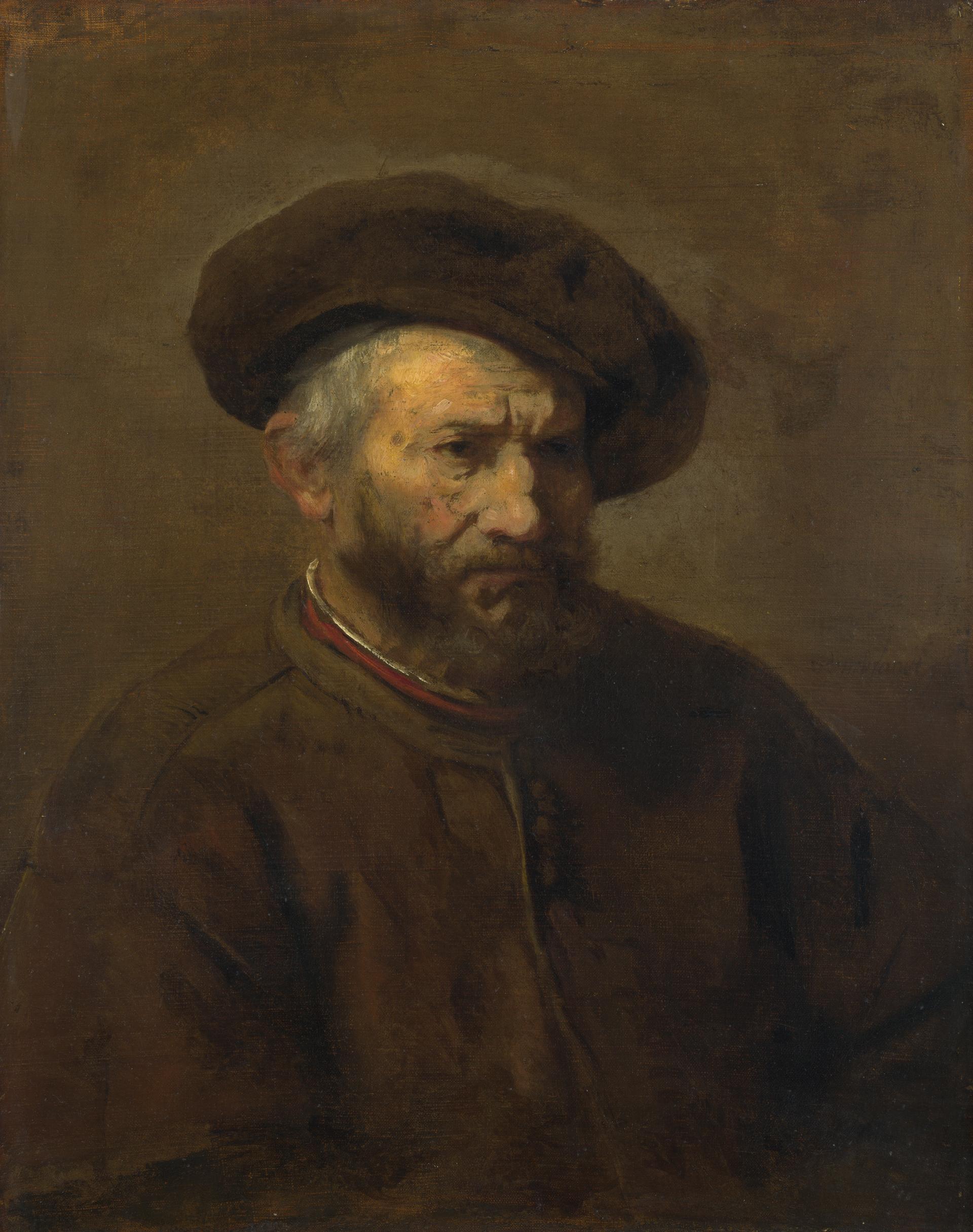
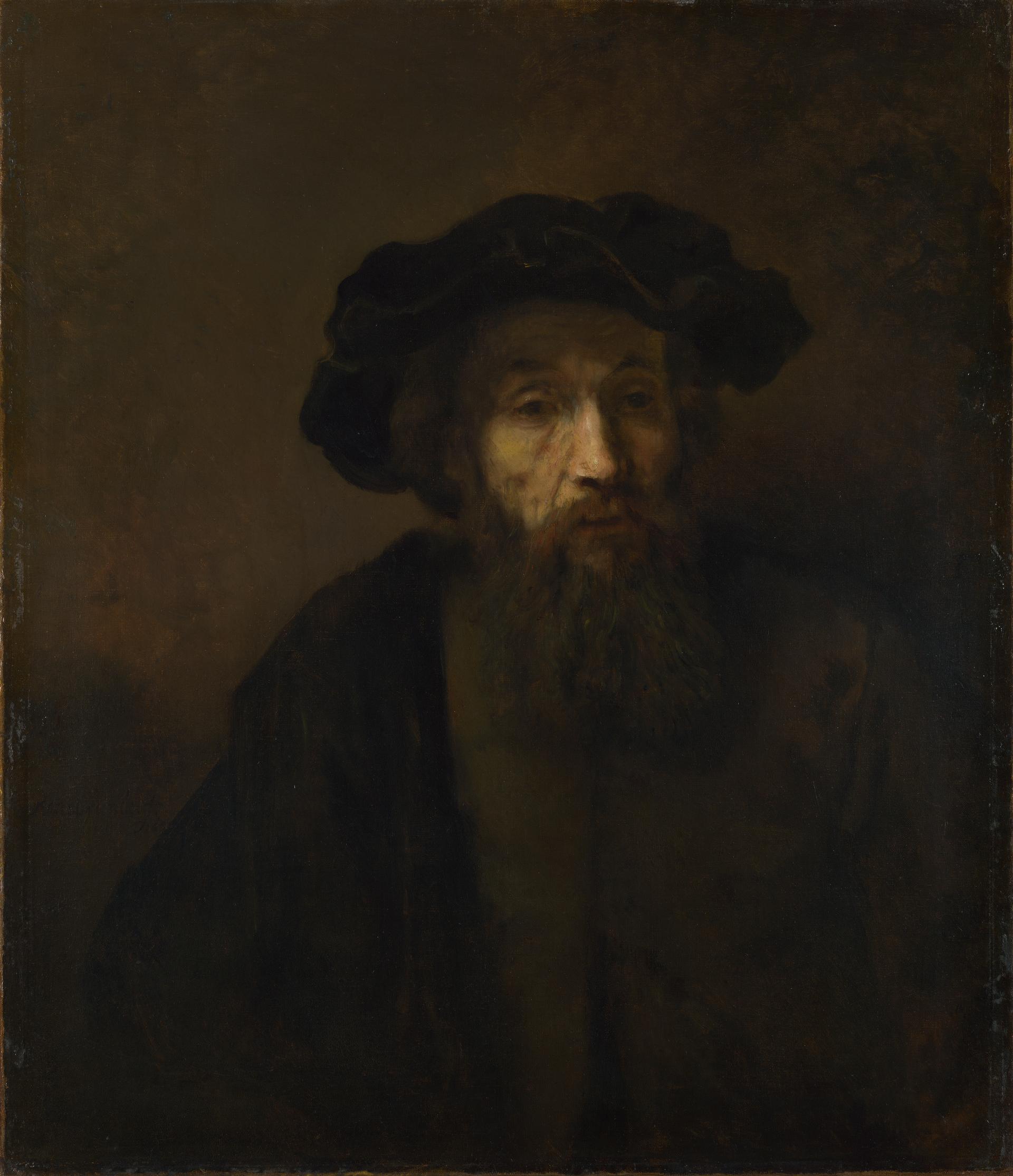
A Bearded Man in a Cap
- Artist: Rembrandt
- Date: late 1650s
- Medium: oil on canvas
- Museum: The National Gallery
- Collection record: The National Gallery website
Listen to the free audio guide
About this artwork
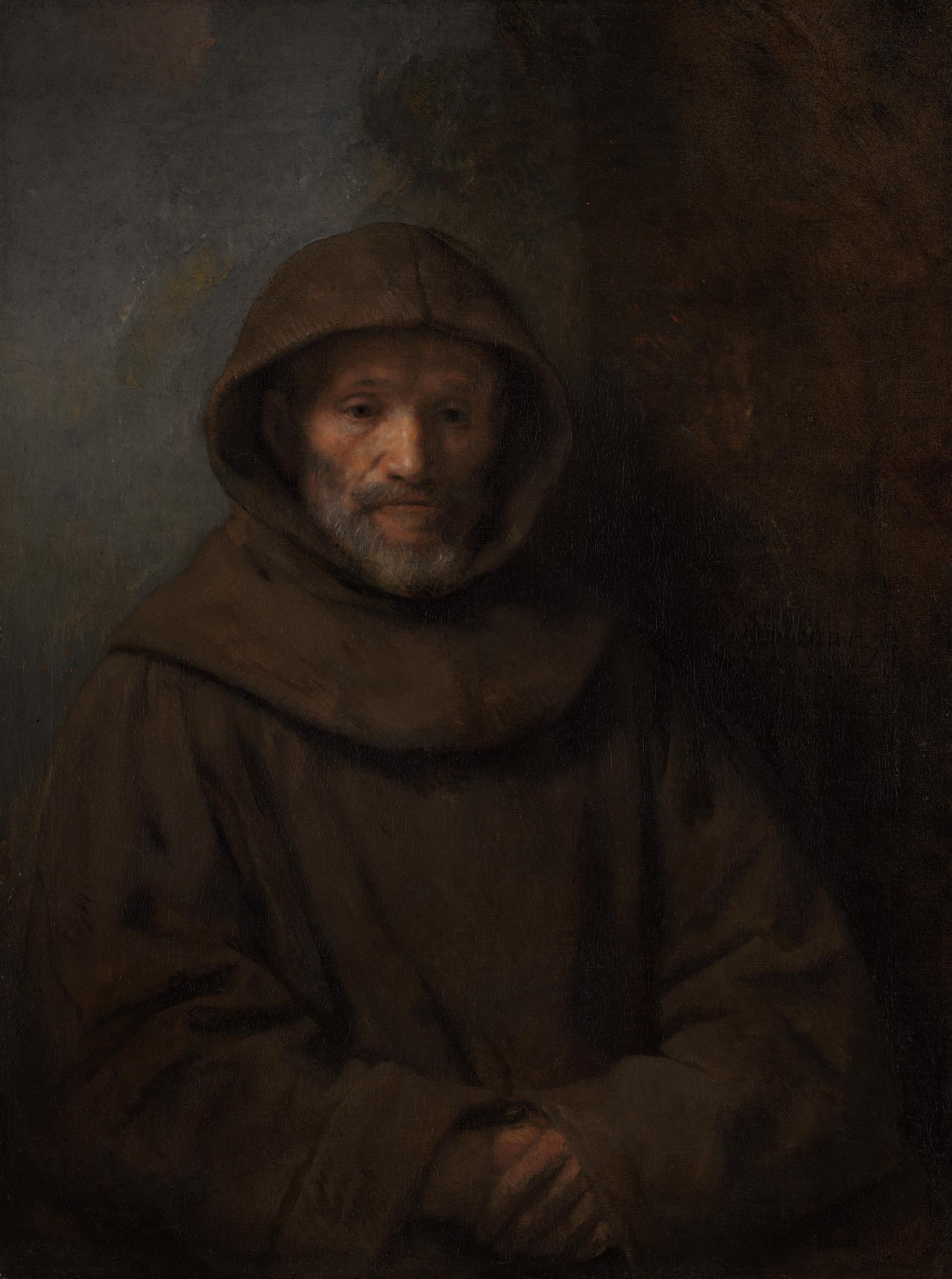
This is the "A Bearded Man in a Cap" by Rembrandt. Painted in the late 1650s, this work falls into the category of 'tronies', or 'heads'. These were understood to represent a type of person rather than an individual, and they were valued as a demonstration of the artist's skill at portraying different characters and particular facial expressions in a convincing way.
Rembrandt was known for his use of studio props to evoke a sense of history or exotic dress in his paintings. The hat worn by this man is likely one such prop, rather than an individual rabbi's attire as it was previously thought. In fact, the same man seems to have sat as a model in several other works made during this period.
The painting shows the artist's characteristic free use of the brush, deep background shadows, and limited palette of browns and ochres. The concentration on the detail of the face, eyes, and beard while only sketching in the rest of the picture are all consistent with Rembrandt's style for the late 1650s and 1660s.
Rembrandt lived near the Jewish quarter of Amsterdam and painted several portraits of Jews, but this painting was not given its current title until the mid-nineteenth century. The "A Bearded Man in a Cap" has also caught the attention of other notable artists, including Thomas Gainsborough, who made a copy of it around 1770.
See it in person
A Bearded Man in a Cap hangs in The National Gallery on Trafalgar Square, London — free to enter. Point your phone at any artwork there and audioguide.london plays a free audio guide in six languages — no app download needed.