Portrait of Aechje Claesdr.
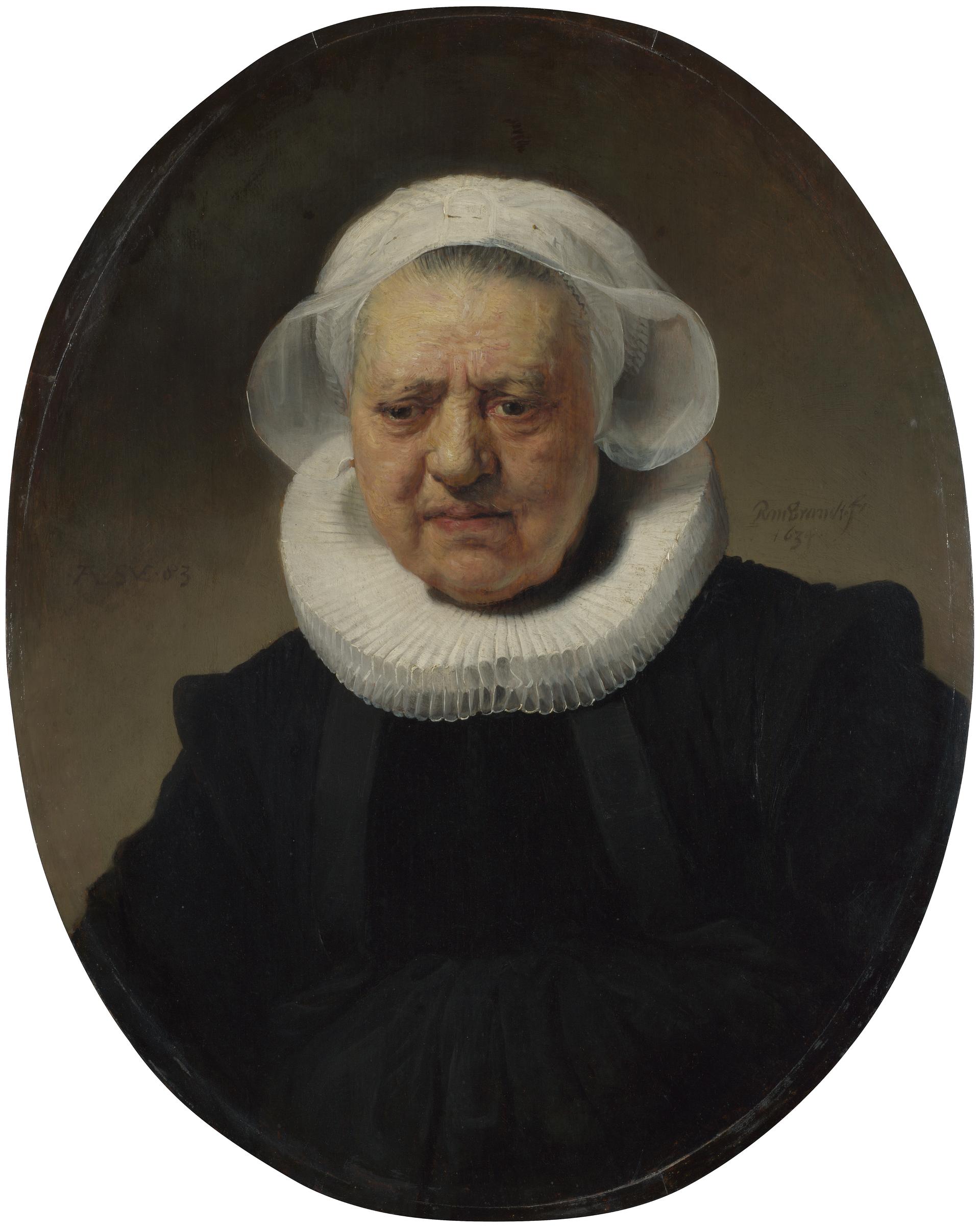
- Artist: Rembrandt
- Date: 1634
- Medium: oil on wood
- Museum: The National Gallery
- Collection record: The National Gallery website
Listen to the free audio guide
About this artwork
This is the Portrait of Aechje Claesdr. by Rembrandt, painted in 1634. Notice how Rembrandt has used contrasts between light and dark to create a highly convincing three-dimensional effect. The blacks and whites of the sitter's clothes, the highlights on her nose, and the heavy shadow under her chin all contribute to this illusion.
But it isn't just the light effects that make this portrait seem so lifelike. Rembrandt has also evoked the old lady's blotched, blemished, and sagging skin using different textures and thicknesses of paint. The furrows and shadows, the wrinkles and pudginess all make her face seem almost tangible.
Interestingly, for a long time this portrait was thought to be a portrait of Rembrandt's grandmother, but about 25 years ago it was identified as Aechje Claesdr., the widow of the Rotterdam brewer Jan Pesser.
See it in person
Portrait of Aechje Claesdr. hangs in The National Gallery on Trafalgar Square, London — free to enter. Point your phone at any artwork there and audioguide.london plays a free audio guide in six languages — no app download needed.