Portrait bust
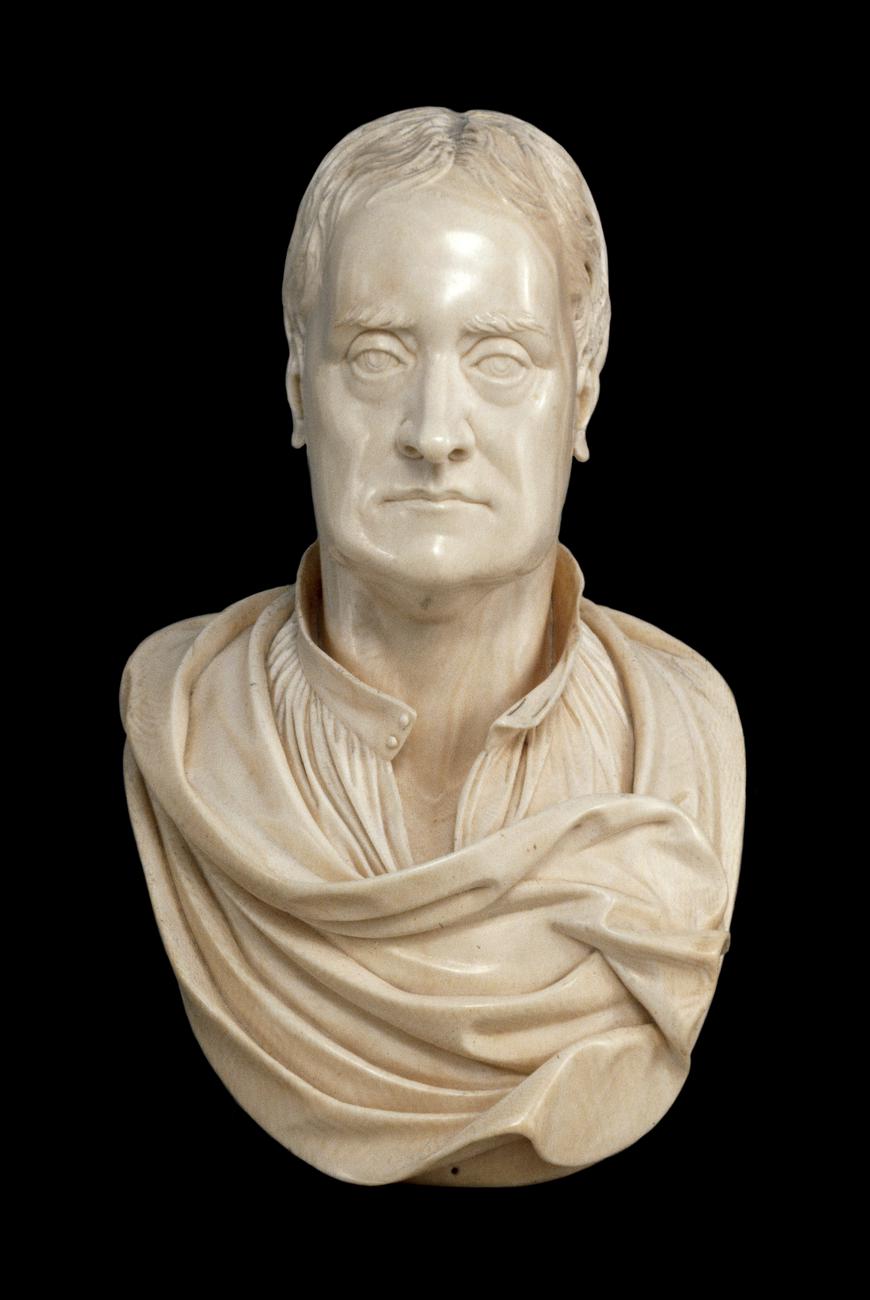
- Gallery: Room 46
- Maker: David Le Marchand
- Made in: London (England)
- Date: 1718
- Object type: portrait bust
- Materials: ivory
- Museum number: 1765,0629.1
- Museum: The British Museum
- Collection record: British Museum website
- Image © The Trustees of the British Museum, shared under a CC BY-NC-SA 4.0 licence.
Listen to the free audio guide
About this object
Before you stands a remarkable portrait bust of Sir Isaac Newton, carved from ivory by David Le Marchand in 1718. The work captures Newton in full face, dressed in a robe over an open shirt with a collar of two buttons. His dignified expression and meticulous detail reflect the craftsmanship of the era.
Carved from a single elephant tusk, the bust showcases Le Marchand’s skill in working with ivory, a material prized for its fine grain and natural sheen. The inscription on the back notes the sitter’s title and the date of the work.
Le Marchand, a Huguenot artist who worked in both Edinburgh and London, was known for creating portraits of influential figures of the time. This bust, commissioned likely by a Newton associate in 1718, is one of his most celebrated works.
Newton, a towering figure in science and mathematics, was knighted in 1705. The detailed rendering of his attire suggests the high importance placed on both intellectual and sartorial presentation in the early 18th century.
See it in person
Portrait bust is on display in Room 46 at the British Museum on Great Russell Street, Bloomsbury, London — free to enter. Choose British Museum on audioguide.london and take a photo of it to hear this free audio guide in six languages — no app download needed.
New, in beta. British Museum support has just launched and is still improving: over 1,000 objects so far, with more added all the time.